


If you are a Deep Winter, choosing a hair color can feel like a risk. Warm shades often turn brassy after a few washes. Caramel highlights can make the skin look red. Even a light brown that looks fine in the salon can fade into orange at home. Many people in this season go through the same cycle. They try a warmer shade, feel off for weeks, then return to dark hair again. It creates the feeling that only very dark hair works and nothing else is safe.
In real consultations and feedback from readers, the issue is almost always tone, not depth. Deep Winter has cool undertones and strong contrast. When hair color stays cool and deep, the face looks clear and balanced. When warmth enters, the skin can look dull and uneven. This guide focuses on what consistently works for this season. It uses practical examples, safe shade ranges, and salon wording that helps you avoid the most common mistakes. The goal is to give you a clear path so you can choose a color that supports your natural contrast and lasts well over time.
Why hair color matters for Deep Winter
Deep Winter has strong contrast. Skin looks cool. Hair and eyes look dark.
Warm shades can make skin look dull. Cool, deep shades make the face look clear.
The goal is simple. Keep depth. Keep cool tones. Keep contrast.
Understanding the Deep Winter palette
Deep Winter sits on the cool and deep side.
Best tones are cool and rich. Think black, espresso, cool brown, and deep red.
Avoid warm gold, copper, and honey. These fight with your undertone.
How contrast affects your best hair color
Deep Winter faces have strong contrast. Skin looks cool. Hair and eyes look deep.
This contrast is why deep shades look balanced.
If hair gets too light or warm, the face can look tired.
Cool and deep shades keep the face sharp and clear.
Best hair colors for Deep Winter
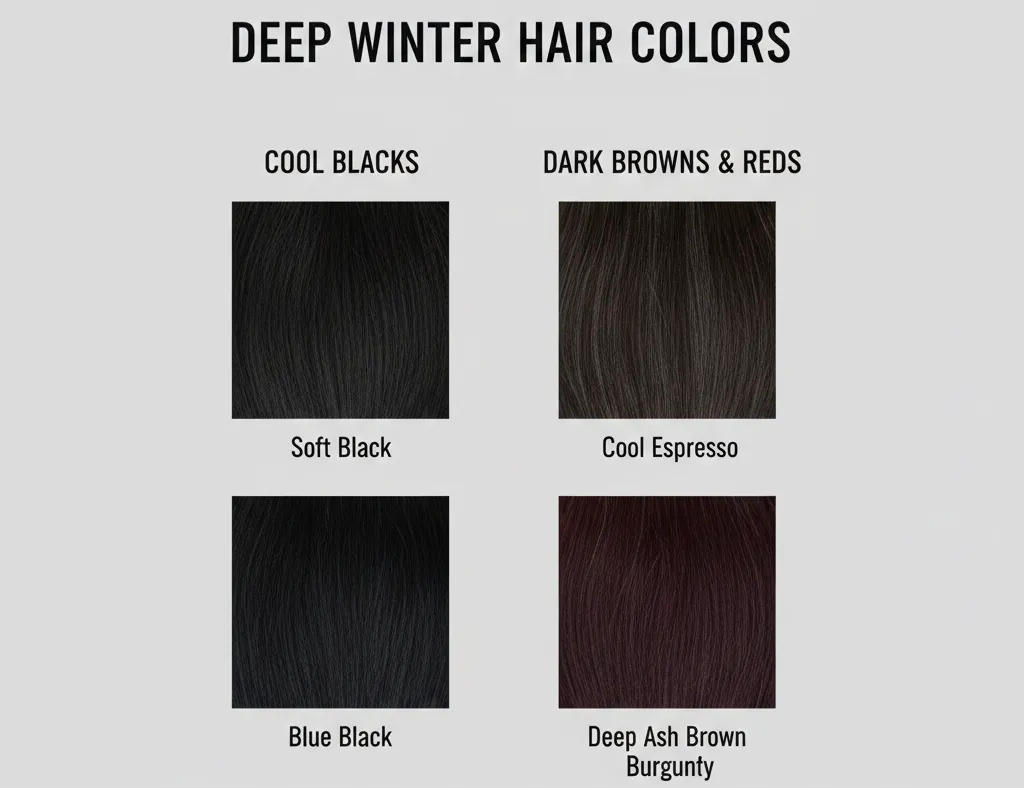
Safest choices
These always work and suit most people in this season.
- Soft black
- Blue-black
- Cool espresso
- Deep ash brown
- Cool dark chocolate
These shades keep contrast strong and skin balanced.
If you want something lighter
Some readers want change without losing depth.
You can go lighter, but stay cool.
- Dark ash brown
- Cool mocha
- Icy highlights on dark hair
- Cool espresso with subtle ash highlights
Avoid light warm blonde. It removes contrast.
Blonde options that can work
Blonde is tricky for this season.
If you try it, stay icy and cool.
- Icy platinum
- Ash blonde
- Silver blonde
Keep the base dark if you can. This keeps contrast.
Red shades that work
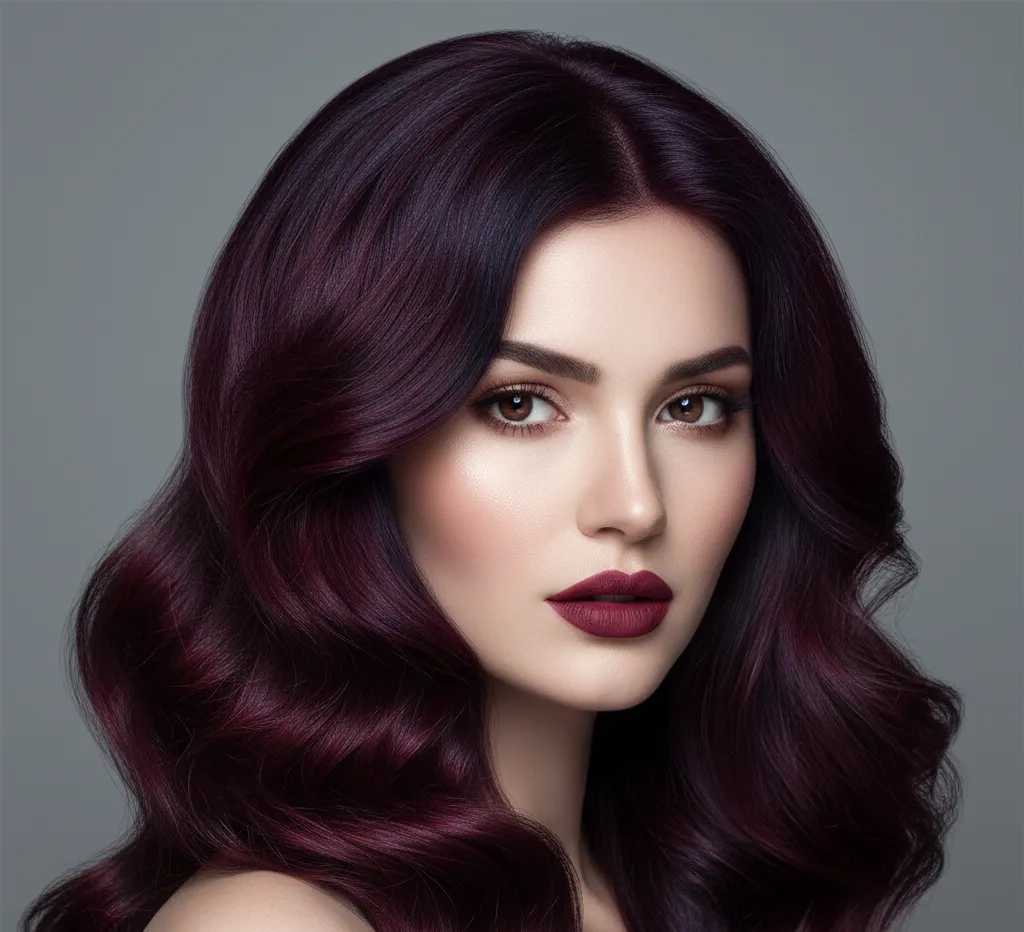
Warm red can look harsh.
Cool red can look rich and clear.
- Deep burgundy
- Wine red
- Plum
- Cool cherry
These shades work because they lean blue, not orange.
Quick Decision Guide
| If your natural hair is… | Safest choice | If you want change |
|---|---|---|
| Black | Soft black or blue-black | Burgundy or plum gloss |
| Dark brown | Cool espresso | Deep ash brown highlights |
| Medium brown | Dark cool brown | Add lowlights first |
| Dyed warm | Tone cooler first | Then go deeper and cool |
Hair color depth guide for Deep Winter
Hair color levels help you choose safely.
- Level 1–2: black and soft black. Safest choice.
- Level 3–4: espresso and cool dark brown. Still strong.
- Level 5: medium brown. Use only if cool and rich.
- Level 6+: often too light for this season.
If unsure, stay between level 1 and 4.
Shade Depth Chart
| Level | Shade Type | Safe for Deep Winter? |
|---|---|---|
| 1–2 | Black | Very safe |
| 3–4 | Espresso, deep brown | Safe |
| 5 | Medium brown | Use caution |
| 6+ | Light brown / blonde | Risky |
Highlights and balayage for Deep Winter
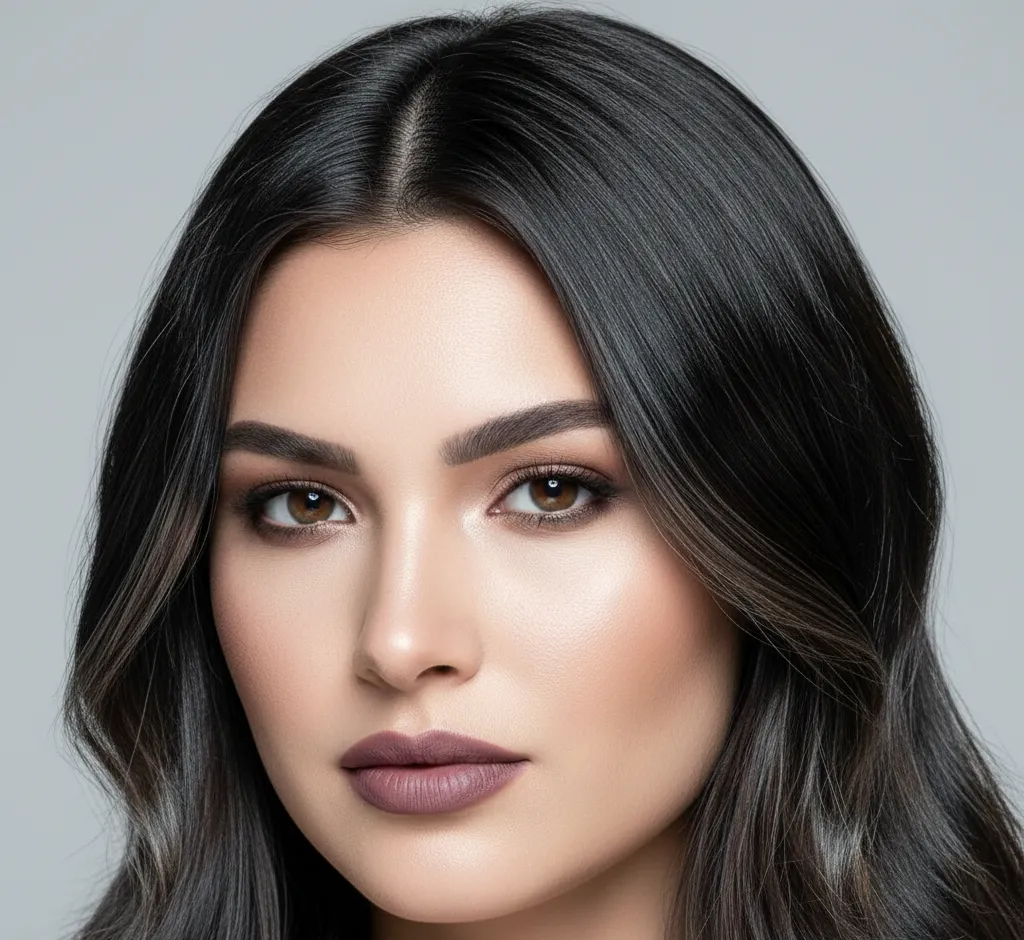
Highlights should stay cool and soft.
Too much lightness breaks contrast.
Good choices:
- Icy highlights on black hair
- Ash brown highlights
- Plum lowlights
- Silver tones
Ask for cool toner at the salon.
Say you want no warmth.
Hair colors to avoid
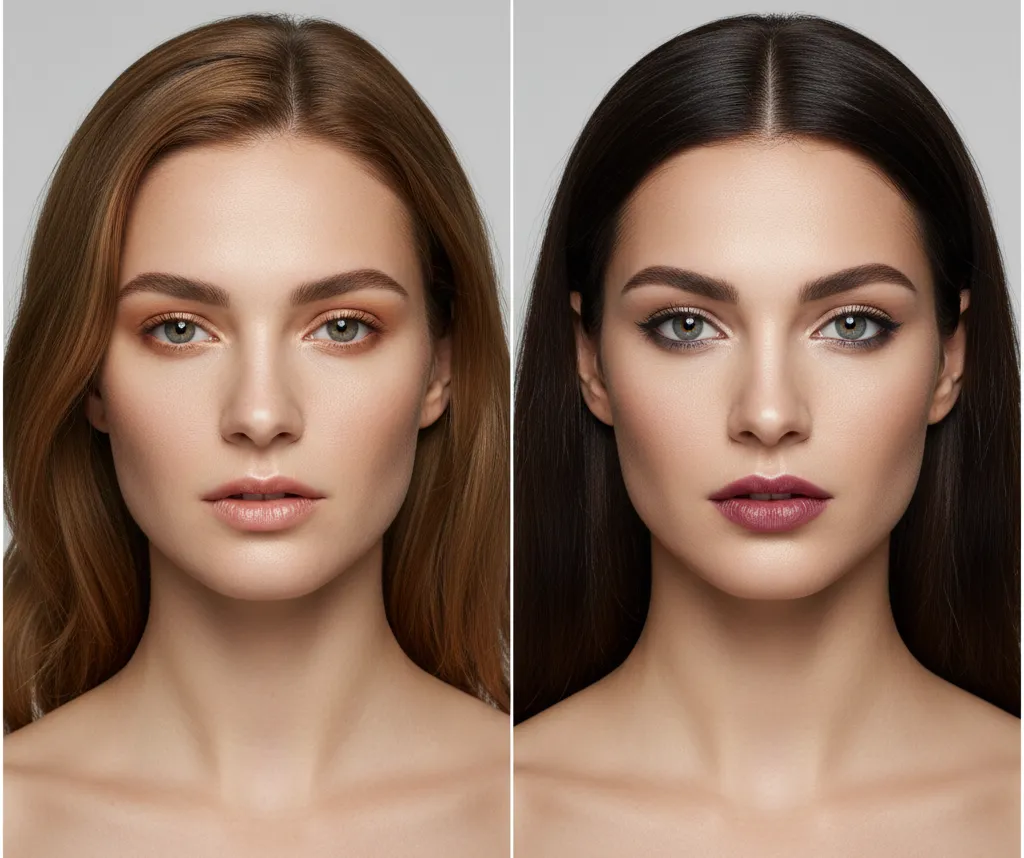
These shades often clash with Deep Winter.
- Golden blonde
- Honey blonde
- Caramel
- Copper
- Warm auburn
- Warm chestnut
- Orange tones
If hair turns brassy, it needs toning.
Common mistakes Deep Winter makes
Many people in this season run into the same issues.
- Choosing caramel or honey tones
- Adding warm balayage
- Going too light too fast
- Letting dark hair fade into brass
- Trusting warm salon lighting
If hair looks orange or golden, it needs cooling.
Before You Dye – Quick Checklist
- Is the tone clearly cool?
- Is the depth dark enough for strong contrast?
- Does it avoid gold, copper, or warmth?
- Will it keep your natural contrast visible?
If the answer is yes to all, the shade likely works for Deep Winter.
What to tell your stylist
Many readers worry about salon visits.
Use simple words.
Say this:
- I need cool tones
- No gold or warmth
- Keep depth
- Use ash or blue base
- I suit deep, cool shades
Bring photos. This helps avoid mistakes.
Show This to Your Stylist
- Use cool base only
- No gold or warm tones
- Keep depth between level 1–4
- Finish with ash or blue toner
Quick salon wording guide
If you want to avoid mistakes, say this at the salon:
- I need cool tones only
- No gold or warmth
- Keep depth between level 1 and 4
- Use ash or blue base
- Add cool toner after color
Clear wording helps avoid warm results.
At-home dye or salon?
Both can work.
Choose based on how big the change is.
At home works if:
- You stay dark
- You refresh color
- You use cool brown or black
Go to a salon if:
- You want highlights
- You want lighter hair
- You need color correction
How to maintain Deep Winter hair color
Cool tones fade into warmth over time.
Maintenance keeps color fresh.
Use:
- Purple shampoo once a week
- Color-safe shampoo
- Gloss every few weeks
- Cool toner if brass shows
Touch up roots every 4–6 weeks.
Fixing a wrong hair color
If hair looks warm or orange, do this:
- Use blue or purple shampoo
- Add a cool toner
- Ask salon for ash gloss
- Go slightly darker if needed
Cool tones bring balance back.
How to transition from warm hair to cool hair
If your hair is warm now, you can shift it slowly.
- Add ash toner to cancel warmth
- Go slightly darker first
- Use cool gloss between salon visits
- Avoid adding more highlights until tone is fixed
A gradual shift keeps hair healthy and balanced.
If you want the safest choice
If you want a shade that almost always works, choose:
- Soft black
- Blue-black
- Cool espresso
These keep contrast strong and suit most Deep Winters.
Real-life shade examples that suit Deep Winter
Some shades often seen on this season:
- Deep espresso with cool shine
- Black with blue undertone
- Burgundy with dark base
- Plum highlights on black hair
These shades keep depth and cool tone.
Quick decision guide
If your natural hair is black → stay black or soft black
If your hair is dark brown → choose cool espresso
If you want change → try burgundy or plum
If you want lighter → add icy highlights
Keep depth and cool tone in mind.
Quick Takeaway
- Safest shades: Soft black, blue-black, cool espresso
- Bold but safe: Burgundy, plum
- Avoid: Caramel, honey, copper, golden tones
- Rule: Cool + deep = flattering for Deep Winter
Conclusion
The best hair color for Deep Winter follows clear rules. Depth should stay strong. Tone should stay cool. Contrast should remain visible. When these three things are in place, most shades will look balanced and polished. This is why soft black, blue-black, cool espresso, and deep burgundy work so well. They match the natural contrast of the season and keep the skin looking clear. Lighter or warmer shades can work only in small amounts and with careful toning.
From experience, people who stay within cool and deep ranges have fewer regrets and less maintenance. They do not have to keep correcting brass or fading warmth. Instead, they build from a strong base and make small changes that still fit their palette. If you keep your color cool and deep, you give yourself the best chance of long-term results that feel right every day. A well-chosen shade should support your features, keep your skin looking even, and save you from constant fixes.
