
Close Menu
  • Home
  • Color Theory Basics
  • Seasonal Color Analysis
  • MORE
    • Autumn Color Seasons
    • Summer Color Seasons
    • Winter Color Seasons
    • Spring Color Seasons
    • Hair Color by Undertone
    • Hair Color by Season
    • Hair Color Families
    • Celebrity Color Analysis
  • News
    • Beauty & Hair Trends
    • Celebrity Fashion
    • Designer & Brand News
    • Fashion Events & Shows
    • Fashion Industry News
    • Fashion Trends
    • Street Style & Everyday Fashion
  • Free Color Season Quiz
What's Hot

Milan Fashion Week Womenswear Schedule: CNMI Provisional Calendar

July 27, 2026

What is the 3-3-3 rule for outfits?

July 27, 2026

Sherri Shepherd Responds to Fashion Criticism and Ageist Remarks

July 27, 2026
Facebook X (Twitter) Instagram
shadecompass
Facebook Pinterest
  • Home
  • Color Theory Basics
  • Seasonal Color Analysis
  • MORE
    • Autumn Color Seasons
    • Summer Color Seasons
    • Winter Color Seasons
    • Spring Color Seasons
    • Hair Color by Undertone
    • Hair Color by Season
    • Hair Color Families
    • Celebrity Color Analysis
  • News
    • Beauty & Hair Trends
    • Celebrity Fashion
    • Designer & Brand News
    • Fashion Events & Shows
    • Fashion Industry News
    • Fashion Trends
    • Street Style & Everyday Fashion
  • Free Color Season Quiz
shadecompass
Home » Seasonal Color Analysis Tips: Find Your True Color Season
Seasonal Color Analysis

Seasonal Color Analysis Tips: Find Your True Color Season

Emily CarterBy Emily CarterJanuary 26, 2026No Comments8 Mins Read
Share
Facebook Twitter LinkedIn WhatsApp Pinterest Email

I used to buy clothes just because they looked nice in the store. My wardrobe had every color you could think of, from bright pink to bold yellow. But over time, I noticed I only wore the shades that truly complemented my skin tone and hair. That was the moment I understood how powerful the right color palette can be.

Seasonal color analysis, often called color season analysis, is a method used to identify the colors that suit you best. The seasonal analysis system uses 12 palettes, and while it may seem complex at first, this guide breaks it down step by step so you can test it at home.

This approach looks at your eyes, skin undertone, and overall coloring to place you into one of the four seasons: Spring, Summer, Autumn, or Winter. Each subtype can feel cool, soft, bright, deep, or muted, depending on the natural intensity of your features.

Quick Takeaway:
Undertone (Hue) + Contrast (Value) + Intensity (Chroma) = Your Color Season.
Table of contents
  1. What Seasonal Color Analysis Really Means
  2. Three Dimensions That Shape Your Best Colors
  3. Easy At-Home Steps to Spot Your Season
  4. A Simple Look at the Four Seasonal Groups
  5. Common Mistakes in Self-Analysis
  6. Not Sure Which Color Season You Are?
  7. Closing Thoughts: Building Your Personal Palette
  8. Frequently Asked Questions – FAQ

What Seasonal Color Analysis Really Means

Seasonal color analysis is a system that categorizes people into color seasons based on skin tone, eye color, and hair color. I’ve seen how wearing the right palette can create instant harmony in your wardrobe and make your complexion appear more balanced.

This concept has roots in color theory, where artists explored how tones interact. By the mid-20th century, fashion stylists adapted the idea into personal styling, noticing that people look more vibrant when their clothing matches their undertone.

The system started with four main seasons but later evolved into twelve subtypes for greater accuracy:

  • Spring: Light Spring, True Spring, Bright Spring
  • Summer: Soft Summer, True Summer, Light Summer
  • Autumn: Soft Autumn, Warm Autumn, Deep Autumn
  • Winter: Bright Winter, Cool Winter, Deep Winter

If you want a clearer breakdown of how both systems work, read our guide on color seasons explained (4-season vs 12-season). Some neighboring palettes are known as sister seasons in color analysis because they share similar traits and flow naturally into each other.

Each palette combines:

  • Temperature (warm or cool)
  • Depth (light or dark)
  • Intensity (soft or clear)

The Purpose Behind Knowing Your Season

The purpose of seasonal color analysis is simple: to help you understand which colors naturally enhance your look.

When you wear tones aligned with your season:

  • Your skin looks smoother
  • Your eyes appear brighter
  • Your overall style feels more cohesive

It also makes shopping easier because your wardrobe becomes more consistent over time.

If you’re still unsure and wondering what is my color season, this guide walks you through the basics in a simple way.

What Your Personal Color Season Actually Means

Your personal color season is more than just a category. It explains why certain shades make your complexion brighter and your overall look more balanced. Once you understand the real personal color season meaning, choosing clothes and makeup becomes much easier because everything works with your natural coloring.

Three Dimensions That Shape Your Best Colors
seasonal color analysis tips - find your true color season

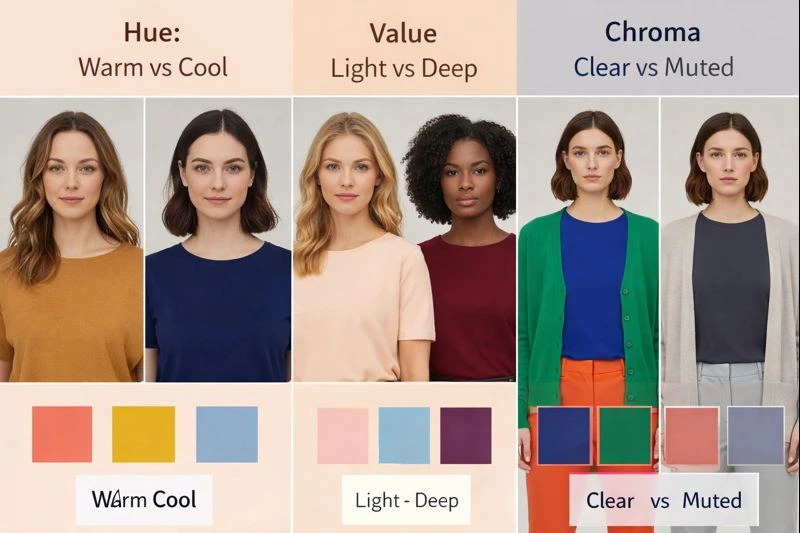
Seasonal color analysis is built around three key dimensions:

  • Hue
  • Value
  • Chroma

These are the foundations for finding your most flattering shades.

Value: Light, Medium, or Deep

Value in colors looks at how light or dark your features appear and how much contrast there is between your skin, hair, and eyes. These are often some of the first signs that you are a light season in seasonal color analysis

Hue: Warm or Cool Temperature

Hue refers to your undertone, which is one of the most important parts of finding your season.

If you are still unsure, review these common signs you are warm vs cool to confirm your undertone.

Chroma: Clear or Muted Color Intensity

Chroma describes how bright or soft your overall coloring appears. Many people also compare soft autumn vs soft summer because both seasons share soft and muted coloring

These three dimensions are the foundation of learning how to determine your color season accurately.

At-Home Checklist Before Testing
  • Natural daylight only
  • No makeup
  • Compare warm vs cool fabrics
  • Take photos to check contrast

Easy At-Home Steps to Spot Your Season

To find your season, follow a simple order:

  1. Identify undertone (Hue)
  2. Observe depth and contrast (Value)
  3. Determine brightness or softness (Chroma)

Once those three pieces are clear, matching yourself to one of the 12 palettes becomes much easier.

For a full walkthrough with step-by-step examples, see our complete seasonal color analysis at home (DIY guide).

A Simple Look at the Four Seasonal Groups

4-Season Cheat Sheet

Spring = warm + light + bright
Summer = cool + light + soft
Autumn = warm + deep + muted
Winter = cool + deep + clear

In the system of Seasonal Color Analysis, there are 12 subtypes, but I always recommend starting with the four main seasons first.

  • Spring feels warm, light, and bright
  • Summer appears cool, soft, and gentle
  • Autumn is warm, deep, muted, with earthy richness
  • Winter stays cool, deep, clear, and has strong contrast

Strong contrast and deeper coloring are usually common signs that you’re a dark season.

After that, you can explore subtypes like Soft Summer, Warm Autumn, or Bright Spring. If warm depth and bright clarity feel similar, comparing Deep Autumn vs Bright Spring can make the differences easier to understand.

For a deeper comparison, see our full breakdown of summer vs winter vs autumn vs spring differences.

Common Mistakes in Self-Analysis
seasonal color analysis tips

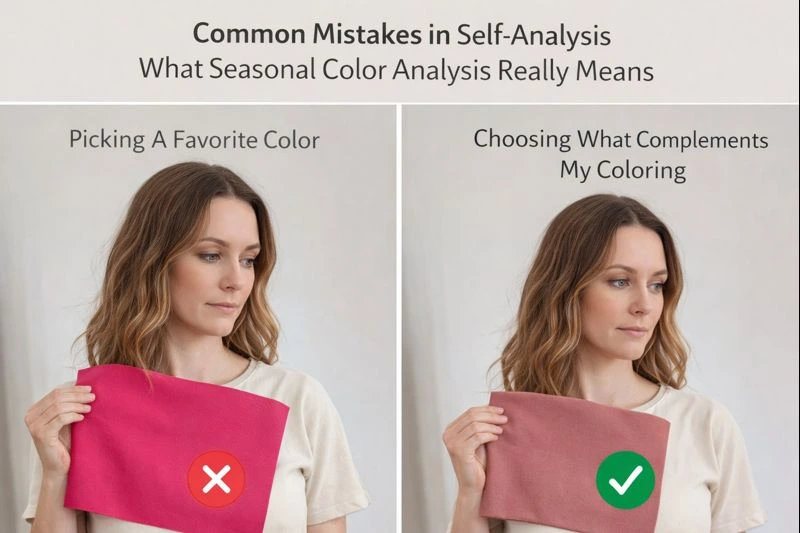
Many people get confused by a few common mistakes:

  • Testing in artificial lighting
  • Wearing makeup during analysis
  • Focusing only on skin tone instead of full coloring
  • Ignoring chroma (bright vs muted)
  • Overcompensating with too much contrast

A season is always based on the full balance of skin, hair, and eyes.

To see how each subtype actually looks in practice, explore our full guide to the 12 color seasons.

Not Sure Which Color Season You Are?

Take our free 2-minute Color Season Quiz to discover whether you are most likely a Spring, Summer, Autumn, or Winter—and explore the colors that suit you best.

Start quiz

Closing Thoughts: Building Your Personal Palette

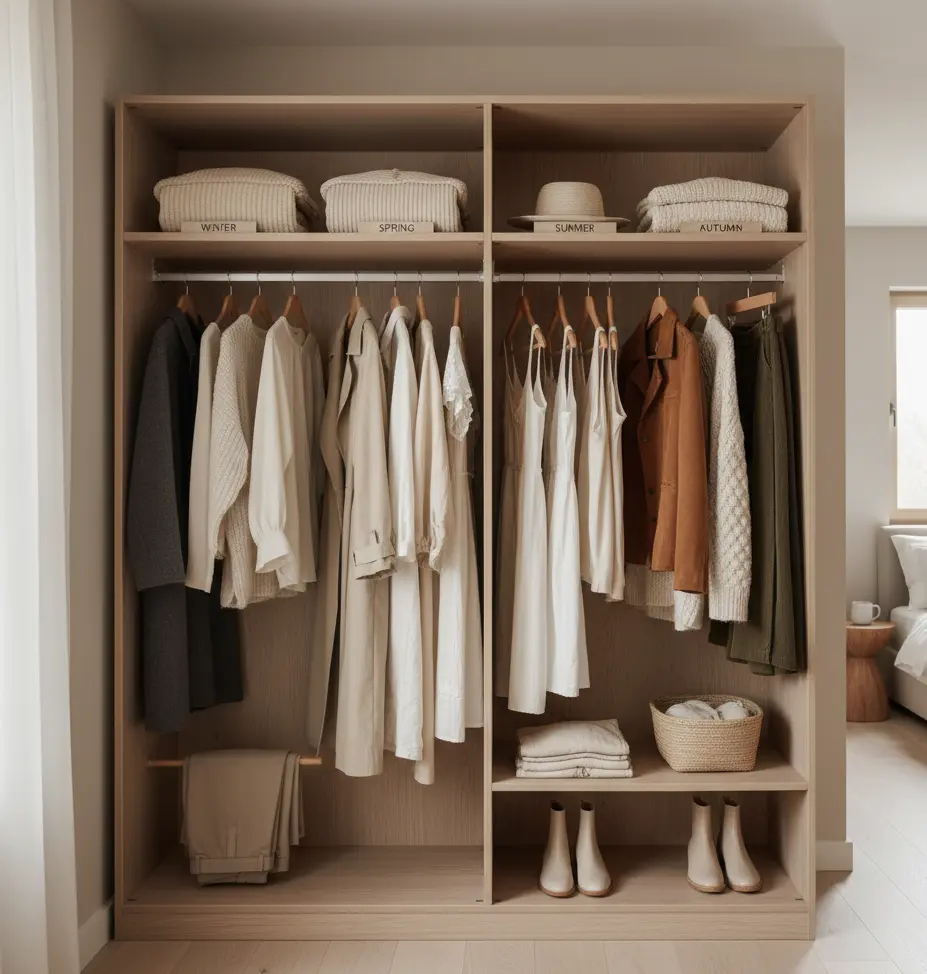
Once you identify your season, the next step is applying it in real life through clothing, makeup, and everyday choices. In my experience, the system becomes most useful when you stop guessing and start choosing shades that match your undertone, depth, and chroma.

Whether you fall into Spring, Summer, Autumn, or Winter, or one of the 12 subtypes like Soft Summer, Warm Autumn, Bright Spring, or Deep Winter, the goal stays the same: building a flattering, consistent wardrobe that feels natural.
Seasonal Color Analysis: Find Your True Color Season by building a matching capsule wardrobe palette

Small changes, like swapping bright tones for muted ones or matching your contrast level, can create more balance and harmony in your overall look over time. If muted warmth feels confusing, this comparison between soft autumn vs light spring makes the differences easier to spot.

Want to go deeper?
For detailed guides on each subtype, explore more seasonal palette resources on ShadeCompass .

Frequently Asked Questions – FAQ

How do I find my seasonal color type?

You find your seasonal color type by checking undertone, contrast, and chroma together. Separate skin tone from undertone, observe how light or dark your overall coloring looks, and notice if colors appear better soft or clear. Simple at-home tests in natural light help confirm the result.

What is seasonal color analysis and how does it work?

Seasonal color analysis groups people into color groups and seasons by studying skin tone, eye color, and hair color. It finds a color palette that matches your undertone so your natural complexion looks balanced, and your wardrobe feels more in harmony.

What are the four main seasons in color analysis?

The four main seasons are Spring, Summer, Autumn, and Winter. Spring and Autumn are warm seasons, while Summer and Winter are cool seasons. Each season is grouped by undertone and helps guide color choices.

What is the difference between the four-season and twelve-season systems?

The four-season system places people into Spring, Summer, Autumn, or Winter. The twelve-season system expands each one into three subtypes to show neutral and blended coloring. This adds detail by refining undertone and intensity within each main season.

Do I need a professional color analysis or can I do it myself?

You can do seasonal color analysis yourself using at-home methods like observing colors in natural light, testing undertones, and comparing shades against your skin. Professional color analysts can help if results feel confusing, though many people get clear results by using several DIY methods together.

How can I do a DIY seasonal color analysis at home?

Start by testing fabrics in natural light. Compare warm shades and cool shades, then see if light colors or deep colors suit you best. Taking photos without makeup can help you spot which colors create harmony and point to your seasonal color season.

What is the easiest way to find my color season without a stylist?

Identify your undertone as warm or cool and check your natural contrast level such as light, medium, or deep. These traits help you choose the right season. Simple at-home testing in natural light can guide you to your true color season.
color color season seasonal color analysis
Share. Facebook Twitter Pinterest LinkedIn Tumblr WhatsApp Email
Emily Carter
  • Website

Emily Carter is a color analysis expert and the creator of ShadeCompass, a style education platform focused on seasonal color analysis and personal color guidance. With more than 10 years of experience in personal styling and color theory, Emily has helped hundreds of people understand their true color season and build wardrobes that feel natural and confident. Her work combines practical styling advice with clear, easy-to-follow education, making color analysis simple for beginners and useful for anyone serious about personal style.

Related Posts

Right Shade of Red for Your Color Season: Find Your Most Flattering Red

July 13, 2026

Deep Autumn vs Bright Spring: How to Tell the Difference

May 11, 2026

10 Signs You’re a Dark Season (And How to Know for Sure)

May 5, 2026

9 Signs You’re a Light Season

April 28, 2026

Soft Autumn vs Soft Summer: What Is the Difference?

April 25, 2026

Soft Autumn vs Light Spring: Which One Are You?

April 24, 2026
Add A Comment
Leave A Reply Cancel Reply

About Owner
Emily Carter – Founder of ShadeCompass

Emily Carter

Emily Carter is a color analysis expert and the creator of ShadeCompass, a style education platform focused on seasonal color analysis and personal color guidance. With more than 10 years of experience in personal styling and color theory, Emily has helped hundreds of people understand their true color season and build wardrobes that feel natural and confident.

Latest Posts

Milan Fashion Week Womenswear Schedule: CNMI Provisional Calendar

July 27, 2026

What is the 3-3-3 rule for outfits?

July 27, 2026

Sherri Shepherd Responds to Fashion Criticism and Ageist Remarks

July 27, 2026

Emerging Talents Switzerland Helps New Designers Go Global

July 26, 2026
Don't Miss
Seasonal Color Analysis

What Is My Color Season? Easy Ways to Discover Yours

By Emily CarterJanuary 27, 2026

Have you ever worn a color that looked beautiful on someone else, but on you…

12 Color Seasons Explained: All Seasons and Sub-Seasons

January 28, 2026

Autumn Color Seasons: Soft, True & Deep Explained

January 29, 2026

Summer Color Seasons: Soft, True, Light & Cool Explained

January 31, 2026
Stay In Touch
  • Facebook
  • Twitter
  • Pinterest
  • Instagram
Demo
About Us
About Us

At ShadeCompass, we share simple guides and practical tips to help you understand seasonal color analysis and choose the colors that suit you best. Whether you’re new to personal style or refining your look, you’ll find inspiration here to feel confident in every shade you wear.

Our Picks

Milan Fashion Week Womenswear Schedule: CNMI Provisional Calendar

July 27, 2026

Sherri Shepherd Responds to Fashion Criticism and Ageist Remarks

July 27, 2026

Emerging Talents Switzerland Helps New Designers Go Global

July 26, 2026
Start Here
  • Seasonal Color Analysis Tips
  • What Is My Color Season?
  • How to Determine Your Color Season
  • Color Theory for Personal Style
Facebook X (Twitter) Instagram Pinterest
  • Home
  • Contact Us
  • Terms & Conditions
  • Privacy Policy
  • About ShadeCompass
  • Advertise With Us
ShadeCompass.com © 2026 - All rights reserved.

Type above and press Enter to search. Press Esc to cancel.