


Picking the right hair color starts with knowing your skin undertone and how warm vs cool shades work together. Warm skin tones usually match best with warm hair colors, while cool skin tones look better with cool shades. Many people fall in the neutral range, sitting between both.
As a stylist, I always focus on keeping harmony between the skin undertone and the hair shade chosen. The right match enhances natural features, balances the overall look, and helps clients feel confident with a color that truly suits them.
Quick Takeaway: Warm vs Cool Undertones
- Warm undertone → Honey blonde, caramel brunette, copper red
- Cool undertone → Ash brown, icy blonde, cool burgundy
- Neutral undertone → Bronde, balayage, chocolate brown
Understanding Cool and Warm Tones
Before choosing undertones, it helps to know the difference between cool tones and warm tones.
Cool Tones
Cool tones usually have an ashy, blue, or violet base. Examples include icy platinum blonde, smoky brunette, or cool chestnut. These shades help counter unwanted warmth and reduce brassy hues, giving a fresher, more balanced cool hair color.
Warm Tones
Warm tones bring a softer glow with golden, copper, and red undertones. Shades like honey blonde, caramel brunette, or warm auburn add brightness and warmth. When the undertone is a good match, warm shades can make the face look healthier and more lively.
Identifying Your Client’s Skin Undertone
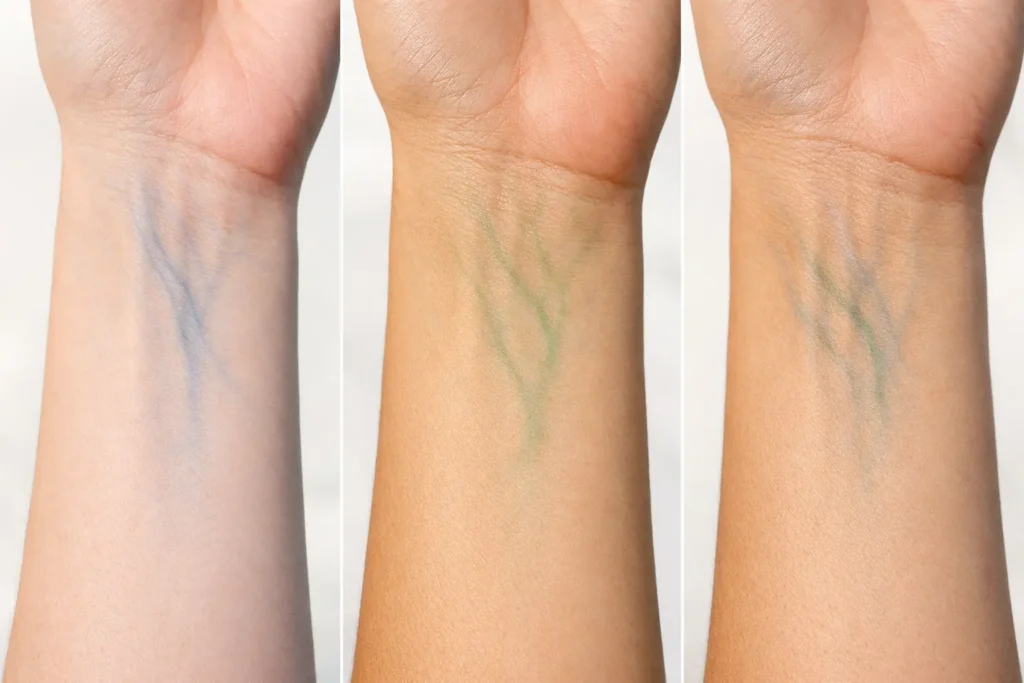
Your skin undertone can determine what hair colors, makeup, jewelry, and clothing shades suit you best. Every client typically falls into warm, cool, or neutral undertones.
Cool Undertones
Cool undertones are often seen in fair skin with pink tones and visible blue or purple veins on the wrist. Cooler hair shades help bring balance, reduce redness, and match the natural coolness of the skin.
Warm Undertones
Warm undertones include golden or olive skin with greenish veins. Many people with warm undertones tan easily and suit warm shades like gold, rich browns, and copper-based hair colors.
Neutral Undertones
Neutral undertones are a blend of warm and cool. These clients often have the widest range of hair color choices. Neutral skin may show subtle mixes of green, grey, and yellowish hues. Skin depth does not always define undertone, so someone with light or darker skin can still lean warm or cool.
Methods to Identify Your Skin Tone
If you’re unsure or struggling, I always suggest using simple methods to know your true skin tone. A combination of methods makes it easier to spot what’s really going on.
Check Your Veins
This is one of the quickest ways to spot undertones.
Look at the underside of your wrists.
- Blue veins or purple veins usually mean a cool skin undertone
- Green veins usually mean a warm skin undertone
- A mix of both can mean a neutral undertone
For people with prominent veins, this test is even easier.
The Paper Test

This is a simple way to compare your skin against white.
Stand with a mirror and hold a piece of white paper near your face.
- A hint of yellow or orange suggests warm undertones
- Skin that looks pink, red, or blueish suggests cool undertones
- If it looks balanced, you may be neutral
You can also place a crisp white sheet over your shoulders for clarity.
The Window Test
Stand near a window with a mirror.
Look closely at the skin beneath your eyes.
- A yellowish green cast can signal a warm tone
- A more purple-y look with blue undertones suggests a cool tone
Natural daylight makes this method more accurate.
The Blusher Test
This test helps you see which tones brighten your face.
Dust blush on each cheek and compare in daylight.
- Pink blush that suits you points to cool-toned skin
- Peach blush that looks better suggests warm-toned skin
Apply heavier than normal so the difference is clear.
Try On Some Jewelry
Jewelry can quickly show your undertone.
Try both gold and silver near your face.
- Gold jewelry often flatters warm undertones
- Silver jewelry tends to suit cool undertones
- If both look good, you may have a neutral skin tone
This is a helpful quick check for many clients.
Finally, Do You Tan Easily?
Your reaction to sun is another clue.
Think about what happens after time outdoors.
- If you come back with a deep tan, you may lean warm
- If you burn easily or turn pink, you may lean cool
- If you tan but still notice pink tones, you might be neutral
This final check works best with the other tests combined
Simple Undertone Test Checklist
- Blue or purple veins usually mean a cool undertone
- Green veins often suggest a warm undertone
- A mix of both may point to neutral undertones
- Silver jewelry tends to flatter cool tones
- Gold jewelry often suits warm tones
Hair Color by Skin Undertone: Warm vs Cool Shade Choices
Once the undertone is clear, the next step is choosing hair colors that create balance and harmony. The goal is to avoid shades that bring out redness, dullness, or uneven tone.
Best Hair Colors by Undertone Type
| Undertone Type | Best Hair Colors |
|---|---|
| Cool | Ash brown, icy blonde, cool burgundy |
| Warm | Honey blonde, caramel brunette, copper red |
| Neutral | Chocolate brown, bronde, soft balayage |
Best Hair Colors for Cool Undertones
Clients with cool undertones usually look best in cool-based shades, such as:
- Icy Blonde with platinum or silver tones
- Ash Brown for a cool, rich brunette
- Cool Burgundy with a purple-red base
These shades reduce brassiness and match the skin’s cooler base.
Best Hair Colors for Warm Undertones
Best hair color for Warm undertones shine in golden and copper shades, including:
- Honey Blonde for warmth and brightness
- Caramel Brunette with golden undertones
- Copper Red with a bold orange base
Warm shades enhance golden and olive skin tones beautifully.
Best Hair Colors for Neutral Undertones
Neutral undertones can explore both warm and cool shades. Popular options include:
- Soft Balayage with blended warm and cool highlights
- Rich Chocolate Brown with neutral balance
- Golden Bronde, a mix of blonde and brown with soft warmth
Considering Eye Color and Undertones
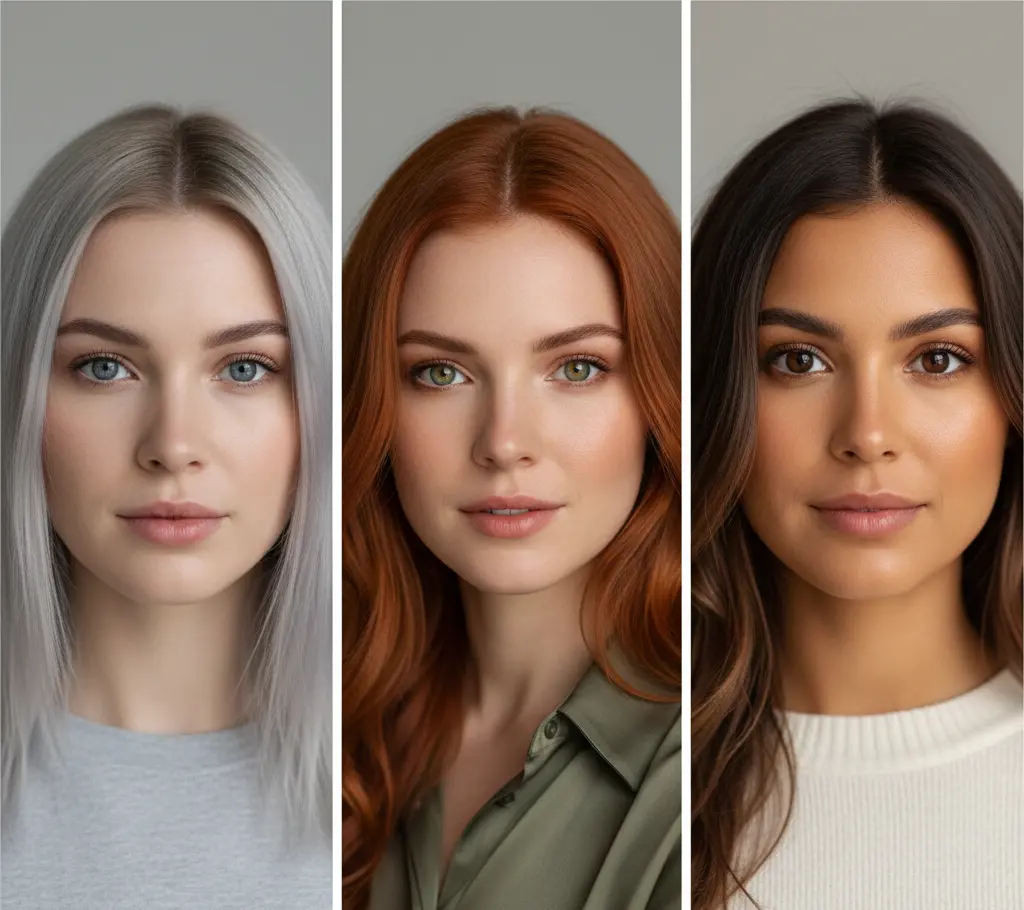
In my experience, eye color has a real role in choosing the right undertones for hair. When I work with a client, I always focus on complementing the eye area so the features can truly pop and the whole style feels more balanced.
Blue or Grey Eyes
With blue or grey eyes, a cool direction often works best. I’ve seen how shades like ashy blonde, light mocha, or an icy brunette can highlight the eyes beautifully, giving a more cohesive and balanced look.
Green or Hazel Eyes
For green or hazel eyes, warm colors tend to bring out natural richness. Options such as golden blonde, chestnut, or copper red can create a glowing effect, while still keeping the undertones and hair in a cohesive look.
Brown Eyes
With brown eyes, I usually see the best results with neutral and warm tones. Shades like deep caramel or mahogany can enhance the depth, and they work well for complementing the overall look while respecting the skin’s undertones.
Client Preferences and Lifestyle
Hair color is not just about undertones. Lifestyle and personal preferences matter too. Some clients with warm undertones may still want an edgier cool shade, while cool-toned clients may enjoy warmer colors for seasonal changes.
Maintenance is also important. Cool blondes often require toners to prevent brassiness, while warm shades may fade differently over time.
Tips for a Smooth Consultation
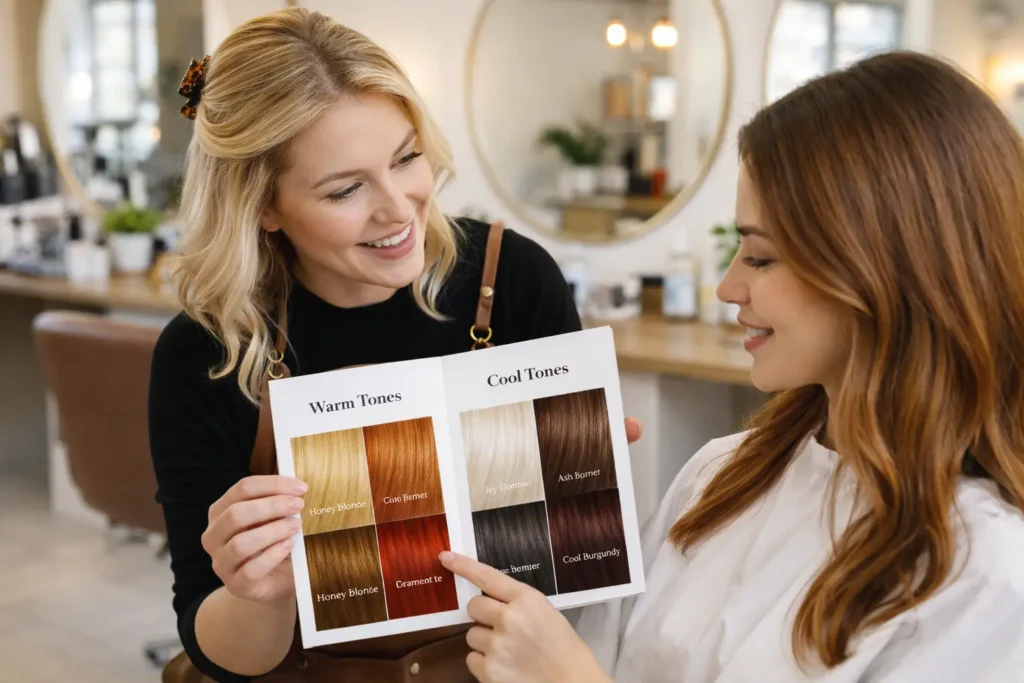
Choosing the right hair color works best with a clear consultation process.
Use Visual Aids
Show color swatches and photos of similar skin tones. This helps clients understand warm vs cool shades.
This is especially useful when clients struggle to see the difference between tones.
Discuss Maintenance
Explain upkeep needs. Cool tones may need toning, while warm brunettes may benefit from gloss treatments.
This helps clients choose a shade that fits their routine and lifestyle.
Address Concerns Early
If a client feels unsure, share examples and offer softer options like semi-permanent dyes or glosses.
These temporary choices can make the change feel more comfortable and natural.
When Cool and Warm Shades Work Best Together
Sometimes the most flattering hair color is not fully warm or fully cool. In my experience, blending both cool tones and warm tones can give a more balanced look that truly suits clients with mixed undertones and a more dynamic color effect.
Bronde Highlights
A great example is bronde highlights, a combination of blonde and brown with highlights that mix warm honey tones and cool beige hues. This creates a soft, natural, sun-kissed effect that feels easy and real.
Smoky Rose
Another option I often suggest is smoky rose, a trendy blend of cool pink and warm rose with a touch of gold. It’s perfect for clients looking for something playful yet sophisticated and balanced.
Warm Ash
For those who like a more muted style, warm ash is a neutral blend with an ashy blonde base and subtle hints of warmth. It’s ideal for clients who want an ashy look but still want it to feel soft, not too icy.
Common Mistakes to Avoid
- Choosing hair trends without checking your skin undertone
- Ignoring maintenance needs for cool or warm tones
- Over-processing dry or damaged hair
Common Mistakes to Avoid
A common mistake is ignoring undertone and choosing shades only because they are trendy. Another issue is over-processing damaged hair, which can ruin even the best shade choice. Skipping maintenance also leads to dullness, even with semi-permanent color.
Final Thoughts on Choosing the Right Shade
Hair Color by Skin Undertone: Warm vs Cool is about finding harmony, not forcing a trend. Once you understand whether you lean warm or cool, choosing hair shades becomes much easier.
Some people love contrast, while others prefer a softer match. Either way, knowing your undertone helps you choose a shade that feels natural, flattering, and truly you.
