


The 12 seasons system is a smart and modern way to understand how seasonal color analysis is organized. It begins with the four main seasons: Spring, Summer, Autumn, and Winter. Each one is divided into three sub-seasons, creating twelve color seasons in total and offering a more detailed framework than the basic four-season model.
This system explains how palettes are shaped by patterns like warmth, depth, softness, and brightness. Instead of treating color as random, the 12-season approach provides a clear structure for understanding how different seasonal groups relate to one another across the full spectrum of natural coloring.
If you want to figure out your own match, you can start with our guide on what is my color season here:
Quick Takeaway
The 12-season system helps you choose colors based on warmth, depth, and softness, so your clothes and makeup feel more natural and flattering.
All 12 Seasons Explained
The basic 4 colors:
- Spring
- Summer
- Autumn
- Winter
Each one has three sub-seasons.
Breakdown of 12 Seasons
Spring: Light Spring, True Spring, Bright Spring
Summer: Light Summer, True Summer, Soft Summer
Autumn: Soft Autumn, True Autumn, Deep Autumn
Winter: Deep Winter, True Winter, Bright Winter
Quick Table: Main Seasonal Traits
| Season | Temperature | Depth | Style Feel |
|---|---|---|---|
| Spring | Warm | Light | Bright and Clear |
| Summer | Cool | Light | Soft and Muted |
| Autumn | Warm | Deep | Rich and Earthy |
| Winter | Cool | Deep | Bold and High Contrast |
Difference between 4 seasons and 12 seasons
The 4-season system groups everyone into Spring, Summer, Autumn, or Winter, but it can feel too broad. Many people don’t fit perfectly into one season, which is why the 12 seasons system offers more detail.
The 12-season approach breaks each main season into three smaller sub-seasons, showing differences in brightness, softness, and depth. For example, Light Summer and Soft Summer are both Summer but need different shades to match natural features closely, giving clearer guidance in 12 color seasons.
Spring Seasons (Warm + Light + Bright)
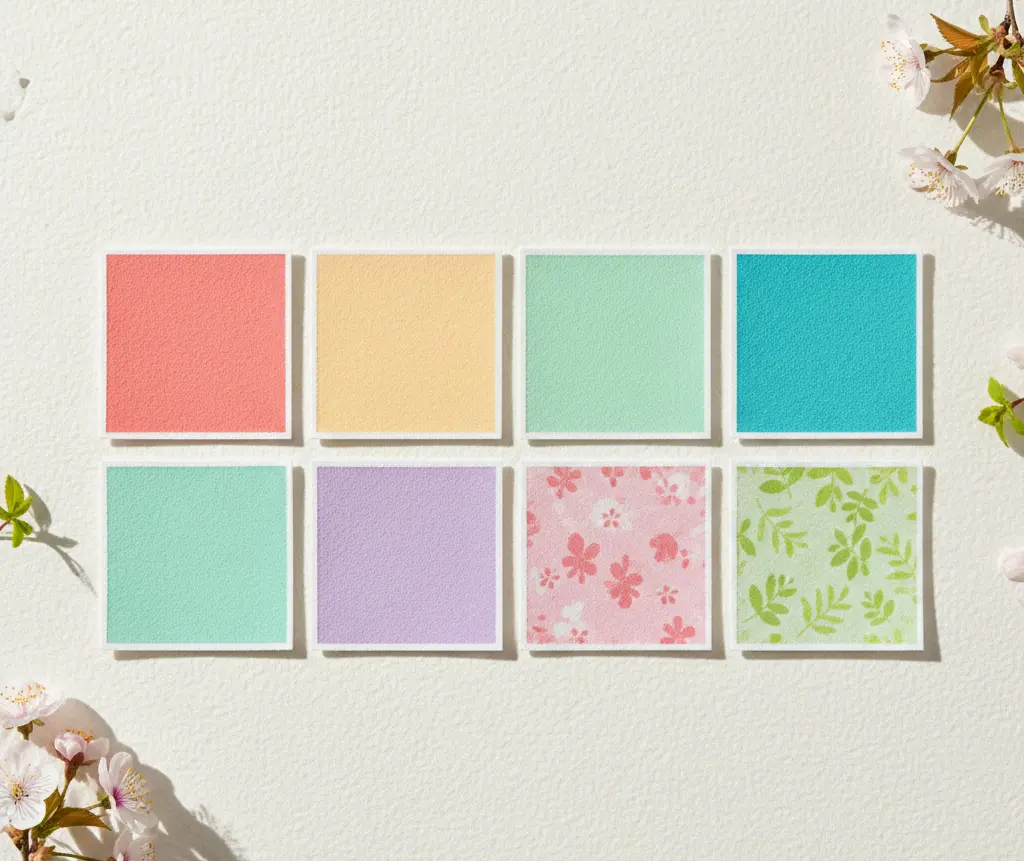
Spring is the season of renewal, filled with warm, fresh, blooming colors. its types appear bright, warm, and light, often with a glowing look.
Three divisions of Spring:
- Bright Spring
- True Spring
- Light Spring
Bright Spring has strong clearness and very saturated color. These shades are lively, almost rivalled only by Bright Winter.
True Spring is the warmest Spring season with no coolness at all. It cannot tolerate muted or cool shades.
Light Spring moves gently toward Summer. Its palette is softer and lighter, like delicate sweets or pastel warmth.
Summer Seasons (Cool + Light + Soft)
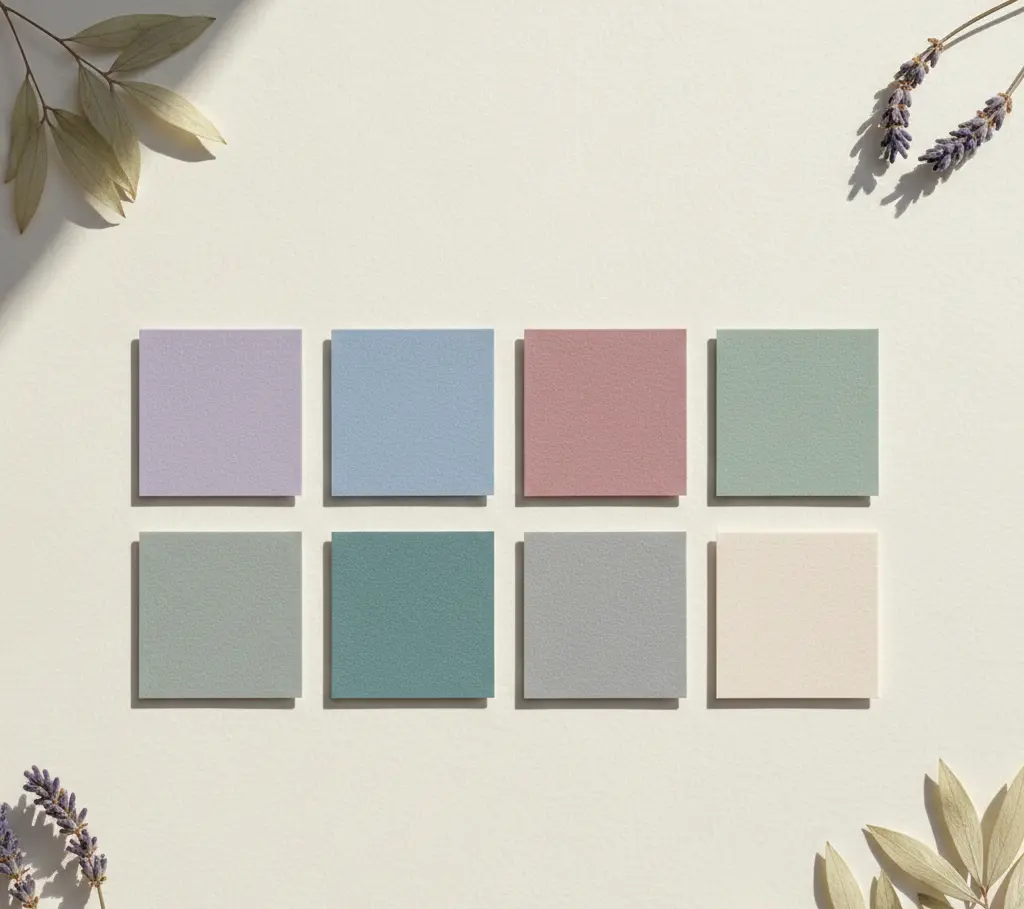
Summer has a calm, gentle feeling, like soft sunlight and cool breezes. Its features are:
- Cool
- Light
- Muted
Summer is divided into:
- Light Summer
- True Summer
- Soft Summer
Light Summer flows from Spring and stays neutral-cool with low contrast.
True Summer is the coolest Summer season, with soft coolness and no harsh contrast. Warm bright colors feel overpowering here.
Soft Summer is the most blended and muted, flowing into Autumn with greyed softness.
Autumn Seasons (Warm + Deep + Muted)
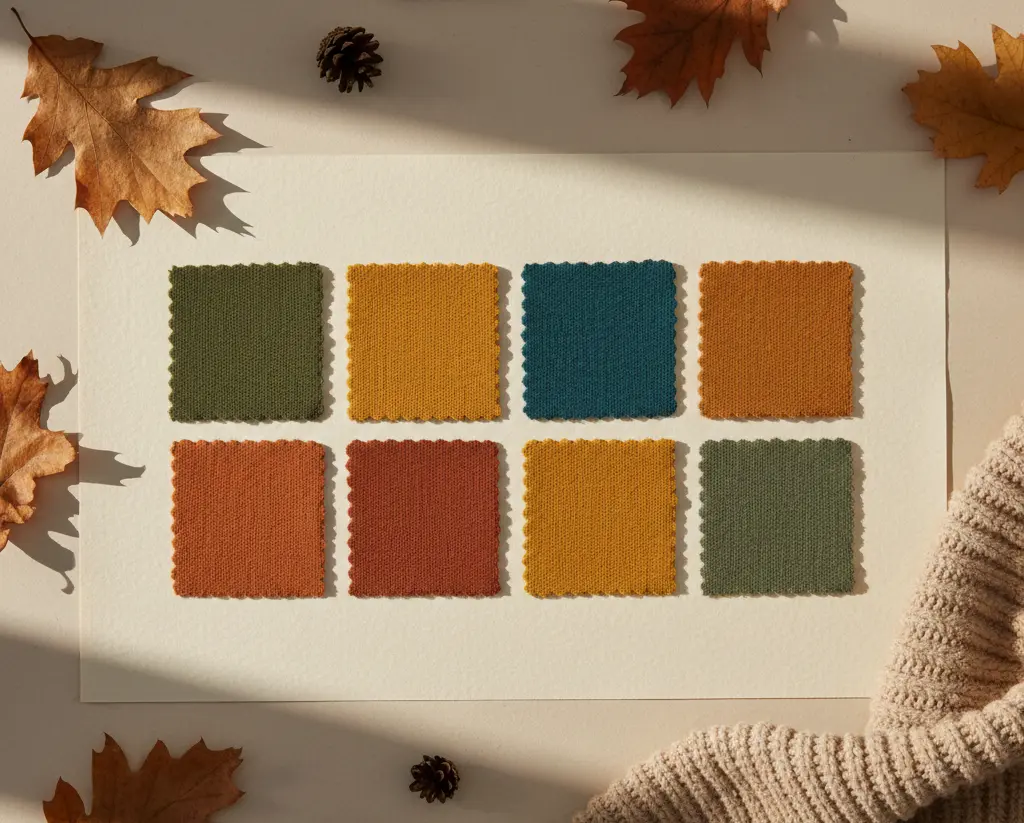
Autumn reflects harvest colors: hazy, rich, earthy, and warm. Its types appear:
- Warm
- Deep
- Muted
Autumn includes:
- Soft Autumn
- True Autumn
- Dark Autumn (Deep Autumn)
Soft Autumn flows from Summer and stays neutral-warm, with understated shades like wheat and rose.
True Autumn is richly warm, earthy, and feels like foliage rather than brightness.
Dark Autumn flows into Winter, adding depth, stronger contrast, and warm spice tones.
Winter Seasons (Cool + Deep + Bright)
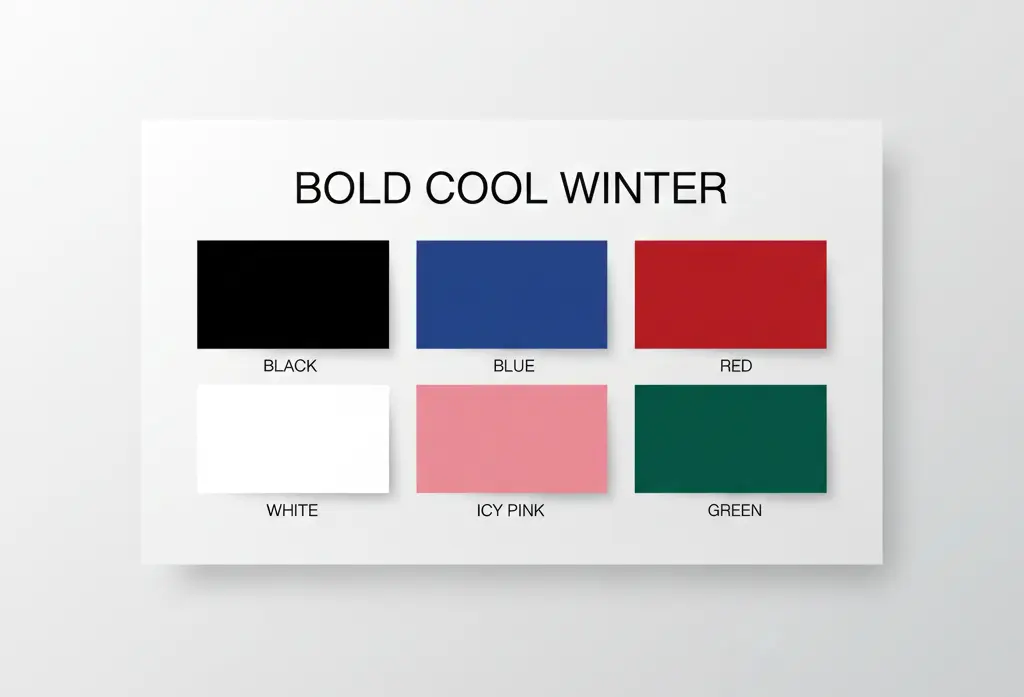
Winter is the season of high contrast, icy clarity, and bold color. Its features are:
- Cool
- Bright
- Dark
Winter is divided into:
- Dark Winter
- True Winter
- Bright Winter
Dark Winter flows from Autumn and has deep coloring with strong contrast.
True Winter is the coolest and most icy, needing crisp and clear shades.
Bright Winter flows toward Spring with intense, vibrant color and striking clarity.
How the 12 Seasons Flow Into Each Other
One of the most helpful parts of the 12-season system is that seasons blend naturally:
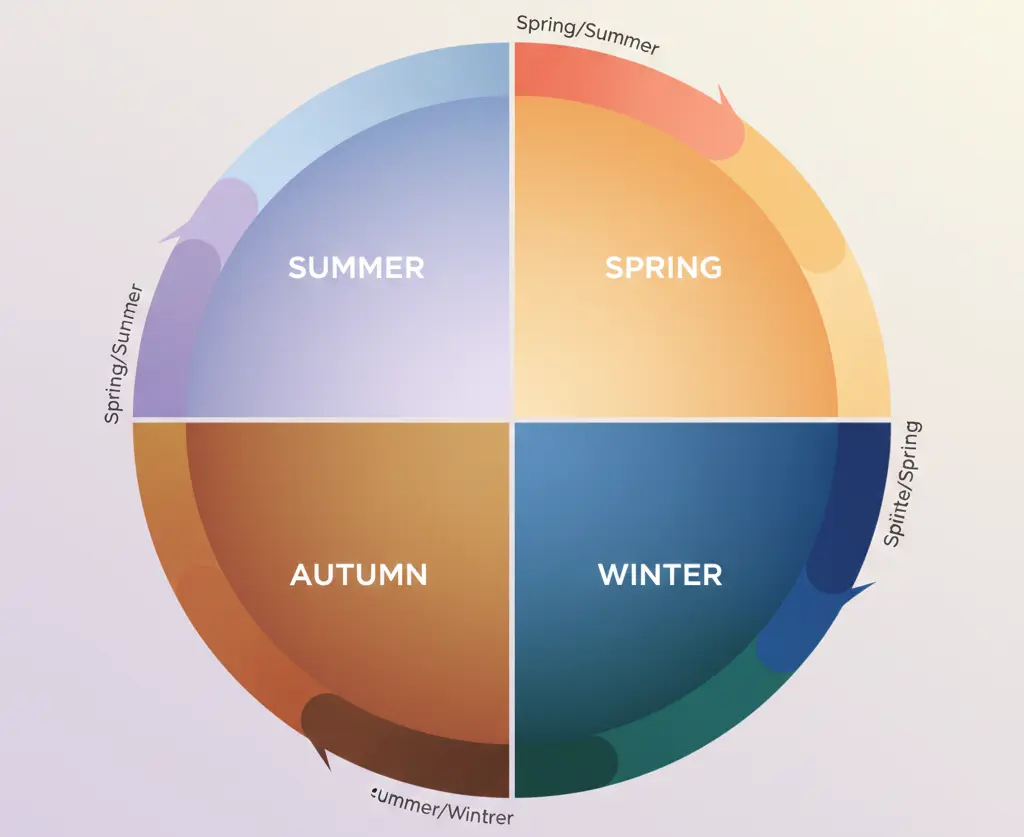
- Spring blends into Summer
- Summer blends into Autumn
- Autumn blends into Winter
- Winter blends back into Spring
That’s why some people fall between two seasons
For example:
- Light Spring and Light Summer share lightness
- Soft Summer and Soft Autumn share muted softness
- Deep Autumn and Deep Winter share depth
- Bright Winter and Bright Spring share clearness
These neighbor seasons shift gradually through small changes in warmth, softness, and contrast.
The 12 Seasonal Color Palettes
The 12-season system is a fresh take on classic seasonal color analysis. It connects hue, chroma, and value to real human coloring.
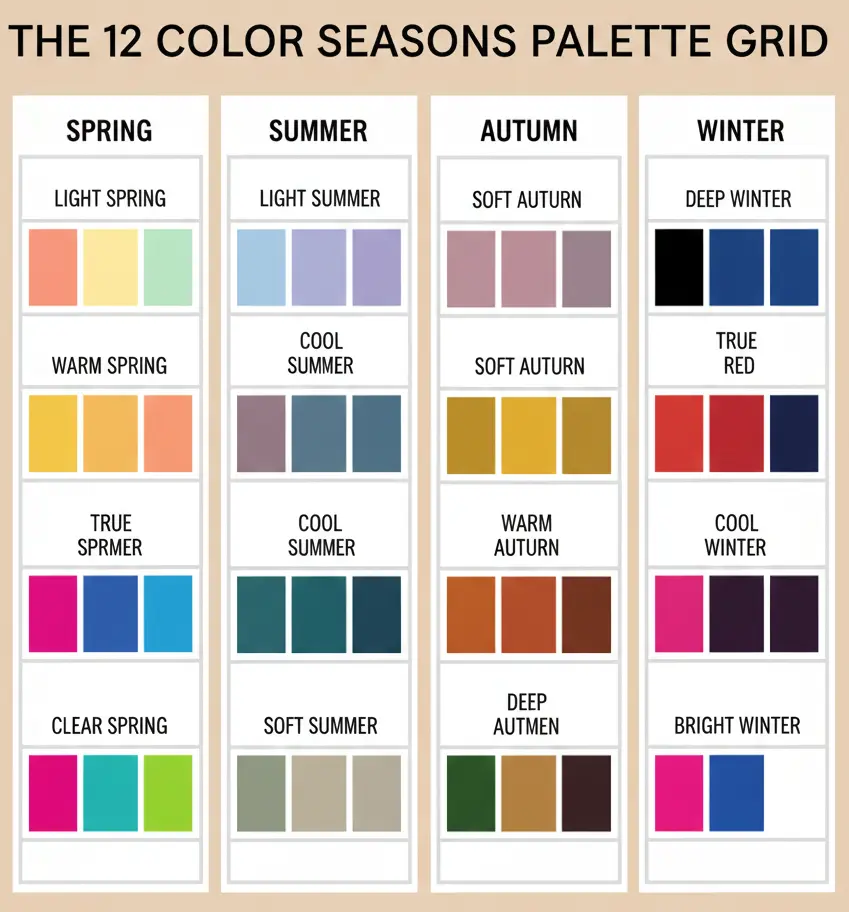
In my experience, most people have these attributes in their color seasons:
- One dominant trait
- Two secondary traits
This helps explain why saturated, soft, or muted shades work differently for each person. It can very on person to person, not fixed.
A helpful guide shows how each season shifts:
- Light Spring: peach, mint, coral
- True Spring: apricot, grass green, tomato
- Bright Spring: lime, hot coral, cyan
For more practical advice on wearing your palette daily, check out these seasonal color analysis tips.
Spring Family Palette Guide
Spring palettes have yellow undertones, medium-light depth, and vibrant clarity. Signature shades include butter yellow, tangerine, warm turquoise, and melon.
I often suggest simple kits like:
- Coral blush
- Apricot lip
- Cream and peach basics
- Tomato red statement pieces
Summer Family Palette Guide
Summer palettes are cool, soft, and muted. Shades include lavender, powder blue, mauve, and sage.
Soft contrast works best, paired with:
- Silver jewelry
- Matte finishes
- Rose and slate combinations
Autumn Family Palette Guide
Autumn is rich, earthy, warm, and muted. Key colors include camel, olive, mustard, terracotta, and forest green.
Textures like suede and brass details enhance Autumn tones beautifully.
Winter Family Palette Guide
Winter is bold, cool, and high-contrast. Signature colors include black, royal blue, cherry red, crisp white, and icy tones.
I love dramatic pairings like:
- Black and white
- Cobalt and fuchsia
- Red lips with jewel tones
Common Mistakes to Avoid
- Mixing up Soft Summer and Soft Autumn
- Thinking deep always means Winter
- Picking colors only based on personal preference
- Ignoring how seasons flow into each other
Final Thoughts
The 12 color seasons system makes it much easier to understand why some shades look natural on you while others feel off. It helps people notice clear color patterns like warmth, depth, softness, and brightness.
Because every season flows into the next, there is room for subtle differences while still keeping structure. Whether you fit Spring clarity, Summer softness, Autumn richness, or Winter contrast, the right palette helps your natural features stand out in the best way.
