

Most people have bought clothes they loved in the store but never wore again. The color looked good on the hanger, yet on the face it felt off. Skin looked dull. Dark circles showed more. Many end up sticking to safe colors like black or gray because they feel unsure. This confusion is common. People want to know the real differences between summer, winter, autumn, and spring so they can stop guessing and start choosing colors that work.
In my work testing colors on real people in natural light, one thing keeps showing up. The right colors make the skin look clear and bright. The wrong ones make the face look tired. When we compare outfits side by side, the change is easy to see. This guide is based on those real checks and results. It will help you see the differences between the four seasons and use simple steps to find the colors that suit you best.
Start Here: Fast Season Clues
Many readers are stuck between two seasons. Use these quick signals before reading deeper.
- If bright colors feel loud on your face, try softer seasons.
- If soft colors make you look tired, try clearer seasons.
- If gold jewelry improves your skin, you likely lean warm.
- If silver jewelry looks sharper, you likely lean cool.
- If black is your strongest neutral, you may be winter.
Always test colors near a window. Indoor lighting can mislead.
What seasonal color analysis means
Seasonal color analysis groups people into four color types: spring, summer, autumn, and winter. Each season has colors that match a person’s skin tone, hair, and eyes.
When you wear the right colors:
- Your skin looks fresh
- Your eyes stand out
- Your face looks brighter
When you wear the wrong colors:
- Skin looks dull
- Dark circles show more
- You look tired
That is why many people search for the differences between these four seasons.
Quick differences between all four seasons
| Season | Undertone | Best colors | Avoid | Overall look |
|---|---|---|---|---|
| Spring | Warm | Light, bright, clear | Dark, dusty | Fresh and light |
| Summer | Cool | Soft, cool, muted | Bright, warm | Calm and gentle |
| Autumn | Warm | Deep, earthy, rich | Icy, cool | Warm and deep |
| Winter | Cool | Bold, clear, high contrast | Dusty, warm | Sharp and strong |
This table gives a fast view of how the four seasons differ.
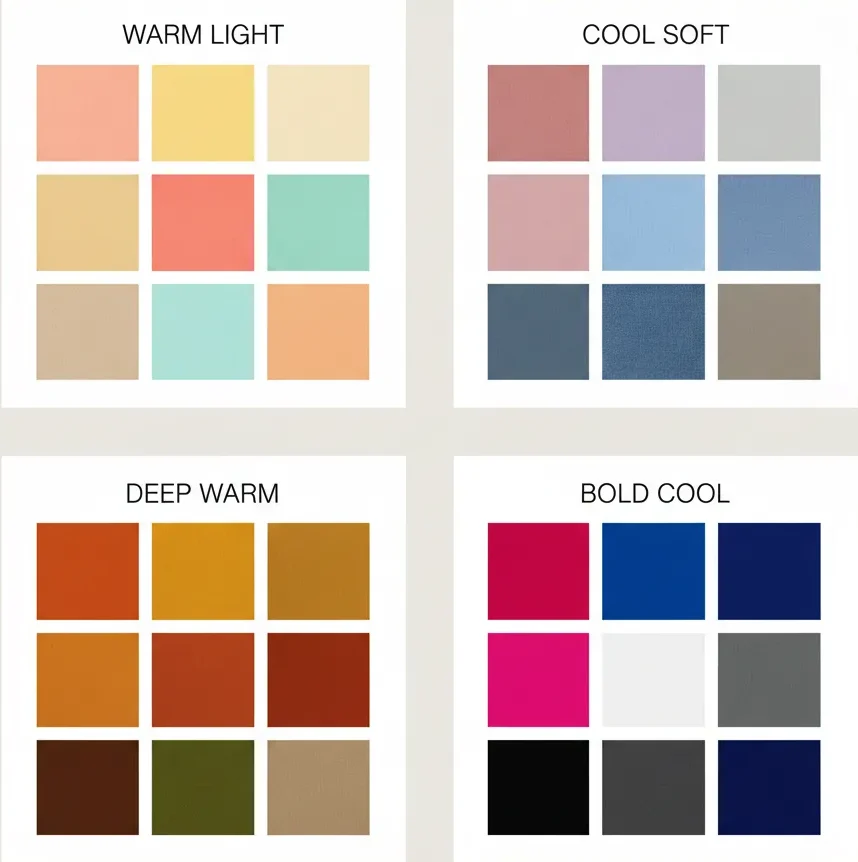
How to find your season
Most people feel stuck between two seasons. Use these simple checks.
Check your undertone
Look at your skin in daylight.
- Gold jewelry looks better → warm
- Silver jewelry looks better → cool
Warm usually fits spring or autumn.
Cool usually fits summer or winter.
This test gives a clue, not a final answer.
Check your contrast
Look at the difference between your hair, skin, and eyes.
- High contrast → winter
- Low contrast → summer
- Medium warm contrast → autumn
- Light clear contrast → spring
Check color softness
Hold bright and soft colors near your face.
- Bright looks better → spring or winter
- Soft looks better → summer or autumn
These tests help narrow it down.
Use This to Narrow It Down Fast
Hold two colors near your face in daylight. Compare them directly.
- Soft gray over black → look at summer
- Black over gray → look at winter
- Peach over cool pink → look at spring
- Olive over peach → look at autumn
The right color will make your skin look smoother and your eyes clearer.
Season vs Season Differences
Spring vs Summer
Both can look light, but they are different.
Spring is warm and bright.
Summer is cool and soft.
If peach and coral look great, you may be spring.
If dusty rose and soft blue look better, you may be summer.
Spring handles clear colors.
Summer needs muted colors.
Summer vs Winter
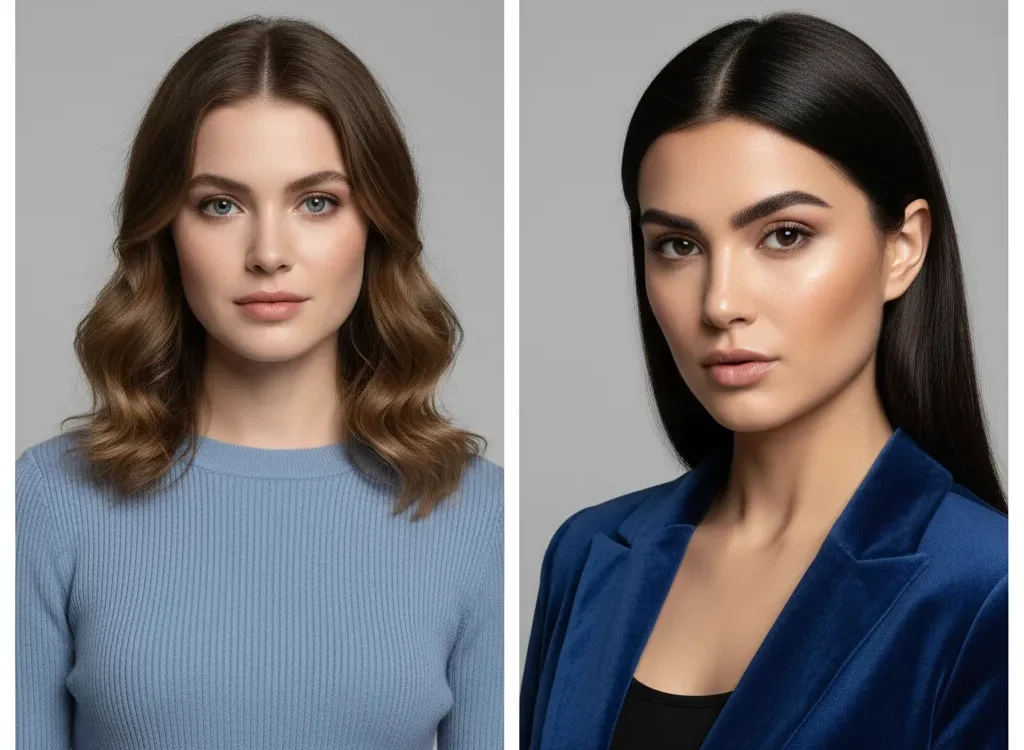
Both are cool seasons.
Summer looks best in soft shades.
Winter looks best in bold shades.
If black looks strong and sharp, you may be winter.
If black looks harsh, you may be summer.
Winter handles high contrast.
Summer looks better in low contrast.
Spring vs Autumn
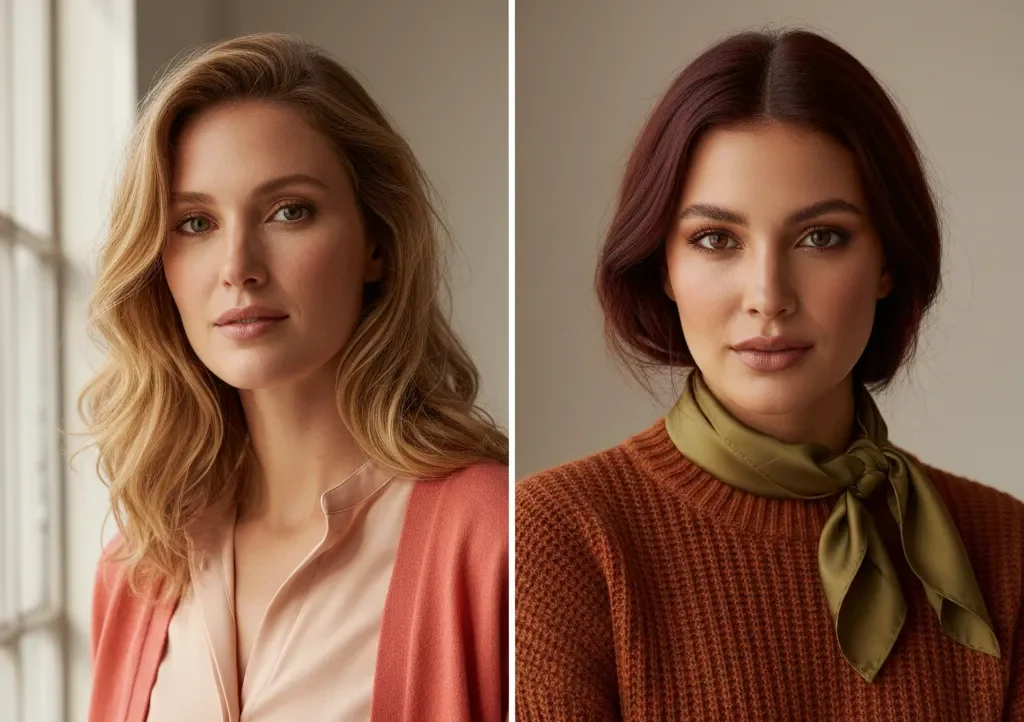
Both are warm seasons.
Spring is light and fresh.
Autumn is deep and rich.
If mustard and olive look better, you may be autumn.
If coral and warm pink look better, you may be spring.
Spring suits light warmth.
Autumn suits deep warmth.
Spring season
Spring types look best in warm and light colors. Their features often look fresh and bright.
Best colors
- Peach
- Coral
- Light green
- Warm pink
- Cream
Avoid
- Black
- Dark brown
- Dusty shades
Style tip
Choose light fabrics and fresh colors. Heavy dark colors can look too harsh.
Summer season
Summer types look best in cool and soft colors. Their features look gentle.
Best colors
- Dusty rose
- Soft blue
- Lavender
- Cool gray
- Soft navy
Avoid
- Bright orange
- Neon colors
- Very dark shades
Style tip
Muted colors work well. Sharp contrast can overpower the face.
Autumn season
Autumn types look best in warm and rich colors. Their features feel deep and warm.
Best colors
- Olive
- Rust
- Mustard
- Warm brown
- Deep green
Avoid
- Icy pastels
- Cool pink
- Pure white
Style tip
Earthy colors bring out warmth in the skin.
Winter season
Winter types look best in cool and bold colors. Their features often have a strong contrast.
Best colors
- Black
- White
- Jewel tones
- True red
- Cobalt blue
Avoid
- Warm beige
- Dusty tones
- Orange
Style tip
Strong contrast works well. Soft colors can look dull.
Step-by-Step Way to Confirm Your Season
Use this order.
Step 1: Check warm or cool
Look at jewelry and clothing colors.
Step 2: Check contrast
Notice how strong the difference is between hair, skin, and eyes.
3rd step : Test bright vs soft
Hold bright and dusty colors near your face.
4th Step: Try full outfits
Wear one full outfit in a season palette.
Your correct season will make your face look clearer.
Signs You Picked the Wrong Season
You may have the wrong season if:
- Your skin looks dull in your “best” colors
- Dark circles stand out
- Lip color looks too strong
- Clothes feel heavy on your face
Try another season close to yours.
Most common mix-ups:
- Summer and winter
- Spring and autumn
What Right vs Wrong Colors Look Like
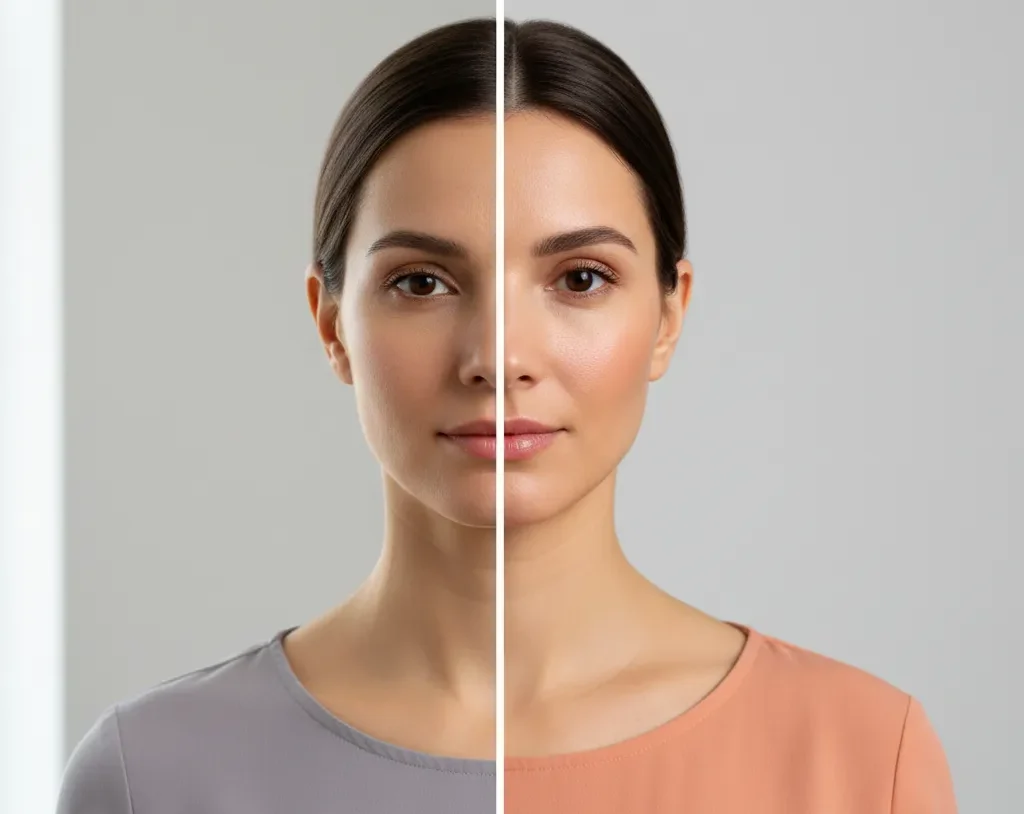
Right colors make:
- Skin look smoother
- Eyes look brighter
- Face look fresh
Wrong colors make:
- Shadows stronger
- Skin uneven
- Lips look faded
Stand in daylight to see the difference.
Wardrobe Building by Season
Best neutrals
Spring
Cream, light tan, soft navy
Summer
Soft gray, cool navy, dusty blue
Autumn
Brown, olive, warm beige
Winter
Black, white, charcoal
Build outfits around these neutrals first.
Use This While Shopping
Stores often group colors by trend, not by season. Use these checks.
- If most items look dusty on you, you may need clearer colors.
- If most items look too bright, you may need softer colors.
- If black is your best neutral, check winter.
- If brown is your best neutral, check autumn.
- If cream works better than white, check spring.
- If soft gray beats both, check summer.
Always hold clothes near your face, not your arm.
Jewelry Guide by Season
Spring
Gold and light warm metals
Summer
Silver and soft metals
Autumn
Antique gold and bronze
Winter
Silver and high-shine metal
Outfit ideas by season
Spring
Light denim
Peach top
Cream shoes
Summer
Soft blue shirt
Gray pants
Silver jewelry
Autumn
Olive jacket
Brown boots
Rust sweater
Winter
Black blazer
White shirt
Bold red lip
Simple Color Quiz
Answer yes or no.
- Do bright colors suit you?
- Does black look good on you?
- Do warm earthy colors suit you?
- Do soft dusty colors suit you?
Mostly yes to bright → spring or winter
Mostly yes to soft → summer or autumn
Mostly yes to warm → spring or autumn
Mostly yes to cool → summer or winter
Men’s Seasonal Color Guide
Men can use the same system.
Spring
Light blue shirts
Warm beige pants
Summer
Soft gray shirts
Cool blue denim
Autumn
Olive jackets
Brown shoes
Winter
Black jackets
White shirts
Beard and hair color also affect contrast.
Four seasons vs twelve seasons
Some systems split the four seasons into twelve types. This gives more detail like soft summer or deep winter. Beginners can start with the main four. That is enough for most people.
Common Mistakes
- Testing colors in yellow light
- Wearing makeup during tests
- Looking only at skin tone
- Ignoring contrast
- Using only online quizzes
Always test in daylight
Signs You May Be in the Wrong Season
- Your “best” colors make your face look flat in photos.
- Black feels heavy on your face.
- Beige or cream makes your skin look yellow.
- Bright colors overpower your features.
- Muted colors make you look tired.
Try the season next to yours. Most people sit close to another season.
How These Guidelines Are Tested
Seasonal color analysis works best when colors are tested in natural daylight and compared side by side near the face. The guidance here reflects repeated testing on different skin tones, hair shades, and contrast levels.
- Colors were compared directly near the face.
- Testing without heavy makeup gives clearer results.
- Skin clarity and shadow changes matter most.
Not Sure Which Color Season You Are?
Take our free 2-minute Color Season Quiz to discover whether you are most likely a Spring, Summer, Autumn, or Winter—and explore the colors that suit you best.
Conclusion
Once you know your season, getting dressed becomes easier. People who find their best colors often shop with more confidence and waste less money on clothes that never get worn. Even small changes, like switching from a harsh shade to a softer one, can make the face look more balanced and fresh. Testing colors near a window and comparing them side by side gives clear answers.
From years of checking colors on different skin tones and features, the pattern stays the same. The right palette brings out the eyes and smooths the look of the skin. The wrong palette adds shadows and makes features look flat. Use the steps in this guide and trust what you see in natural light. Once you confirm your season, building outfits and choosing colors becomes simple and consistent.
