

If you have ever looked at brown hair color ideas and felt confused, you are not alone. A lot of people want a brown shade that looks rich, flattering, and natural, but many end up with hair that feels too flat, too red, too dark, or just not quite right for their skin tone. That is exactly why chestnut brown gets so much attention. When it is done well, it can make the hair look warmer, softer, shinier, and more polished without feeling too bold or hard to wear.
From what I have seen in beauty shade research and color-matching advice, the biggest mistake people make is choosing any chestnut brown color instead of the right one for their features. The best result depends on your skin tone, undertone, eye color, natural base, and the amount of warmth you want. This guide will help you understand what chestnut brown hair really looks like, who it suits best, how it compares to similar hair shades, and how to choose a version that actually works for you.
Quick Takeaway
Chestnut brown hair is a warm, rich brunette shade that can look soft, glossy, and very flattering when matched to your features.
- Best for: people who want a natural-looking but richer brunette shade
- Works well on: warm undertones, many neutral tones, and most Autumn color seasons
- Looks like: a brown base with soft golden, copper, or reddish warmth
- Good choice if you want: more shine, depth, warmth, and dimension without going too bold
- Best tip: choose the right version of chestnut brown for your skin tone, undertone, and natural base
What Is Chestnut Brown Hair?
This is a warm brown hair color with soft red, golden, or copper tones in it. It is usually deeper than light brown but softer than very dark brown.
It often looks:
- warm
- glossy
- rich
- natural
- softly dimensional
That is what makes this shade so flattering. It is not flat or dull. It has warmth and life in it.
Many people choose this shade because it gives them a fresh look without changing their hair too much.
Chestnut brown usually looks:
- warmer than chocolate brown
- less red than auburn
- softer than black hair
- more glowing than a plain brunette
So if you want a color that feels natural but is still pretty, chestnut brown is a strong choice.
How Rare Is Chestnut Hair?
Natural chestnut brown hair is not very rare, but it is still very loved because it looks rich and balanced.
A lot of people are born with medium or dark brown hair, but true chestnut brown usually has a special warmth to it. That soft, warm tone is what makes it stand out.
In salon color, this shade is also very popular because it works well on many people and looks polished without feeling too dramatic.
So while it is not rare in a strict way, it still feels special because it looks:
- healthy
- expensive
- glossy
- easy to wear
How Do You Get Chestnut Hair?
You can get this hair color in a salon or at home, but the result depends a lot on your starting hair color.
Some people can get this shade very easily. Others may need a little lift or tone correction first.
If your hair is already:
- light brown → chestnut brown is usually easy to get
- medium brown → chestnut tones often show well
- dark brown → you may need more warmth added
- black hair → the chestnut tone may look subtle unless lightened
- bleached hair → the shade may need careful toning so it does not turn too red or too orange
You can ask for:
- all-over chestnut brown color
- chestnut gloss
- chestnut balayage
- chestnut brown highlights
- soft warm brunette with chestnut tones
If you want the best result, bring photo examples and ask your stylist if you want your hair to look:
- warm
- neutral
- soft
- rich
- more golden
- more copper
- less red
That helps a lot.
What Does Chestnut Brown Look Like on Different Base Hair Colors?
This color can look different depending on your starting hair color. This is very important because the same dye does not look the same on everyone.
Your natural or current hair color affects:
- How warm the result looks
- How visible the chestnut tone will be
- Whether you may need lightning first
On black hair
On black hair, it may look more subtle at first. In indoor light, it can still look dark, but in sunlight, you may notice more warm brown and soft reddish tones.
If you want a more visible chestnut result on black hair, you may need a little lifting first.
On dark brown hair
This is one of the best starting points for this hair color. The warmth usually shows nicely without making the hair look too light.
Dark brown hair often turns into a rich, glossy chestnut with soft warmth and depth.
On medium brown hair
Medium brown hair usually takes this shade very well. The warm tones often show clearly, and the result can look natural but more dimensional.
This is a great base if you want the chestnut to look noticeable without being too dramatic.
On light brown hair
On light brown hair, chestnut brown can look softer, warmer, and a little brighter. It may also show more golden or copper tones depending on the formula.
If you want the result to stay balanced, it helps to avoid tones that are too orange or too red.
On bleached or porous hair
Bleached or very porous hair can pull warmer than expected. That means chestnut brown may fade faster or look more red, copper, or orange over time.
In this case, the shade usually needs more careful toning and maintenance.
What Skin Tone Suits Chestnut Brown Hair?
This is one of the biggest reasons people search for this shade.
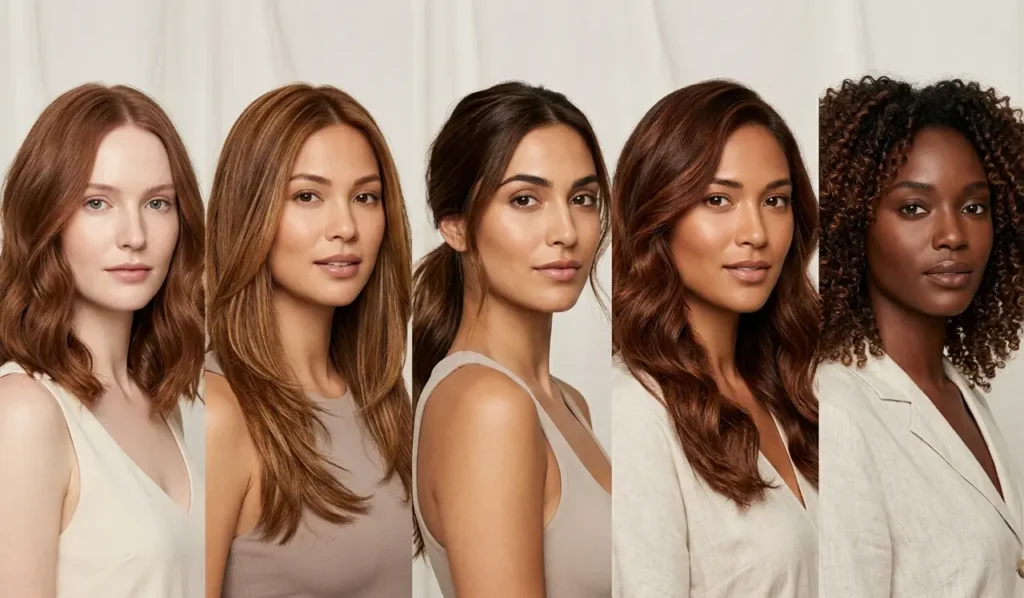
The good news is that chestnut brown can suit many skin tones. The key is choosing the right version of it.
Not every chestnut brown looks the same. Some are warmer and brighter. Some are softer and more neutral.
That means the best version for you depends on your undertone and how much warmth looks good on you.
Chestnut brown often looks beautiful on:
- fair skin
- light-medium skin
- olive skin
- tan skin
- deep skin
But the exact shade should match your features.
Warm Undertones
If you have warm undertones, chestnut brown often looks very flattering on you.
Warm undertones usually look best in shades with:
- golden warmth
- copper warmth
- caramel softness
- rich warm brown depth
A warmer version can make your skin look more glowing and alive.
Warm chestnut brown often works well if:
- Gold jewelry looks better on you
- Your skin has a yellow, golden, peach, or olive warmth
- Warm makeup shades look better than cool ones
Best warm chestnut options:
- golden chestnut brown
- copper chestnut brown
- rich autumn chestnut
- warm chestnut brunette
These shades often look soft, healthy, and flattering.
Cool Undertones
If you have cool undertones, you can still wear chestnut brown, but you usually need a softer or more balanced version.
Some chestnut shades can look too orange or too red on cool-toned skin. That is why it helps to choose a version that feels more neutral.
A softer chestnut brown often looks better if you have cool undertones.
Cooler-friendly chestnut usually looks:
- less orange
- less copper
- more muted
- more balanced
- more soft brunette than fiery brown
Best chestnut options for cool undertones:
- soft chestnut brown
- neutral chestnut brunette
- muted chestnut brown
- cool-leaning chestnut brown
If your features are softer and cooler, avoid chestnut shades that are too bright or too red.
Warm vs Cool Chestnut Brown: What’s the Difference?
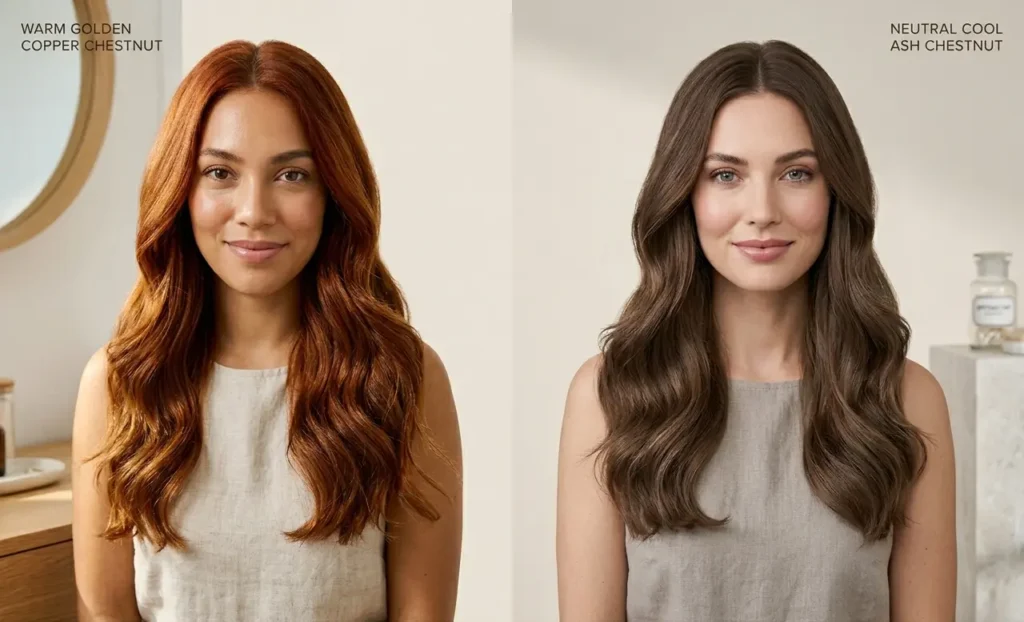
Not all chestnut brown looks the same. Some versions are warmer and richer, while others are softer and more balanced.
This is why one chestnut shade can look amazing on one person and too strong on another.
Warm chestnut brown
Warm chestnut brown usually has:
- golden tones
- copper tones
- soft reddish warmth
- more glow, and richness
This version often suits people with:
- warm undertones
- Autumn coloring
- golden or olive warmth in the skin
Warm chestnut usually feels more radiant and cozy.
Cool or softer chestnut brown
Cooler or softer chestnut brown usually has:
- less orange
- less copper
- more muted warmth
- a more balanced brunette look
This version often suits people who want:
- a more natural finish
- less visible redness
- a softer and less fiery result
Neutral chestnut brown
Neutral chestnut brown sits in the middle. It is not too golden and not too red.
This is often the easiest option if you want a chestnut look that feels wearable and balanced.
Simple rule
If you want:
- more glow and warmth → go warmer
- less red and softer tone → go cooler or more neutral
Choosing the right warmth level can make this color look much more flattering.
What Eye Color Goes With Chestnut Brown Hair?
This hair color looks beautiful with many eye colors because it adds warmth and depth around the face.
It often works especially well with:
Brown eyes
Chestnut brown can make brown eyes look richer and deeper.
Hazel eyes
The warm tones in this shade can bring out the gold and green tones in hazel eyes.
Green eyes
This is one of the prettiest pairings. Chestnut tones can make green eyes stand out more.
Warm blue eyes
A softer chestnut shade can create a gentle contrast and make blue eyes pop in a natural way.
Best part
This color does not usually look harsh. It tends to frame the eyes softly, which is why it looks so wearable.
Chestnut Brown and Color Seasons
If you use seasonal color analysis, this section matters a lot.
Chestnut brown is usually best in the Autumn family, but the exact version matters.
Some chestnut shades are:
- soft and muted
- rich and warm
- deep and dramatic
That is why one chestnut brown can look amazing on one person and too strong on someone else.
Autumn Color Season
In general, chestnut brown fits Autumn better than most other seasons because it has warmth and richness.
Autumn coloring usually looks best in:
- earthy tones
- warm browns
- golden warmth
- rich natural shades
That makes this color a very natural fit.
Soft Autumn
If you are Soft Autumn, your best chestnut brown is usually softer and more muted.
Avoid shades that are:
- too dark
- too red
- too intense
Better choices:
- soft chestnut brown
- muted warm brunette
- light chestnut brown
- blended chestnut brown
Soft Autumn usually looks best in shades that feel gentle, creamy, and natural.
True Autumn
If you are True Autumn, you can usually wear warmer and richer chestnut brown very well.
Your best shades often include:
- golden chestnut
- warm copper chestnut
- rich warm brunette
- classic chestnut brown
This season often looks amazing in chestnut because the warmth feels natural and flattering.
Dark Autumn
If you are Dark Autumn, deeper chestnut brown often works beautifully.
Your best shades usually have:
- depth
- richness
- warmth
- stronger contrast
Great options:
- dark chestnut brown
- espresso chestnut
- deep warm brunette
- rich chestnut brown
These shades often look polished and powerful without feeling too harsh.
What Is the Difference Between Chocolate Brown and Chestnut Brown Hair?
This is a very common question.
Chocolate brown and chestnut brown can look similar at first, but they are not the same.
Chestnut brown usually looks:
- warmer
- a little lighter in tone
- softer
- more golden, coppery, or reddish
Chocolate brown usually looks:
- deeper
- cooler or more neutral
- smoother and darker
- less warm
Simple way to think about it
If chocolate brown looks like a rich dark brunette, chestnut brown looks like a warm, glowing brunette.
If you want:
- more warmth → choose chestnut brown
- more depth and smooth richness → choose chocolate brown
Is Chestnut Hair Ginger?
No, chestnut brown is not the same as ginger hair.
This confuses a lot of people because chestnut brown can have red or copper warmth in it.
But there is still a big difference.
Chestnut brown:
- has a brown base
- looks softer
- feels more brunette
Ginger hair:
- has a stronger orange or red base
- looks more fiery
- feels more red than brown
So if you are worried that this shade will make you look too red, that usually depends on how warm the formula is.
A soft or balanced chestnut can still look very brunette.
What Is the Difference Between Auburn and Chestnut Hair Color?
Auburn and chestnut brown are also easy to mix up, but they are different.
Chestnut brown:
- is more brown than red
- looks softer and more natural
- often feels easier to wear every day
Auburn hair:
- is more red than brown
- looks bolder
- feels more noticeable and warm
Simple rule
If you want a brown hair color with warmth, choose chestnut brown.
If you want a reddish-brown hair color with more impact, auburn may suit you better.
That is why this shade is often a safer pick for people who want warmth without going too red.
Chestnut Brown vs Similar Hair Colors
Best Chestnut Brown Hair Shades to Try
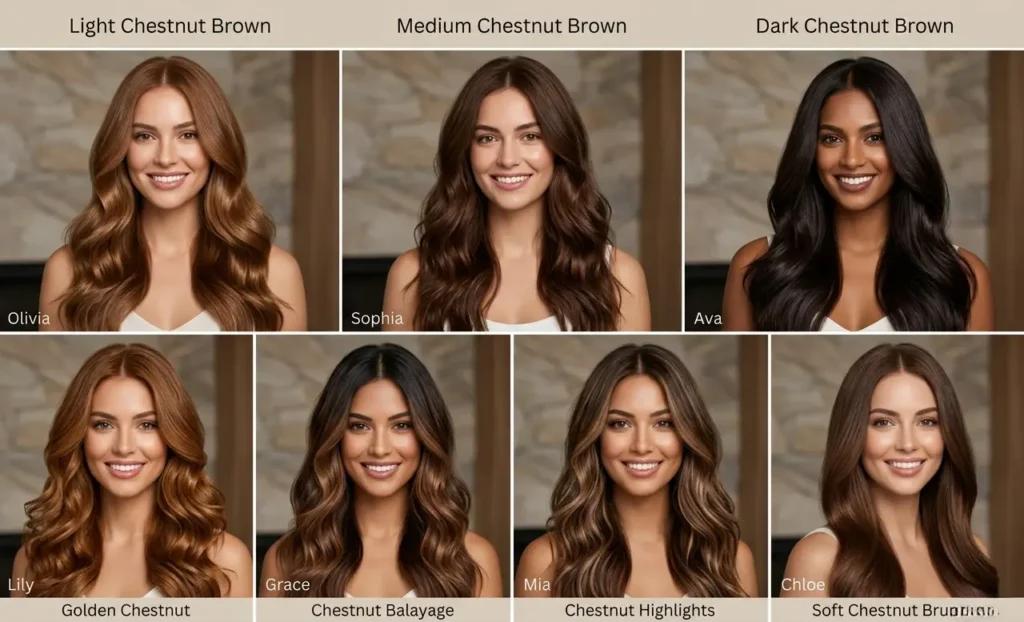
One of the best things about chestnut brown is that it comes in many beautiful versions. Some look softer and more natural, while others look richer and warmer.
Here are some popular chestnut brown hair color ideas to consider.
Light chestnut brown
This version looks softer and a little brighter. It works well if you want a natural, warm brunette look without going too dark.
Medium chestnut brown
This is a classic option. It usually gives the perfect balance of warmth, depth, and shine.
Dark chestnut brown
This shade looks deeper and richer. It is a great choice if you want your hair to feel polished and elegant.
Golden chestnut brown
This version has more warmth and glow. It often works very well on warm undertones.
Soft chestnut brunette
This is a gentler version of chestnut brown. It is a good option if you want the shade to look natural and not too red.
Chestnut brown with highlights
Highlights can add movement and dimension. This is a good choice if you want your hair to look lighter and more textured.
Chestnut balayage
Chestnut balayage gives a softer, blended finish. It is a nice option if you want warmth without a full all-over color.
Chestnut gloss
A chestnut gloss can add shine and tone without making the color feel too heavy. This is a good option if you want a low-commitment refresh.
The best version for you depends on how soft, warm, rich, or visible you want the color to look.
Best Chestnut Brown Hair by Goal
The best version of chestnut brown for you also depends on what kind of result you want. Some versions look softer and more natural, while others give more warmth or depth.
Here are a few easy ways to choose the right shade based on your goal.
Best chestnut brown for a natural look
If you want your hair to look soft, easy, and natural, go for:
- soft chestnut brunette
- medium chestnut brown
- neutral chestnut brown
These shades usually blend well and do not look too bold.
Best chestnut brown for more warmth
If you want your hair to look warmer and more glowing, try:
- golden chestnut brown
- copper chestnut brown
- rich warm chestnut
These shades can make the hair look brighter and more radiant.
Best chestnut brown for dark hair
If your hair is naturally dark and you want the change to still show, good options include:
- dark chestnut brown
- rich chestnut brunette
- chestnut balayage
These versions can add visible warmth and shine without taking your hair too light.
Best chestnut brown for low maintenance
If you want a shade that is easier to maintain, try:
- medium chestnut brown
- soft chestnut brunette
- chestnut gloss
These options often grow out more softly and usually need less upkeep than brighter or lighter hair colors.
Best chestnut brown for more dimension
If you want your hair to look fuller, shinier, and more textured, try:
- chestnut brown with highlights
- chestnut balayage
- layered chestnut tones
These options can make the hair look more lively and less flat.
The best chestnut brown shade is the one that matches your features, your comfort level, and how much upkeep you want.
Does Chestnut Brown Hair Cover Grey Hair?
Yes, chestnut brown can be a very good choice for grey coverage.
This is one reason many people choose it.
Why it works well:
- It has enough depth
- It often blends grays better than very light shades
- The warm tones can help the hair look fuller and richer
A well-done chestnut brown color can make grey hair look softer and more blended, especially if the formula is matched well to your natural base.
For better grey blending, many people like:
- medium chestnut brown
- dark chestnut brown
- warm chestnut brunette
- chestnut brown with soft highlights
If you have a lot of grey hair, a stylist can help you choose the best version for coverage and maintenance.
Does Chestnut Brown Hair Need Bleach?
This depends on your starting hair color.
Some people can get chestnut brown without bleach, while others may need a little lightening first to make the warm tones show better.
You may not need bleach if:
- Your hair is light brown
- Your hair is medium brown
- Your hair is already a warm brunette shade
You may need some lifting if:
- Your hair is very dark
- Your hair is black
- Your hair has old dye buildup
- You want the chestnut tone to show clearly
Important to know
If your hair is already light or porous, chestnut brown may be too warm if it is not toned properly.
That is why the best result depends on:
- your base color
- your hair history
- how warm you want the final shade to look
So the answer is simple:
Chestnut brown does not always need bleach, but sometimes it needs a little help to show properly.
What to Ask Your Stylist
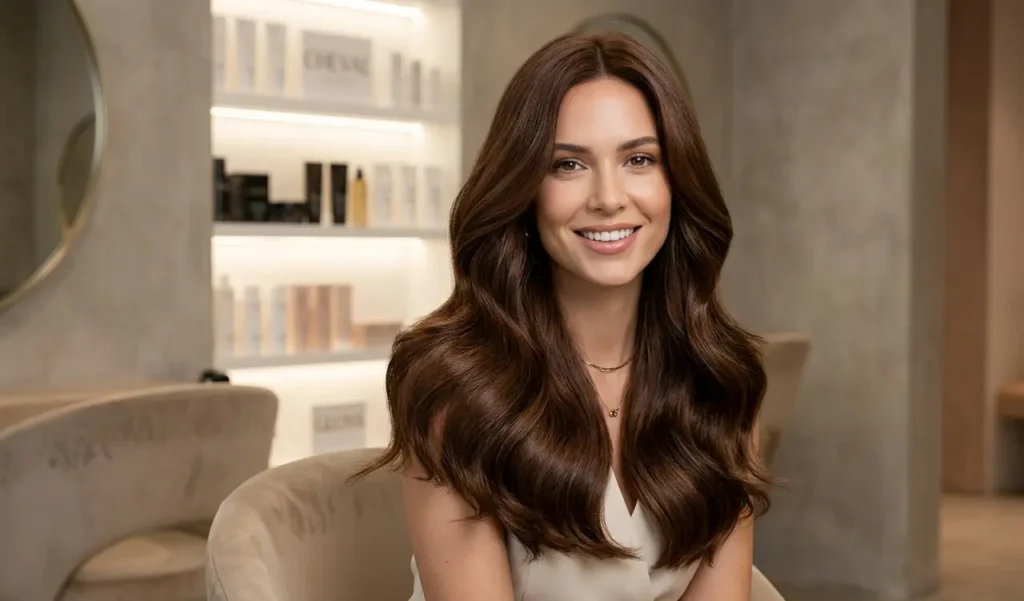
If you want this shade, it helps to be specific at the salon. Saying only “brown hair” can lead to a result that is too flat, too dark, or too warm.
It helps to tell your stylist:
- you want a chestnut brown shade
- you want it to look warm, soft, rich, or balanced
- you do or do not want visible red tones
- you want something natural or more dimensional
You can also ask for:
- all-over chestnut brown
- chestnut gloss
- chestnut balayage
- chestnut brown with highlights
- soft warm brunette with chestnut tones
Best tip
Bring photo examples and tell your stylist what you like most about them.
For example:
- “I like how warm this looks.”
- “I want this, but less red.”
- “I want this, but softer.”
- “I want this shade to still look natural.”
This makes it much easier to get a flattering result that suits your features and your comfort level.
Is Chestnut Brown Hair Hard to Maintain?
Chestnut brown is usually easier to maintain than blonde, bright red, or high-contrast color changes.
That is one reason it is so popular.
But it still needs some care if you want it to stay glossy and rich.
Chestnut brown can fade:
- warmer
- duller
- slightly redder
- slightly brassy
This depends on:
- your starting hair color
- how often do you wash it
- heat styling
- sun exposure
- your hair products
So no, this shade is not very hard to maintain, but it does need support if you want it to stay fresh.
Hair Washing
Hair washing affects how long your color lasts.
Helpful tips:
- wash less often if possible
- use color-safe shampoo
- avoid harsh cleansers
- rinse with cooler water if you can
This helps the color stay richer for longer.
If you wash your hair too often, the shade may fade faster and lose shine.
Styling and Finishing
Heat and styling can also change how your hair looks over time.
Helpful tips:
- use heat protectant
- avoid too much heat every day
- use shine products lightly
- get a gloss if your hair starts to look dull
A gloss can help chestnut brown look:
- richer
- smoother
- shinier
- fresher
This is one of the easiest ways to keep the shade looking expensive.
Conclusion
This hair may sound like a simple brunette shade, but the right version can make a big difference. It can look soft, rich, glossy, warm, and very flattering when it matches your features well. From a beauty guidance point of view, this shade works best when you treat it like a custom color choice instead of just a trend.
The most flattering version of chestnut brown usually depends on your skin tone, undertone, eye color, natural hair base, and how much warmth or maintenance you are comfortable with. If you choose the right chestnut tone for your features, it can give your hair more depth, shine, and softness while still feeling easy to wear. So if you want a brunette shade that feels prettier than basic brown but easier than red or blonde, chestnut brown is a very strong option.

