

Sometimes your hair looks fine, but it still feels like something is missing. That is often the perfect time for a fresh change. In my work with hair color shade guides, I’ve seen how switching your shade can completely refresh your look.
Your personal style matters, but your complexion and natural hair color matter just as much. Whether you want blonde, prefer rich brown tones, or feel curious about red or black, it helps to slow down and choose wisely.
Hair color charts can feel confusing at first. Many people stand in the store unsure about the letters and numbers on the boxes. But once you understand the basics, choosing the right shade becomes much easier.
Hair Color Levels Made Simple
These levels help you stay realistic with your shade change, because your base level controls how light or dark you can safely go. I always start by identifying the level before picking a new look.
Hair color levels usually run from:
- Level 1 (Jet Black)
to - Level 10 (Lightest Blonde)
Between them are dark, medium, and light shades of brown and blonde.
Most professionals recommend not going more than two levels lighter or darker in one session, especially at home. Lightening hair often requires bleaching, while going darker is usually easier with box dye.
Levels tell you how light or dark the shade is. Tones tell you whether it is warm or cool.
Quick Hair Color Level Chart (1–10)
Hair color levels help you quickly understand how dark or light a shade will look before choosing blonde, brown, red, or black.
| Level Range | Shade Family |
|---|---|
| 1–2 | Jet Black / Deep Black |
| 3–5 | Dark Brown Shades |
| 6–7 | Light Brown / Dark Blonde |
| 8–10 | Blonde Shade Range |
Hair Tones in Shade Codes
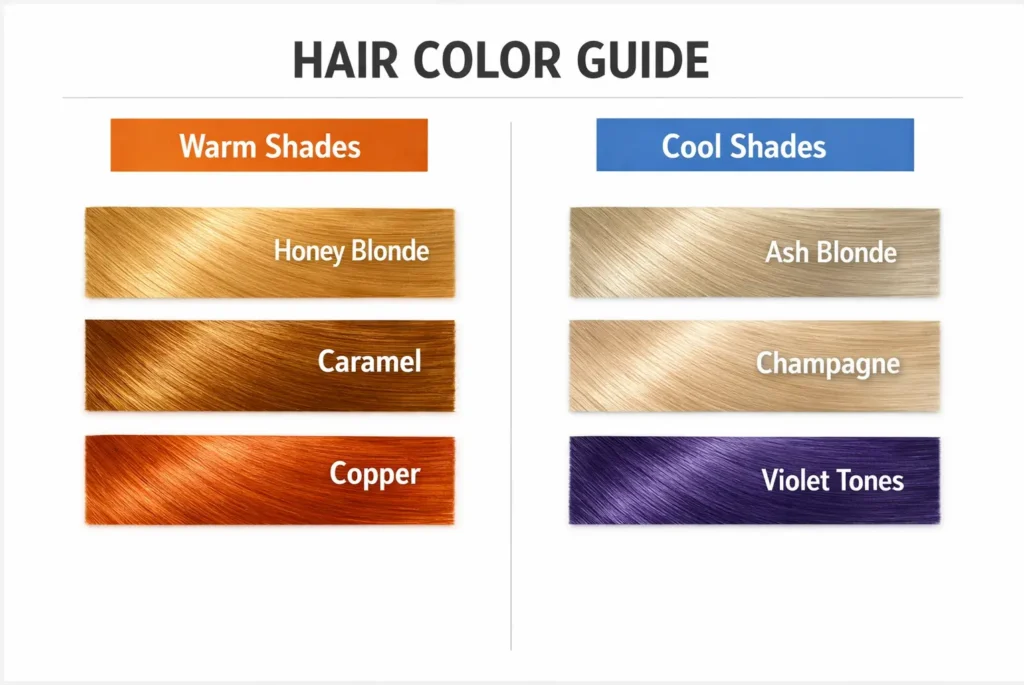
The tone part of the code tells you if the color will lean warm or cool, and that small detail can change the final result. Checking tones helps avoid brassy or overly ashy surprises.
In most shade systems:
- The first number shows the level
- The letters or second number show the tone
Tones help you understand whether the shade has hints of:
- gold
- copper
- red
- ash
- violet
- mahogany
Every natural hair color contains a mix of black, brown, yellow, and red pigments. That is why unwanted warmth often appears when hair is lightened.
Example: 7NCR is a Natural Copper Red, where:
- C = copper
- A = ash
- R = red
- M = mahogany
Warm tones cancel cool tones and cool tones cancel warmth. This is also why blondes use purple shampoo to reduce yellow tones.
Warm vs Cool Hair Tone Cheat Sheet
Hair tones decide whether blonde, brown, red, or black will look warmer or cooler on your complexion.
- Warm tones: golden, honey, copper, caramel
- Cool tones: ash, violet, champagne, smoky beige
- Neutral tones: balanced shades like coffee brown or beige blonde
The 4 Main Hair Colors Explained Simply
Even though brands use extra codes, most shades still come back to four main groups. Once you know this, charts feel much easier to read.
Even though brands add many extra names and codes, most shades fall into four main groups:
- Blonde
- Brown
- Black
- Red
Let’s break down each one in a clear way.
Blonde Hair Color Chart (Finding Your Best Match)
Blonde shades can shift your complexion quickly, so undertone matching matters more than people expect. Neutral, icy, and darker blondes all give different results.
Blonde shades depend heavily on undertone.
Cool or pale skin
Ashy blondes help reduce redness, such as:
- silver blonde
- platinum blonde
- champagne blonde
- mushroom blonde
- ash blonde
Warm or olive skin
Golden blondes can brighten the face, such as:
- honey blonde
- caramel blonde
- strawberry blonde
- golden blonde
A simple trick: check your wrist veins.
- Blue/purple veins → cool undertone
- Green veins → warm undertone
Featured Blonde Shades
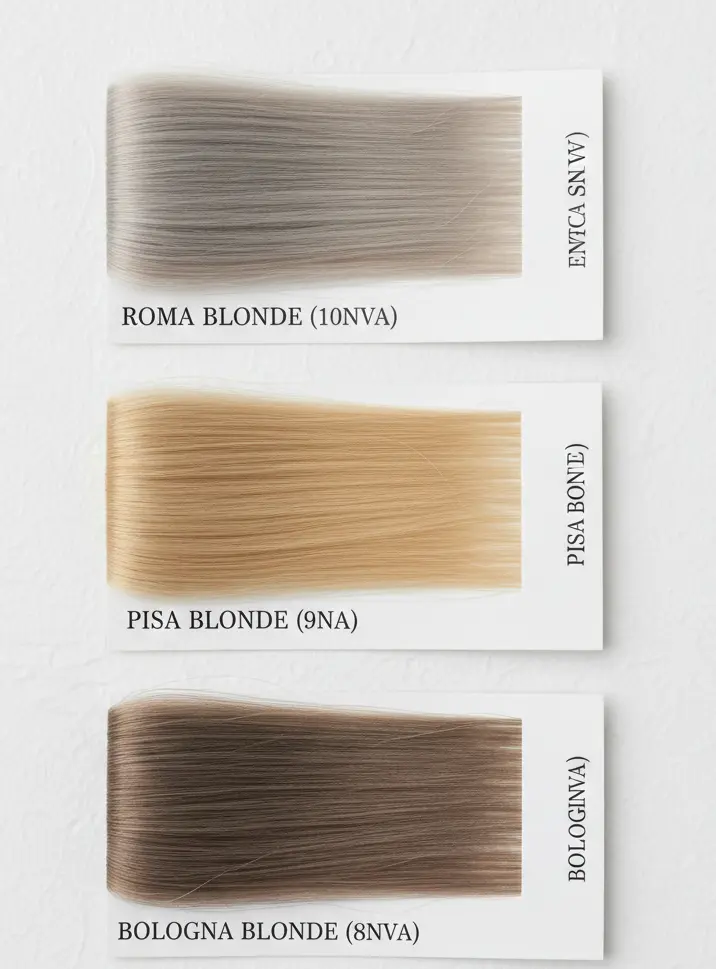
Roma Blonde (10NVA)
This shade works best when hair is already light enough, because level 10 removes most warmth.
A level 10 cool blonde with violet and ash undertones. Best for levels 8–10 and great for blending gray hair.
It is a great choice if you want a bright blonde without strong yellow tones.
Pisa Blonde (9NA)
This is often chosen for soft, clean blonde without harsh brightness.
A beige blonde with soft smoky tones. Works well for levels 7–10 and gives a clean cool finish.
It suits people who prefer a calm, natural-looking blonde result.
Bologna Blonde (8NVA)
This shade helps people go from light brown into blonde without jumping too bright too fast.
A darker wheat blonde, ideal when moving from light brown into dark blonde.
It is perfect for a softer blonde that still feels deep and rich.
Brown Hair Color Chart
Brown is often about warm versus cool balance, since chestnut looks very different from ash or mahogany. Tone choice decides whether brown feels creamy or smoky.
Brown shades are all about balance between warm brown and cool tones.
Warm browns
- chocolate brown
- mocha brown
- chestnut brown
Cool browns
- ash brown
- mahogany brown
- cinnamon brown
Neutral browns
- coffee brown
- dark brown
- reddish brown
- copper brown
Featured Brown Shades
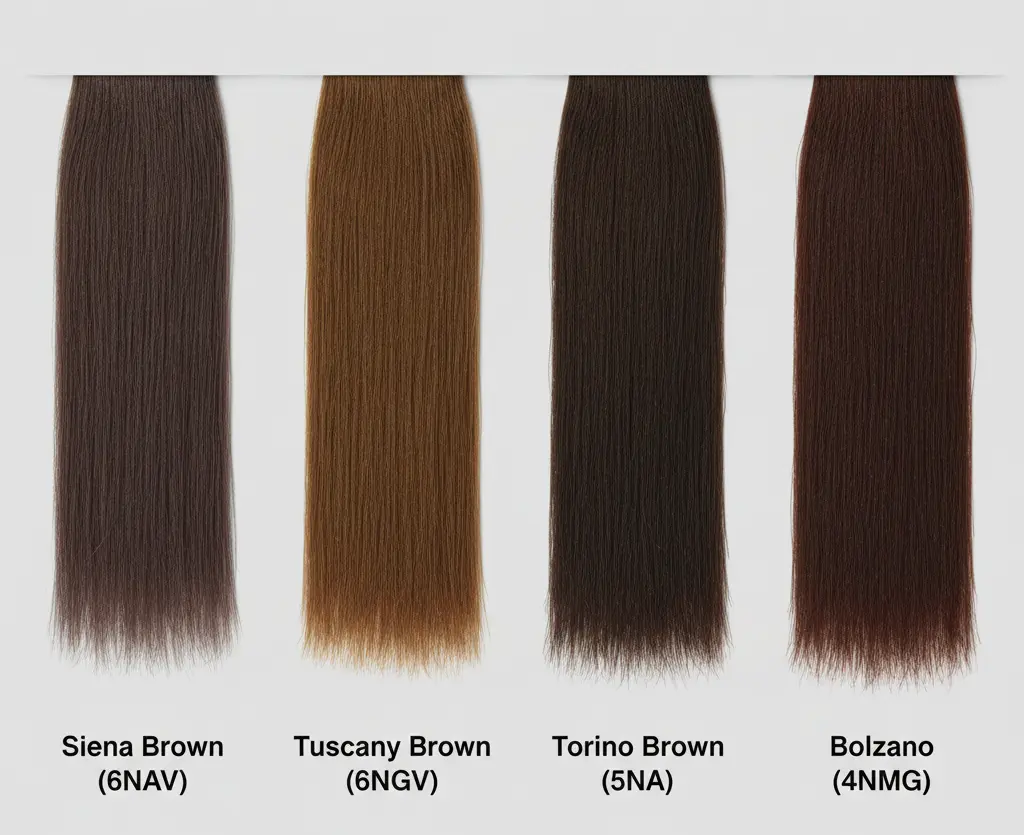
Siena Brown (6NAV)
This shade is helpful for toning down brass and redness with ash softness.
A cool taupe brown that tones down brass and redness. Best for levels 4–7.
It works well if you want brown that looks smooth and not overly warm.
Tuscany Brown (6NGV)
Its golden-violet undertone is what makes it richer than plain chocolate shades.
A rich chocolate brown with golden-violet undertones and strong gray coverage.
It is a great pick for anyone wanting classic chocolate depth.
Torino Brown (5NA)
This deeper brown is often suggested for removing warmth while staying natural.
A deep smoky brown that removes warmth and flatters most skin tones.
It gives a darker finish without looking flat or harsh.
Bolzano Brown (4NMG)
This is the boldest dark brown option here, with mahogany warmth and gold hints.
A bold dark mahogany brown with subtle golden warmth.
It is ideal for people who want a deep brown with a warm twist.
Black Hair Color Chart
Black shades can still vary through violet, ash, cherry, or brown tones. The contrast they create depends a lot on skin depth.
Black hair shades can be more flexible than people think.
Fair skin: Jet black creates strong contrast, while ash-black stays cooler
Medium skin: Blue-black and black cherry shades add depth.
Deep skin: Brown-black and maroon-black give a dramatic finish.
Featured Black Shades
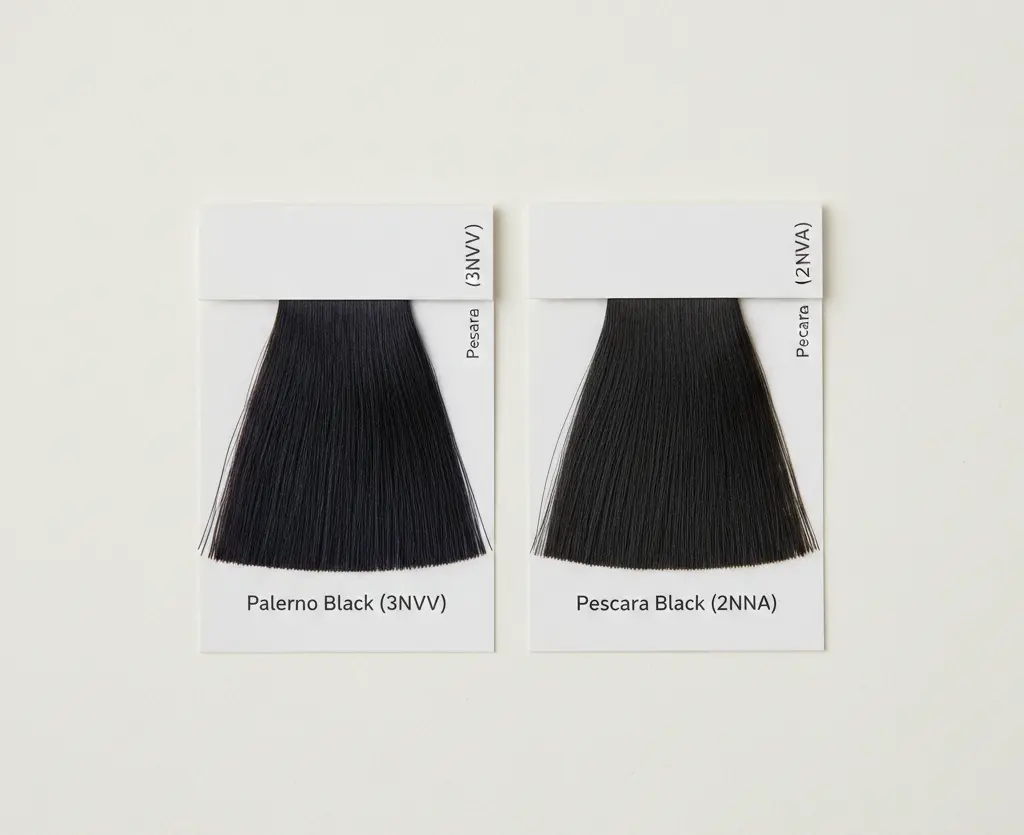
Palermo Black (3NVV)
The violet base keeps this shade dimensional instead of flat black.
A violet-toned black that adds contrast and dimension. Best for levels 2–5.
It is a strong choice if you want black with a cool, modern feel.
Pescara Black (2NNA)
This is one of the deepest blacks and helps keep brassy warmth away.
One of the deepest blacks with ash softness and strong gray coverage.
It is best for people wanting the darkest possible shade with softness.
Red Hair Color Chart
Red shades can feel tricky because they sit between blonde warmth and brown depth. Undertones decide whether red looks coppery, auburn, or wine-dark.
Red shades range widely from copper to wine tones.
Fair complexions
- ginger
- copper
- strawberry red
Medium skin tones
- auburn
- bronze red
- dark mahogany
Deep complexions
- burgundy
- cherry wine
- red-purple shades
Featured Red Shades
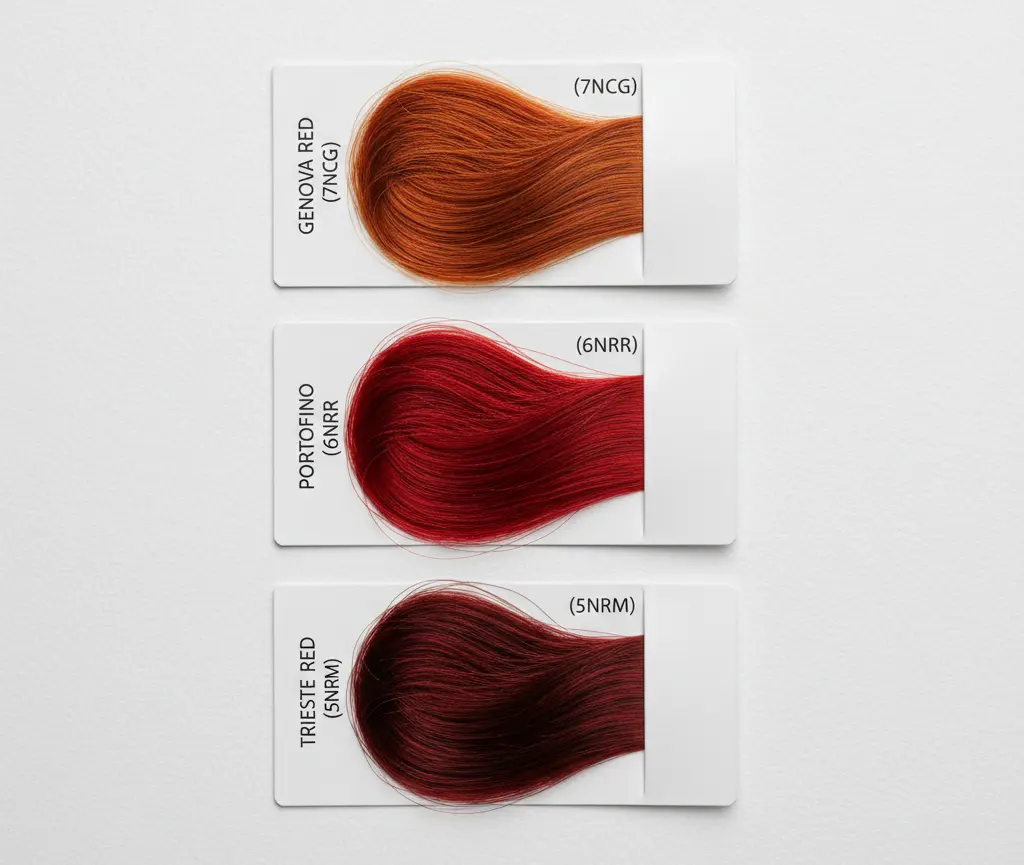
Genova Red (7NCG)
This shade uses copper and gold undertones for a bright auburn effect.
A light auburn with copper-gold warmth. Best for levels 5–9.
It is a lovely option if you want red that still feels light and natural.
Portofino Red (6NRR)
This is the truest medium red shade in the list, built on a strong natural base.
A true medium red auburn shade for levels 4–8.
It works well for people who want a balanced, classic auburn tone.
Trieste Red (5NRM)
This deeper red blends mahogany into the tone for a chocolate cherry finish.
A deep cool red with mahogany richness. Best for levels 3–7.
It is perfect if you want a darker red with a bold, rich finish.
Hair Shade Code Examples Made Simple
Many featured shades include letters and numbers. The number shows the level, and the letters show tone.
| Shade Code | Meaning |
|---|---|
| 10NVA | Level 10 Blonde + Natural Violet Ash tone |
| 6NGV | Level 6 Brown + Natural Gold Violet undertone |
| 3NVV | Level 3 Black + Natural Double Violet depth |
| 6NRR | Level 6 Red + Natural Double Red auburn tone |
Gray Hair Color Chart
Gray charts help compare softness between white, silver, and deeper salt-and-pepper tones. Tone control matters most to avoid unwanted yellow.
Gray shades are useful for comparing tone depth.
- Pale skin: soft white or clean gray
- Medium skin: silver or platinum
- Deep skin: salt-and-pepper blends add natural dimension
Colorful Hair Shades
These playful tones go beyond the four classic groups, using pinks, blues, purples, and rainbow mixes. Clients often love them because they feel bold but creative.
Modern shade guides often include playful options beyond the classics:
- pink hair (rose gold, peach)
- blue hair (teal, midnight blue)
- purple hair (lilac, plum)
- rainbow and unicorn blends
These shades often require pre-lightening for true vibrancy.
Hair Color Wheel (Fixing Unwanted Tones)
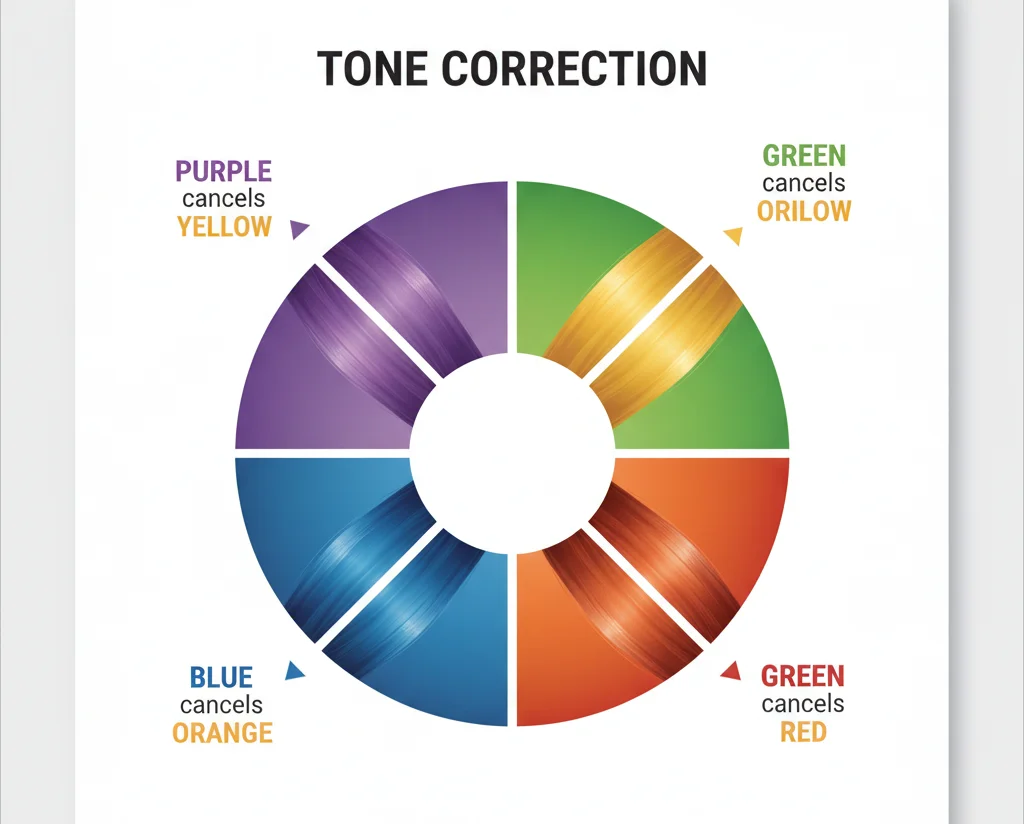
The wheel explains why opposite tones cancel each other, like purple correcting yellow in blonde hair. This is why undertones matter after bleaching.
The hair color wheel helps neutralize unwanted tones:
- Purple cancels yellow
- Blue cancels orange
- Green cancels red
This is why toners and color-correcting shampoos are so important after bleaching.
Best Shade Match Takeaway
A quick way to choose the most flattering blonde, brown, red, or black shade is matching tone with your skin undertone.
- Cool skin: ash blonde, smoky brown, violet black
- Warm skin: honey blonde, chestnut brown, copper red
- Neutral skin: coffee brown, beige blonde, balanced auburn
Conclusion: Choosing the Right Hair Shade
A good hair color shade guide keeps choices simple by focusing on complexion and tone match. The right shade feels natural, flattering, and easy to wear.
A good hair color shade guide makes choosing easier. The best shade is not only about trends, but about what fits your complexion and undertone.
Whether you want blonde, brown, red, or black, the right match creates a flattering, natural result that feels confident and wearable every day.
