

Many people start searching for the deep winter color palette after feeling confused about why some clothes look great while others make them look tired. You might notice that warm shades like mustard, camel, or orange feel wrong on you, while darker cool colors such as black, navy, or burgundy look much better. This happens because the colors we wear interact with our natural skin tone, hair, and eye color.
Through years of studying seasonal color analysis and reviewing different palettes, one clear pattern appears. People with deep winter features usually look best in cool, dark, and high contrast colors. The deep winter palette belongs to the winter color family and includes rich jewel tones that match the depth of these features. In this guide, you will learn the deep winter palette, the key traits of this season, the best and worst colors to wear, and simple styling tips that help these colors work in everyday outfits.
Looking for Deep Winter traits and self-identification? Read the full Deep Winter Guide.
Deep Winter Color Palette
The deep winter palette contains cool, dark, and saturated colors. These colors have depth and intensity.
Most shades look rich and dramatic rather than soft or warm.
Common deep winter colors include:
Reds
- burgundy
- cranberry
- deep cherry
Blues
- navy
- sapphire
- cobalt
Greens
- emerald
- pine green
- deep teal
Purples
- plum
- eggplant
Neutrals
- black
- charcoal
- deep navy
- cool dark brown
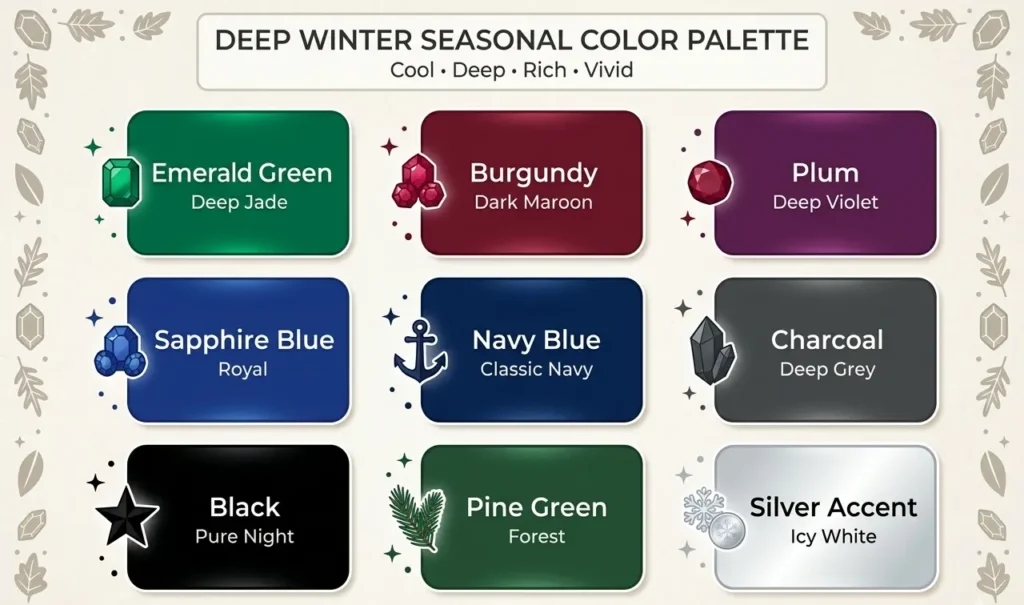
These colors match the natural depth of deep winter features.
Bright jewel tones often look better than dusty or faded shades.
Deep Winter Color Overview
| Color Category | Deep Winter Shades |
|---|---|
| Reds | Burgundy, Cranberry, Deep Cherry |
| Blues | Navy, Sapphire, Cobalt |
| Greens | Emerald, Pine Green, Deep Teal |
| Purples | Plum, Eggplant |
| Neutrals | Black, Charcoal, Deep Navy, Cool Brown |
Best Colors for Deep Winter
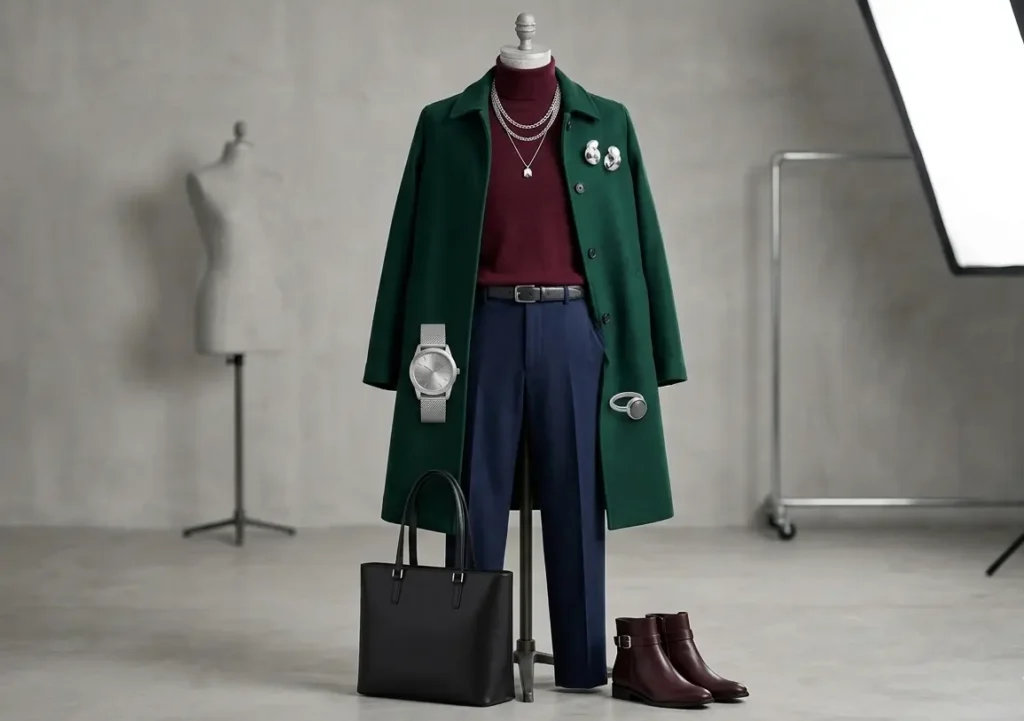
The best colors are dark, cool, and clear.
These colors match the natural depth of the season.
Examples include:
- emerald green
- sapphire blue
- burgundy
- deep plum
- cool red
- navy
Neutrals also play an important role.
Good neutrals include:
- black
- charcoal
- deep navy
These colors help build a balanced wardrobe.
Worst Colors for Deep Winter
Some colors weaken deep winter features.
These shades often appear too warm or too soft.
Examples include:
- mustard yellow
- warm orange
- camel
- dusty brown
- soft beige
Muted colors can make the skin look tired.
Very warm tones often clash with the cool undertone.
Deep Winter Colors: Wear vs Avoid
| Colors That Work Well | Colors to Avoid |
|---|---|
| Emerald | Mustard |
| Sapphire | Warm Orange |
| Burgundy | Camel |
| Navy | Dusty Brown |
| Plum | Warm Beige |
Deep Winter Makeup
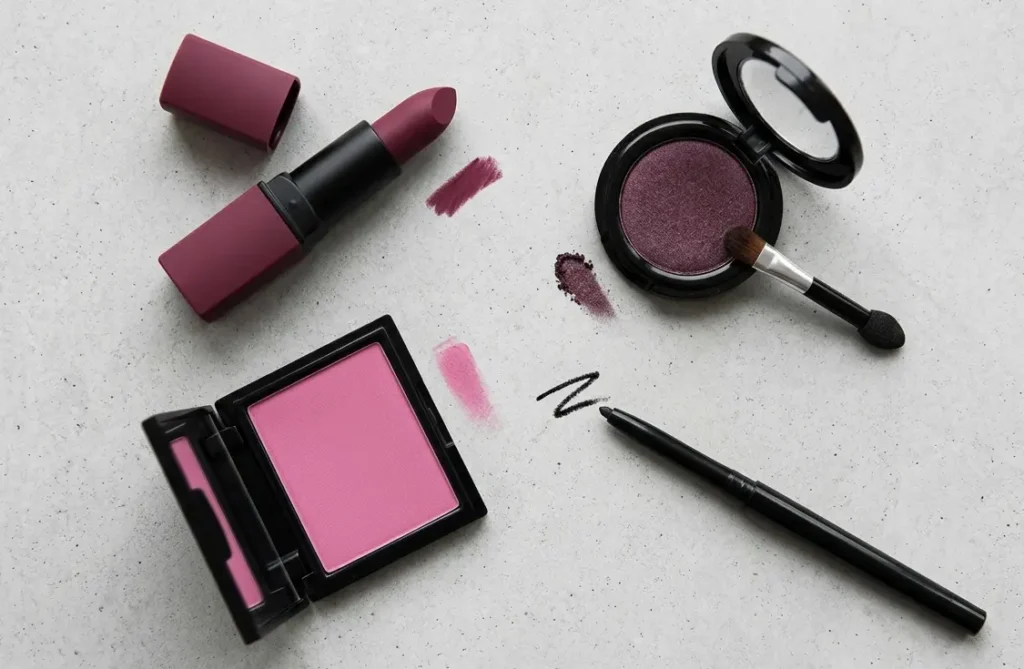
Makeup for deep winter should match the cool and deep palette.
Cool-toned products usually work best.
Lipstick
Good choices include:
- berry
- plum
- deep red
- wine
Blush
Best shades include:
- rose
- berry pink
Eyeshadow
Good colors include:
- charcoal
- cool brown
- plum
- navy
Black eyeliner often works well for this season.
Deep Winter vs Soft Summer
Deep winter and soft summer both belong to cool seasons.
However, they differ in depth and intensity.
Soft summer colors are muted and gentle.
Deep winter colors are strong and bold.
Soft summer looks better in dusty shades.
Deep winter looks better in rich jewel tones.
Styling
Deep winter styling works best with high contrast outfits.
Black clothing often looks strong and elegant.
Good outfit combinations include:
- black and emerald
- navy and burgundy
- charcoal and sapphire
Silver jewelry usually complements this palette.
Platinum and white gold also work well.
Deep winter outfits often look polished and bold.
Deep Winter Outfit Examples
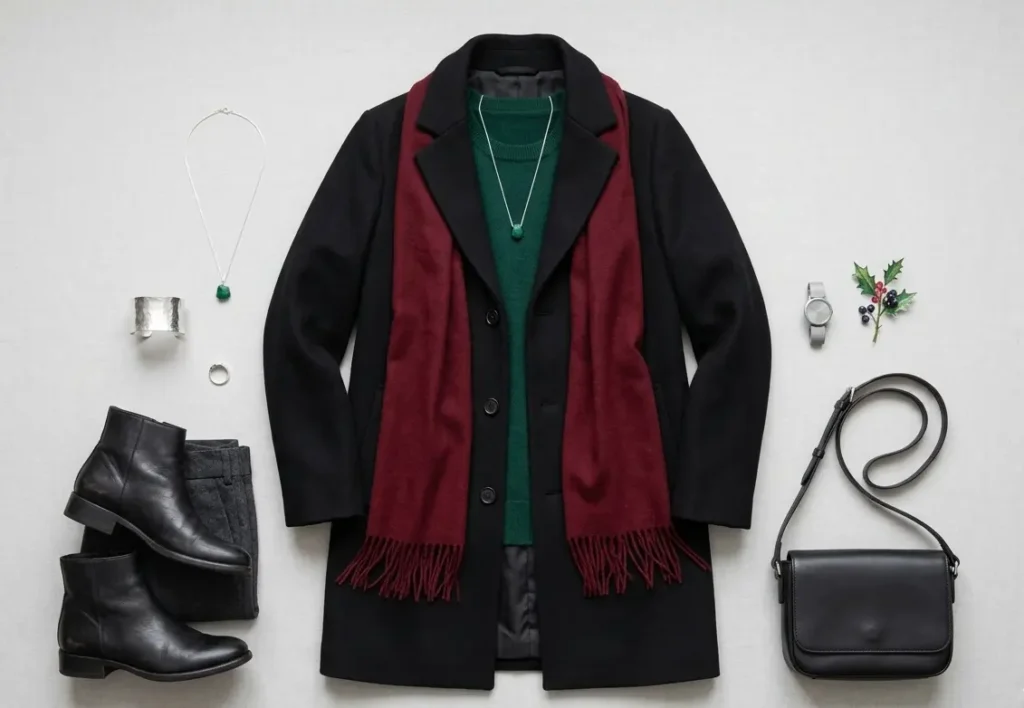
Deep winter outfits usually look best with strong contrast and rich colors.
Simple outfit ideas include:
- black coat with an emerald sweater
- navy blazer with a burgundy top
- charcoal pants with a sapphire blouse
- black dress with silver jewelry
These combinations highlight the cool and deep nature of the palette.
Dark neutrals often form the base of the outfit. Jewel tones then add color and interest.
Deep Winter Neutral Colors
Neutral colors form the base of a deep winter wardrobe. These shades work well with many outfit combinations and help balance bold jewel tones.
The best deep winter neutrals are cool and dark.
Examples include:
- black
- charcoal gray
- deep navy
- cool espresso brown
- dark plum
Black is one of the strongest neutrals for this season. It often looks natural and sharp on deep winter features.
Deep Winter Color Combinations
Deep winter colors work best in high contrast combinations.
Examples include:
- emerald green with black
- navy with burgundy
- charcoal with plum
- sapphire blue with black
- deep red with navy
These combinations highlight the natural depth of deep winter features.
Deep Winter Jewelry Metals
Jewelry can also follow the deep winter color palette.
Cool-toned metals usually work best.
Best jewelry metals include:
- silver
- platinum
- white gold
These metals match the cool undertone of deep winter skin.
Jewelry with deep jewel-tone stones like emerald or sapphire also works well.
Deep Winter Capsule Wardrobe
A capsule wardrobe uses a small number of colors that mix easily together.
Common capsule wardrobe colors include:
- black
- navy
- charcoal
- emerald green
- burgundy
- plum
- cool red
These colors allow many outfit combinations while staying inside the deep winter palette.
Patterns and Prints for Deep Winter
Patterns can also follow the deep winter palette.
Deep winter usually looks best in bold and high contrast prints.
Good pattern choices include:
- black and white prints
- geometric patterns
- bold floral prints
- strong color block patterns
Very faded prints or warm, earthy patterns may not look balanced for this season.
Conclusion
Understanding the deep winter color palette can make personal style much easier. From experience studying seasonal color analysis and observing how different palettes affect appearance, people with deep winter coloring usually look strongest in cool, rich jewel tones like emerald, sapphire, burgundy, and deep navy. These colors support the natural contrast found in deep winter hair, skin, and eyes. Warm or muted shades often hide that contrast and make features appear less clear. Learning your palette is not about limiting your choices. It simply helps you recognize which colors naturally support your features, making it easier to build outfits, choose makeup shades, and create a wardrobe that feels balanced and consistent.
Many readers still have questions about the deep winter color palette, including which colors work best, what shades to avoid, and how to identify this season. The answers below cover the most common questions people ask about deep winter colors, makeup, and styling.
