

If you have ever stood in front of your closet wondering why some colors make you look fresh while others make you look tired, you are not alone. This is a very common problem for people who fall into the Winter category but feel stuck between Deep Winter and Bright Winter. I have seen this confusion many times. People try different shades, but the results feel inconsistent. One day, a color works, the next day it feels off. The issue is not your style. It is choosing the right subtype.
Both Deep Winter and Bright Winter are cool and can handle strong colors, which is why they feel so similar at first. But in real life, the difference is clear once you know what to look for. One group looks better in deep, rich tones, while the other looks better in bright, clear colors. When you understand this, things start to make sense. Your outfits look right, your face looks more balanced, and you stop guessing what works.
Deep Winter vs Bright Winter Color Differences
Here is a quick comparison you can scan in seconds:
| Feature | Deep Winter | Bright Winter |
|---|---|---|
| Main trait | Depth (dark) | Brightness (clear) |
| Best colors | Black, burgundy, deep emerald | Hot pink, cobalt, icy colors |
| Worst colors | Light, washed-out tones | Muted or dusty tones |
| Overall look | Strong, rich, intense | Bold, sharp, high contrast |
| Reaction to bright colors | Can feel too loud | Looks fresh and alive |
| Reaction to dark colors | Looks balanced | Can feel heavy |
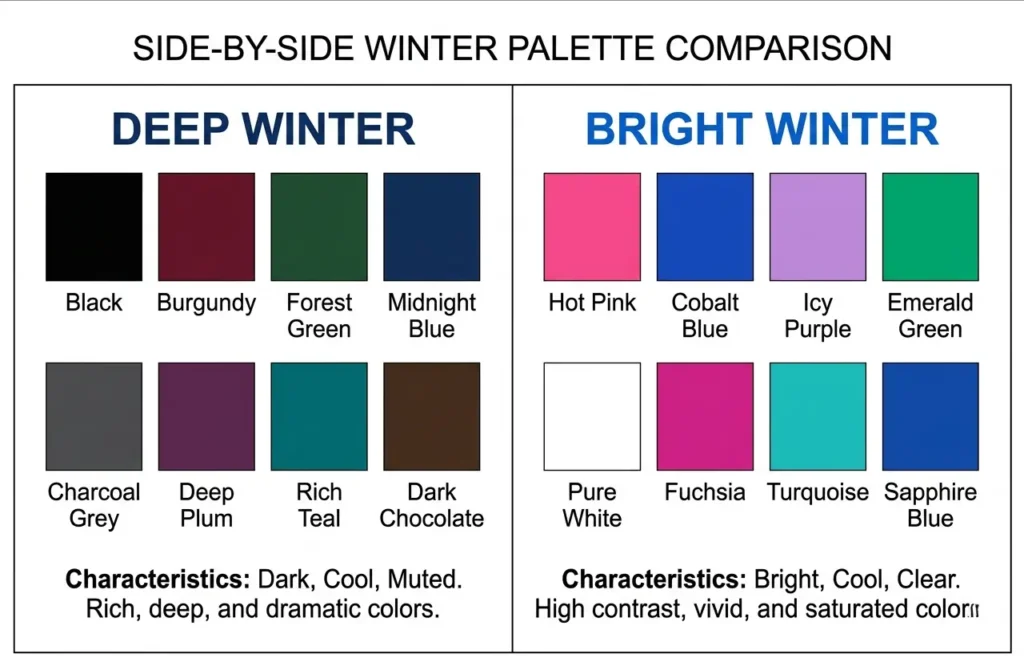
Simple rule:
- If your face looks stronger in deep shades → Deep Winter
- If your face pops in bright shades → Bright Winter
- If deep, dark colors make your face look strong → Deep Winter
- If bright, bold colors make your face look fresh → Bright Winter
- If bright colors feel too strong → Deep Winter
- If dark colors feel too heavy → Bright Winter
Why Deep Winter and Bright Winter Get Confused
Many people struggle with this comparison because both seasons share key traits.
- Both are cool-toned
- Both have high contrast
- Both can handle bold colors
This makes them look similar at first.
The real difference is simple:
- Deep Winter focuses on depth (dark, rich colors)
- Bright Winter focuses on brightness (clear, vivid colors)
If you focus only on “Winter,” you will miss this difference. That’s why confusion happens.
What is Deep Winter
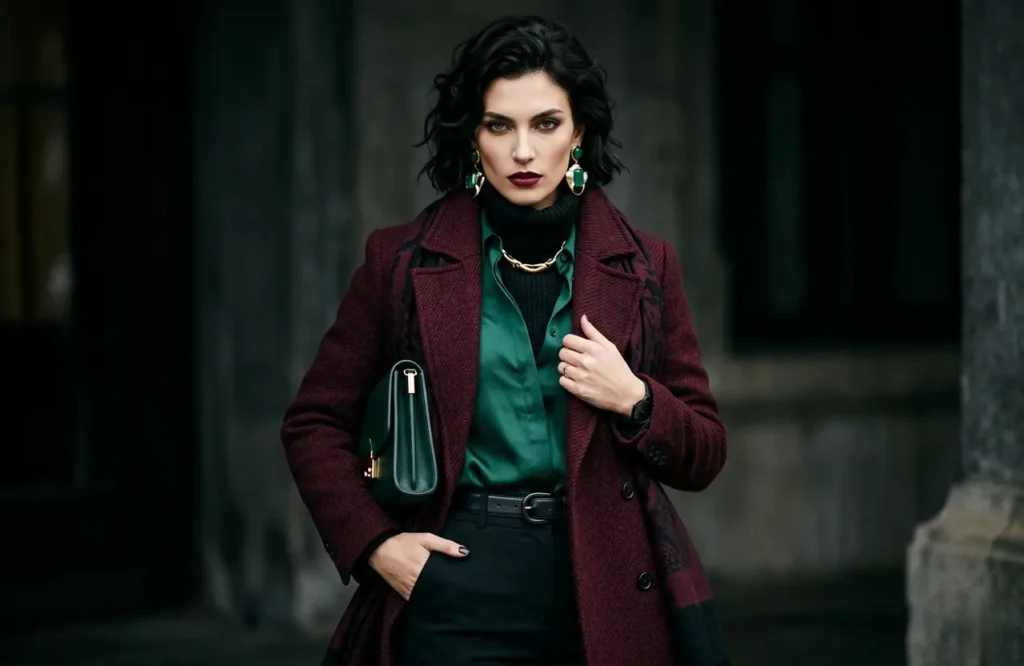
Deep Winter is a Winter season influenced by Autumn depth. It is still fully cool, but more intense.
People in this group often have:
- Dark hair (black or deep brown)
- Medium to deep eyes
- Strong contrast between features
What stands out is rich depth.
How colors behave on Deep Winter
- Deep colors make the face look clear
- Light colors can wash out the face
- Very bright colors may feel too loud
What is Bright Winter

Bright Winter is a Winter season influenced by Spring brightness. It is still cool, but clearer and more vivid.
People in this group often have:
- Bright eyes (blue, green, or clear brown)
- High contrast features
- A fresh, sharp look
What stands out is brightness and clarity.
How colors behave on Bright Winter
- Bright colors make the face glow
- Muted tones look dull
- Very dark shades can feel heavy unless balanced with brighter colors
Key Characteristics
Deep Winter Characteristics
- Deep and rich coloring
- Handles black very well
- Looks best in dark jewel tones
- Can look tired in soft or faded colors
Bright Winter Characteristics
- Clear and vivid coloring
- Handles bold colors easily
- Looks best in bright, cool shades
- Looks dull in muted tones
Deep Winter vs Bright Winter Color Palettes
The main difference is simple:
- Deep Winter → dark + cool + rich
- Bright Winter → bright + cool + clear
Deep Winter Colors
- Black
- Deep burgundy
- Forest green
- Charcoal
Bright Winter Colors
- Hot pink
- Electric blue
- Icy purple
- Bright red
Key tip:
If a color feels “too strong,” it may belong to Bright Winter.
If a color feels “too light,” it may not suit Deep Winter.
What to Notice in Real Life
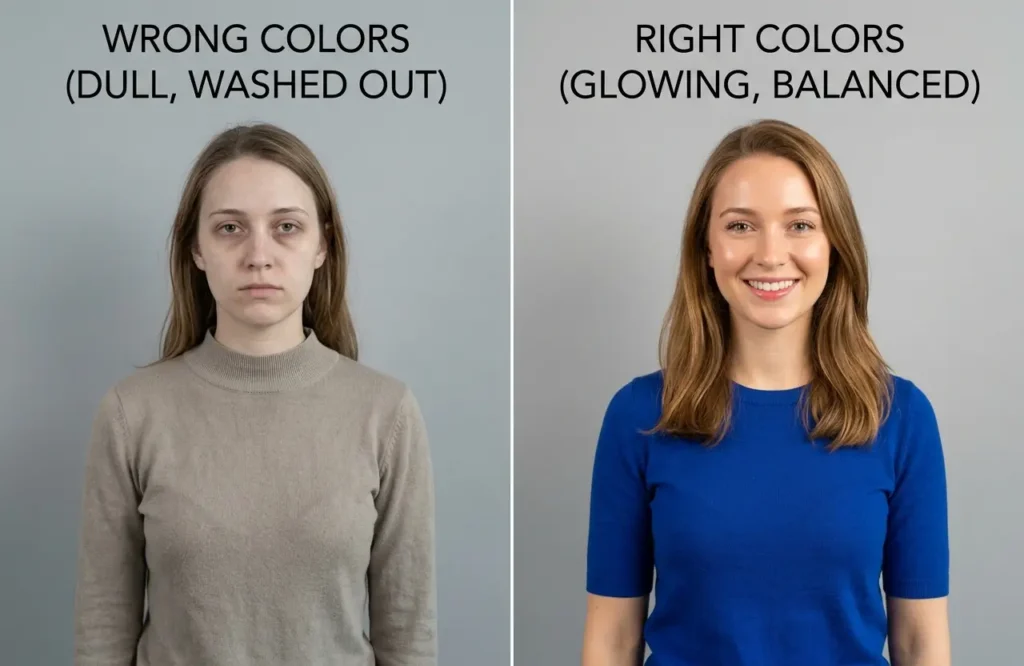
When you try these colors, your face will respond clearly.
- Deep Winter colors make your face look strong and balanced
- Bright Winter colors make your face look fresh and sharp
Watch closely:
- If your features look softer or lost → the color is wrong
- If your features stand out clearly → the color is right
This is one of the easiest ways to tell your season.
How to Tell If You Are Deep Winter or Bright Winter

Use this quick self-test:
1. Try black vs bright pink
- Black looks natural → Deep Winter
- Bright pink makes you glow → Bright Winter
2. Check your face in bright colors
- Face looks overpowered → Deep Winter
- Face looks fresh → Bright Winter
3. Wear muted colors
- Both look bad, but:
- Deep Winter looks flat
- Bright Winter looks dull and lifeless
4. Look at your contrast
- Strong + deep features → Deep Winter
- Strong + bright features → Bright Winter
Common Mistakes to Avoid
Many people pick the wrong season because of these mistakes:
- Thinking bright means light
Bright Winter is vivid, not pale - Assuming all winters can wear neon
Deep Winter often looks overwhelmed by very bright shades - Ignoring depth in features
If your features are deep, bright colors may feel too strong - Focusing only on skin tone
Your overall contrast matters more than just skin tone
Avoiding these mistakes will make your decision much easier.
Celebrity Inspiration
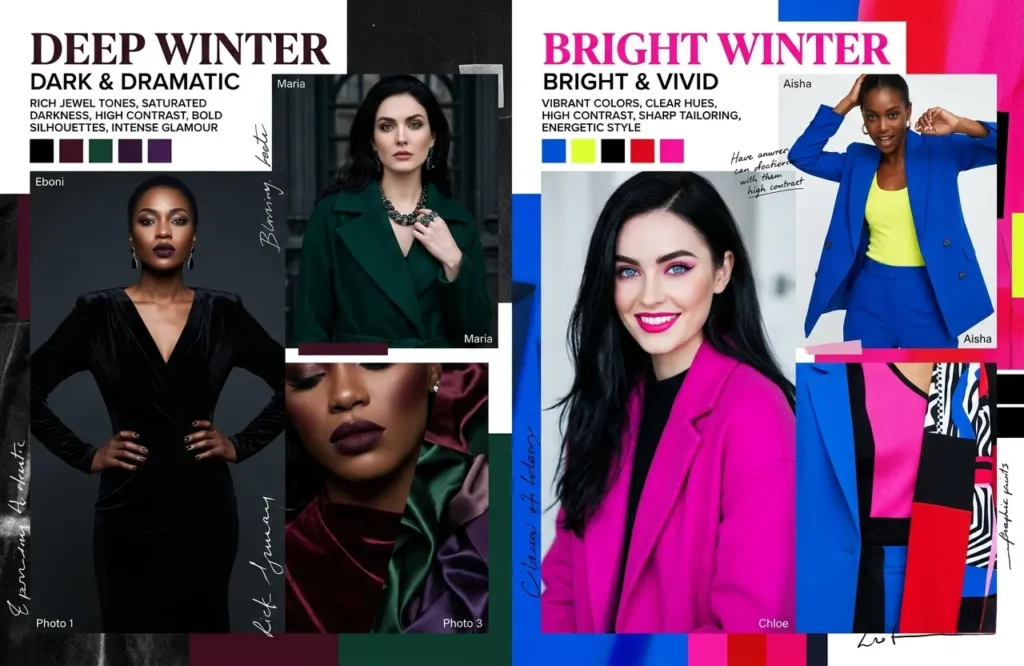
Deep Winter Examples
Why they fit:
- Dark hair
- Strong contrast
- Look powerful in deep shades
Bright Winter Examples
- Zooey Deschanel
- Katy Perry
- Lucy Liu
Why they fit:
- Bright features
- Handle bold colors well
- Look best in clear tones
More Comparisons
If you are still unsure, compare with:
- Other Winter types
- Deep winter vs True winter
- Bright Winter vs True Winter
Related Reading
You can explore:
How Colors Change Your Look
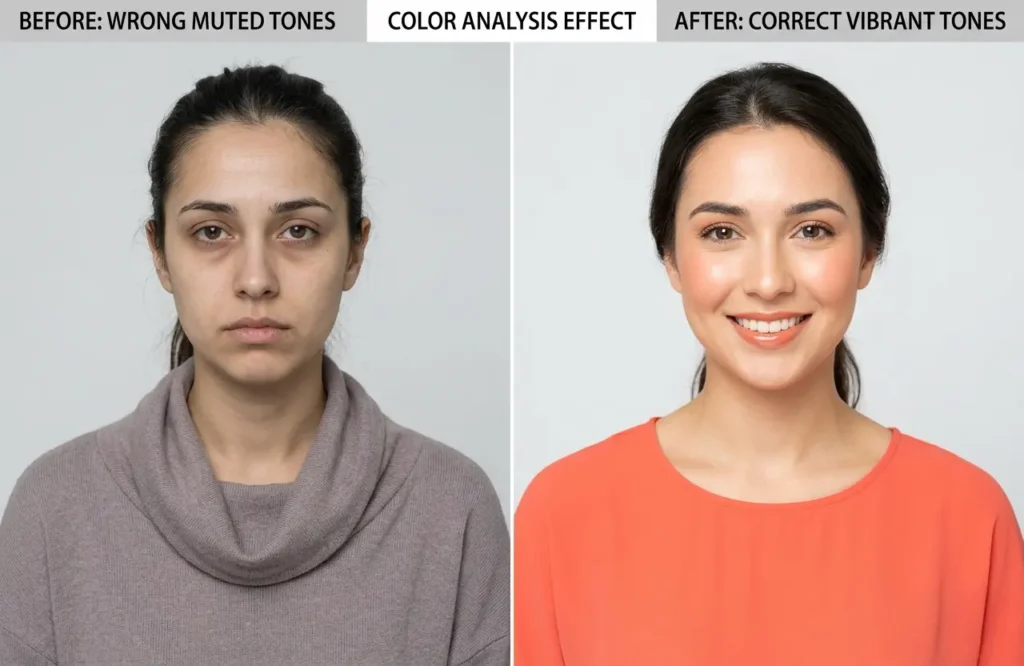
The wrong colors can affect your face more than you think.
- Wrong colors can make you look tired or dull
- Right colors make your skin look clear and healthy
For example:
- A Deep Winter in bright colors may look overpowered
- A Bright Winter in dark, heavy colors may look flat
Pay attention to how your face reacts. That gives you the answer.
Final Thoughts
From experience, the biggest mistake people make is forcing themselves into the wrong type just because it feels close enough. I have seen people choose Bright Winter because they like bold colors, even when those shades overpower their face. Others stay in Deep Winter because dark colors feel safe, even when those shades make them look dull. Your face always shows the truth. When you wear the right colors, your skin looks clearer, your features stand out, and everything feels natural. When the colors are wrong, your face looks tired, and the color takes over. So keep it simple.
If deep, rich shades make you look strong and balanced, you are likely Deep Winter. If bright, clear colors make your face look fresh and alive, you are likely Bright Winter. Trust what you see, and your choice becomes much easier.
Deep Winter is all about depth and richness, while Bright Winter is about clarity and brightness. If your face looks better in deep, dark tones, you are likely Deep Winter. If your face looks better in bright, vivid colors, you are likely Bright Winter. Focus on how your face reacts, not just how the color looks on its own.
