


I used to stand in front of my closet and feel stuck. Some clothes looked good in the store but strange on me at home. Certain colors made my skin look dull or tired, and I could not figure out why. I tried online quizzes and random tips, but the answers never felt clear. If you feel confused about what colors suit you, this is a common problem. Many people waste money on clothes and makeup that do not match their natural coloring.
After testing colors at home in daylight and comparing photos, I started to see patterns. Some shades made my skin look smooth and bright. Others made shadows stand out. Over time, I learned a simple way to test colors without paying for a stylist. This guide comes from that real testing process and from helping others do the same at home. You will learn how to check your undertone, test colors step by step, and find a season you can use when you shop or choose makeup.
Quick Takeaways
- Test colors in natural daylight near a window
- Remove makeup before doing any color tests
- Start by testing warm vs cool colors first
- Take photos and compare them side by side
- Look for patterns instead of one quick result
- Use your final season when shopping for clothes or makeup
Tip: Clear results appear when you test in good light and compare photos calmly.
What is seasonal color analysis?
Seasonal color analysis helps you find colors that make your skin look clear and fresh. Some colors make you glow. Others can make you look tired.
Your best colors depend on:
- warm or cool undertone
- light or deep features
- soft or bright features
When you know your season, shopping gets easier. You stop buying colors that do not suit you.
If you want to know more about color season analysis, read here.
DIY color analysis toolkit
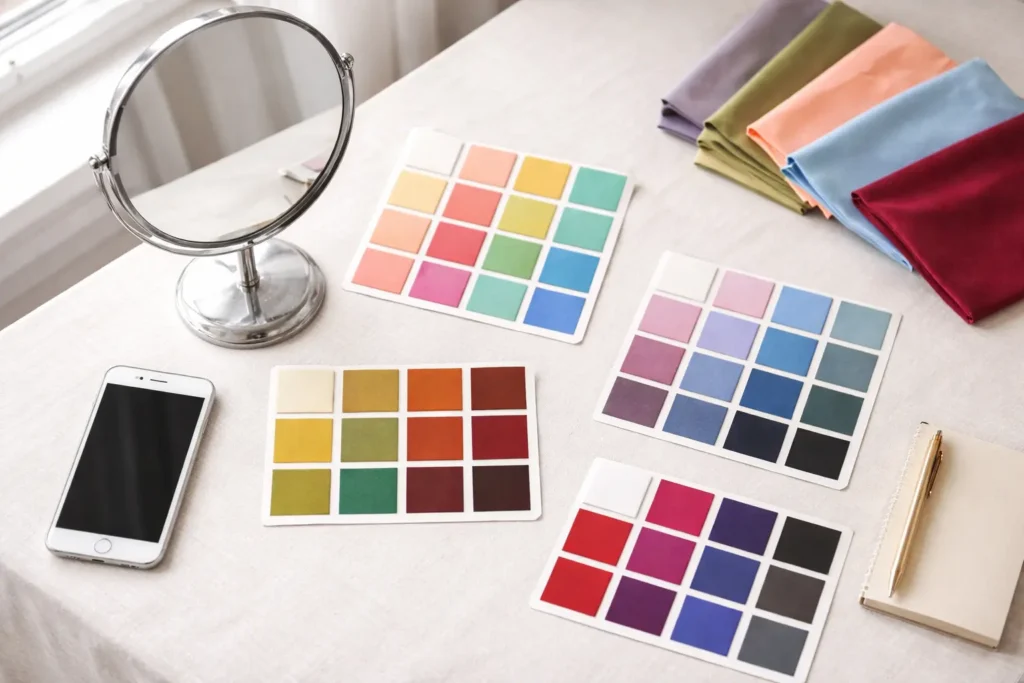
You can do this at home with simple items.
You will need:
- a mirror
- natural daylight
- a phone camera
- plain white cloth or paper
- colored clothes or scarves
Try to collect:
- warm colors like orange and peach
- cool colors like blue and pink
- light colors like beige
- deep colors like black
- bright colors
- soft muted colors
Prep for your color draping
Sit near a window in daylight.
Face the light.
Avoid yellow bulbs.
Wear a plain neutral top.
Tie hair back if needed.
Stand in front of a mirror.
Remove makeup and prep face
Wash your face.
Do not wear makeup.
Do not use filters.
Makeup can hide how your skin reacts to color.
Use natural lighting
Daylight works best.
Stand near a window.
Avoid strong sunlight.
Take photos with your phone.
Turn off filters.
Use the same spot for each test.
How to do a DIY color analysis
Hold one color under your chin.
Look in the mirror.
Switch to another color.
Watch your skin.
Does it look clear or dull?
Take photos of each test.
Compare them later.
Exact step-by-step home testing method
Step 1
Sit in natural daylight. Use the same place for all tests.
Step 2
Wear a neutral top. Remove makeup. Pull hair back.
Step 3
Start with warm vs cool colors.
Test at least 4 warm and 4 cool colors.
Hold each color under your chin for 10 seconds.
Step 4
Take a photo with each color.
Keep your face and camera in the same place.
Step 5
Remove colors that look bad quickly.
Focus on colors that make your skin look clear.
Step 6
Now test light vs deep colors.
Then test soft vs bright colors.
Step 7
Look for patterns.
Repeat tests if needed.
This test takes about one hour.
Start with warm vs cool

Hold a warm color near your face.
Then hold a cool color near your face.
Warm colors:
- orange
- peach
- warm green
Cool colors:
- blue
- pink
- cool purple
If warm colors suit you, you may be warm.
If cool colors suit you, you may be cool.
Try gold and silver jewelry too.
Warm vs Cool Test Guide
| Test | Warm Result | Cool Result |
|---|---|---|
| Jewelry | Gold looks better | Silver looks better |
| Fabric test | Peach or orange works | Blue or pink works |
| Skin reaction | Skin looks warm and clear | Skin looks bright and fresh |
Tip: If both sides look fine, you may have a neutral undertone.
Compare colors on your face
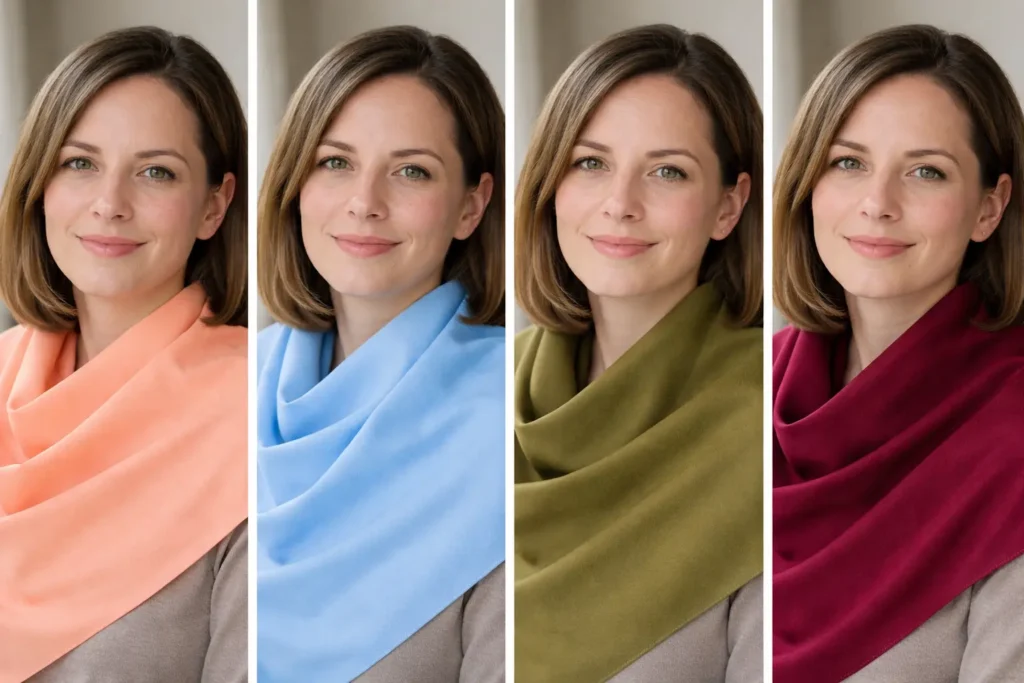
Take photos with each color.
Place them side by side.
Look for:
- smoother skin
- fewer shadows
- brighter eyes
- healthy lip color
Good colors make your skin look fresh.
Bad colors make you look tired.
How to take and compare photos
Place your phone at eye level.
Use the same distance each time.
Turn off filters.
Take one photo per color.
Compare them later.
Look for:
- clearer skin
- even tone
- brighter eyes
The best color will make your face look calm and clear.
Look for patterns
Do not decide from one test.
Look for repeated results.
Ask:
Which colors make my skin glow?
Which colors make me look tired?
Patterns help you find your season.
Tips for choosing undertone
Some people are neutral.
If both warm and cool colors look fine, you may be neutral.
Olive skin can be tricky.
Focus on how skin reacts, not just veins.
Olive and neutral undertone help
You may be neutral if:
- gold and silver both look good
- many colors suit you
You may be olive if:
- skin has a slight green tone
- strong warm colors look too yellow
- strong cool colors look too pink
Test softer shades.
Olive skin often suits muted colors.
Having trouble deciding
Take photos and check later.
Ask a friend.
Test again on another day.
Results get clearer with time.
Test contrast level

Look at your hair, skin, and eyes.
High contrast:
dark hair and light skin
Low contrast:
soft hair and soft skin
Test strong colors and soft colors.
See which suits you.
Determine your season
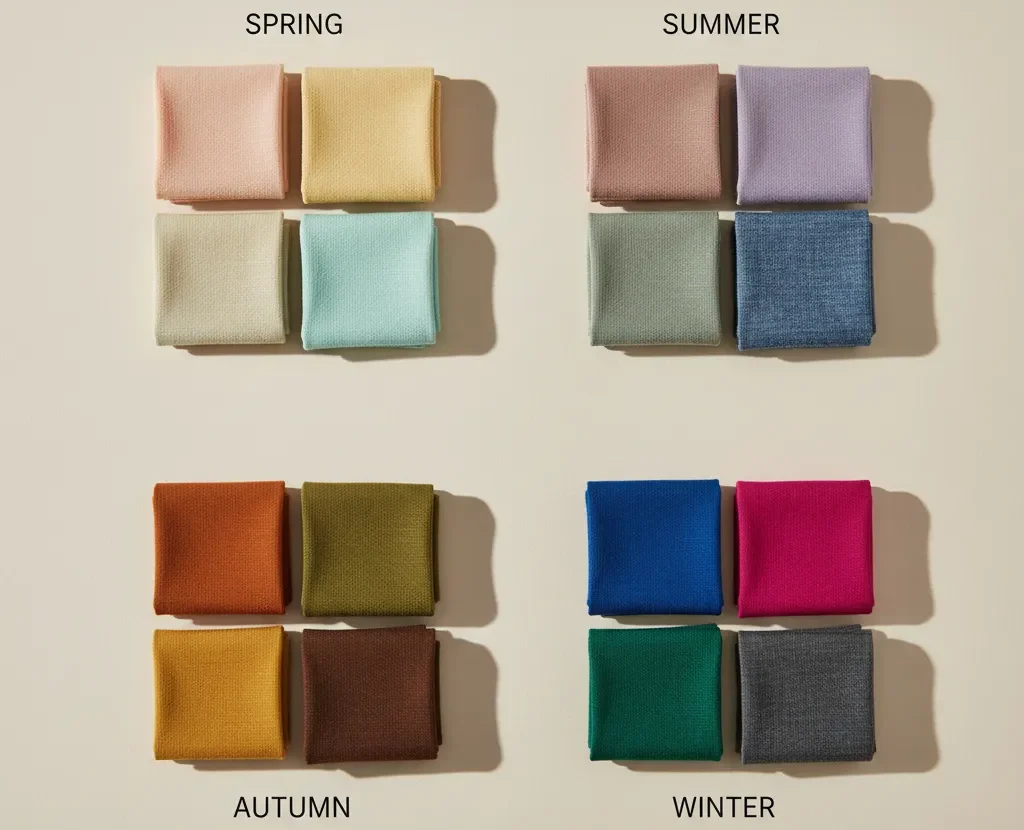
Combine results.
Warm and light → spring
Warm and deep → autumn
Cool and light → summer
Cool and deep → winter
This gives you a starting point.
Color Seasons at a Glance
| Season | Undertone | Best Color Feel |
|---|---|---|
| Spring | Warm | Light, clear, fresh |
| Summer | Cool | Soft, light, gentle |
| Autumn | Warm | Deep, rich, earthy |
| Winter | Cool | Bold, clear, high contrast |
Tip: Focus on how your skin reacts to color instead of guessing from hair or eye color alone.
Quick decision guide
If warm colors suit you → warm
If cool colors suit you → cool
If light colors suit you → light
If deep colors suit you → deep
If bright colors suit you → bright
If soft colors suit you → soft
Combine results to find your season.
Move into sub-seasons
After finding your main season, test more.
Ask:
Do bright colors suit me?
Do soft colors suit me?
This helps refine your result.
Use your palette in real life
Test clothes from your closet.
Hold them near your face.
Keep colors that suit you.
Move aside others.
Closet clean-out method

Take each clothing item.
Test near your face.
Keep items that:
- make skin look clear
- match your season
Stop buying wrong colors.
Closet Color Check
| Keep if… | Remove if… |
|---|---|
| Skin looks clear | Skin looks dull |
| Eyes look brighter | Shadows increase |
| Matches your season | Clashes with undertone |
Tip: You do not need to throw everything away. Just stop buying colors that do not work.
Your shopping companion
Save your palette on your phone.
Use it while shopping.
How to shop using your season
Before buying clothes:
Hold item near your face.
Check under store light.
Take a photo if unsure.
Choose colors that make skin look fresh.
Color match
Test new clothes at home.
Pair them with your best colors.
Makeup try-on

Test lipstick, blush, and eyeshadow.
Warm seasons suit warm shades.
Cool seasons suit cool shades.
Virtual drapes
Apps can help, but test with real fabric too.
Color quiz
Quizzes help you start.
Confirm with real tests.
AI analysis
Photo tools can guide you.
Always confirm with real color draping.
Testing mistakes to avoid
Avoid:
- testing at night
- yellow light
- makeup
- filters
- testing too many colors
- testing when tired
Common mistakes
Do not rely on vein color alone.
Do not pick favorite colors.
Test in daylight.
How long does it take to find your season
Most people find results in one hour.
Some need a few days.
Repeat tests if unsure.
At-Home Color Test Checklist
- Sit in natural daylight
- Remove makeup
- Wear a neutral top
- Test warm vs cool colors
- Take comparison photos
- Look for patterns
- Test contrast level
- Choose your season
Tip: Save your best colors on your phone for easy shopping later.
Final tips
Finding your color season at home may feel confusing at first, but clear steps make it easier. From my own testing and from helping others, I have seen how much difference the right colors can make. When you use natural light, remove makeup, and compare photos, patterns start to show. You begin to see which shades make your skin look fresh and which ones do not.
Once you know your season, daily choices become simpler. Shopping takes less time, and your clothes start to work together. You waste less money and feel more sure about what you wear. Keep your color palette saved on your phone and use it when you shop or choose makeup. With a little practice, picking the right colors becomes a habit you can rely on.
