


I used to buy clothes just because they looked nice in the store. My wardrobe had every color you could think of, from bright pink to bold yellow. But over time, I noticed I only wore the shades that truly complemented my skin tone and hair. That was the moment I understood how powerful the right color palette can be.
Seasonal color analysis, often called color season analysis, is a method used to identify the colors that suit you best. The seasonal analysis system uses 12 palettes, and while it may seem complex at first, this guide breaks it down step by step so you can test it at home.
This approach looks at your eyes, skin undertone, and overall coloring to place you into one of the four seasons: Spring, Summer, Autumn, or Winter. Each subtype can feel cool, soft, bright, deep, or muted, depending on the natural intensity of your features.
Undertone (Hue) + Contrast (Value) + Intensity (Chroma) = Your Color Season.
What Seasonal Color Analysis Really Means
Seasonal color analysis is a system that categorizes people into color seasons based on skin tone, eye color, and hair color. I’ve seen how wearing the right palette can create instant harmony in your wardrobe and make your complexion appear more balanced.
This concept has roots in color theory, where artists explored how tones interact. By the mid-20th century, fashion stylists adapted the idea into personal styling, noticing that people look more vibrant when their clothing matches their undertone.
The system started with four main seasons but later evolved into twelve subtypes for greater accuracy:
- Spring: Light Spring, True Spring, Bright Spring
- Summer: Soft Summer, True Summer, Light Summer
- Autumn: Soft Autumn, Warm Autumn, Deep Autumn
- Winter: Bright Winter, Cool Winter, Deep Winter
If you want a clearer breakdown of how both systems work, read our guide on color seasons explained (4-season vs 12-season).
Each palette combines:
- Temperature (warm or cool)
- Depth (light or dark)
- Intensity (soft or clear)
The Purpose Behind Knowing Your Season
The purpose of seasonal color analysis is simple: to help you understand which colors naturally enhance your look.
When you wear tones aligned with your season:
- Your skin looks smoother
- Your eyes appear brighter
- Your overall style feels more cohesive
It also makes shopping easier because your wardrobe becomes more consistent over time.
If you’re still unsure and wondering what is my color season, this guide walks you through the basics in a simple way.
What Your Personal Color Season Actually Means
Your personal color season is more than just a category. It explains why certain shades make your complexion brighter and your overall look more balanced. Once you understand the real personal color season meaning, choosing clothes and makeup becomes much easier because everything works with your natural coloring.
Three Dimensions That Shape Your Best Colors
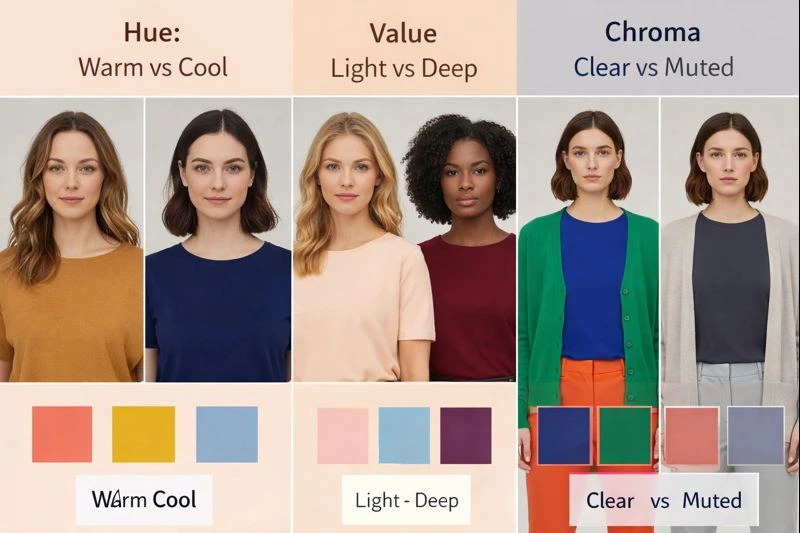
Seasonal color analysis is built around three key dimensions:
- Hue
- Value
- Chroma
These are the foundation for finding your most flattering shades.
Value: Light, Medium, or Deep
Value looks at how light or dark your features appear and how much contrast there is between your skin, hair, and eyes.
Hue: Warm or Cool Temperature
Hue refers to your undertone, which is one of the most important parts of finding your season.
If you are still unsure, review these common signs you are warm vs cool to confirm your undertone.
Chroma: Clear or Muted Color Intensity
Chroma describes how bright or soft your overall coloring appears.
These three dimensions are the foundation of learning how to determine your color season accurately.
- Natural daylight only
- No makeup
- Compare warm vs cool fabrics
- Take photos to check contrast
Easy At-Home Steps to Spot Your Season
To find your season, follow a simple order:
- Identify undertone (Hue)
- Observe depth and contrast (Value)
- Determine brightness or softness (Chroma)
Once those three pieces are clear, matching yourself to one of the 12 palettes becomes much easier.
For a full walkthrough with step-by-step examples, see our complete seasonal color analysis at home (DIY guide).
A Simple Look at the Four Seasonal Groups
Spring = warm + light + bright
Summer = cool + light + soft
Autumn = warm + deep + muted
Winter = cool + deep + clear
In the system of Seasonal Color Analysis, there are 12 subtypes, but I always recommend starting with the four main seasons first.
- Spring feels warm, light, and bright
- Summer appears cool, soft, and gentle
- Autumn is warm, deep, muted, with earthy richness
- Winter stays cool, deep, clear, and has strong contrast
After that, you can explore subtypes like Soft Summer, Warm Autumn, or Bright Spring.
For a deeper comparison, see our full breakdown of summer vs winter vs autumn vs spring differences.
Common Mistakes in Self-Analysis
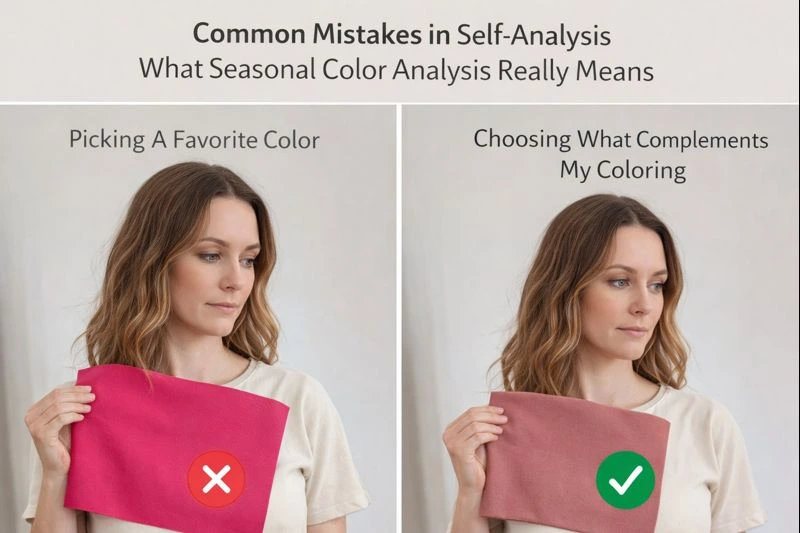
Many people get confused by a few common mistakes:
- Testing in artificial lighting
- Wearing makeup during analysis
- Focusing only on skin tone instead of full coloring
- Ignoring chroma (bright vs muted)
- Overcompensating with too much contrast
A season is always based on the full balance of skin, hair, and eyes.
To see how each subtype actually looks in practice, explore our full guide to the 12 color seasons.
Closing Thoughts: Building Your Personal Palette
Once you identify your season, the next step is applying it in real life through clothing, makeup, and everyday choices. In my experience, the system becomes most useful when you stop guessing and start choosing shades that match your undertone, depth, and chroma.
Whether you fall into Spring, Summer, Autumn, or Winter, or one of the 12 subtypes like Soft Summer, Warm Autumn, Bright Spring, or Deep Winter, the goal stays the same: building a flattering, consistent wardrobe that feels natural.

Small changes, like swapping bright tones for muted ones or matching your contrast level, can create more balance and harmony in your overall look over time.
For detailed guides on each subtype, explore more seasonal palette resources on ShadeCompass .
