


Many people feel stuck after trying to find their color season. You may have taken quizzes, saved palette charts, or followed advice online, yet your results still feel mixed. One guide says you are Summer, another says Winter, and then you hear about the 12-season system and feel even more unsure. This confusion is common. A lot of readers reach this topic after buying clothes that looked right in the store but dull on them at home. They start to wonder if the issue is their taste or the color system itself.
From years of studying seasonal color analysis and testing palettes in real light, one thing is clear. Most people are not wrong about their style. They just need a clearer way to see how color works with their natural features. I have worked with readers who felt frustrated by basic charts and others who felt overwhelmed by too many subtypes. Once they learned how the two systems connect, things became easier. This guide is here to give you that same clarity so you can choose the system that actually helps you in daily life.
Quick Takeaway
- Start with the 4-season system if you are new
- Use the 12-season system for more precise colors
- Test colors in natural light near your face
- Check warm vs cool, light vs deep, soft vs bright
- Use your season to guide shopping and makeup
What is seasonal color analysis?
Seasonal color analysis groups people by the colors that suit them best.
The right colors make your skin look fresh and bright.
The wrong colors can make you look tired or dull.
The two main systems are:
- 4-season color analysis
- 12-season color analysis
Both use the same base idea. One is simple. One is more detailed.
How color analysis evolved
The first system used four seasons only.
Over time, analysts saw that many people did not fit just one group.
Some were warm but also soft.
Some were cool but also deep.
So the 12-season system was created.
It splits each season into three subtypes for more accuracy.
What is the 4-season system
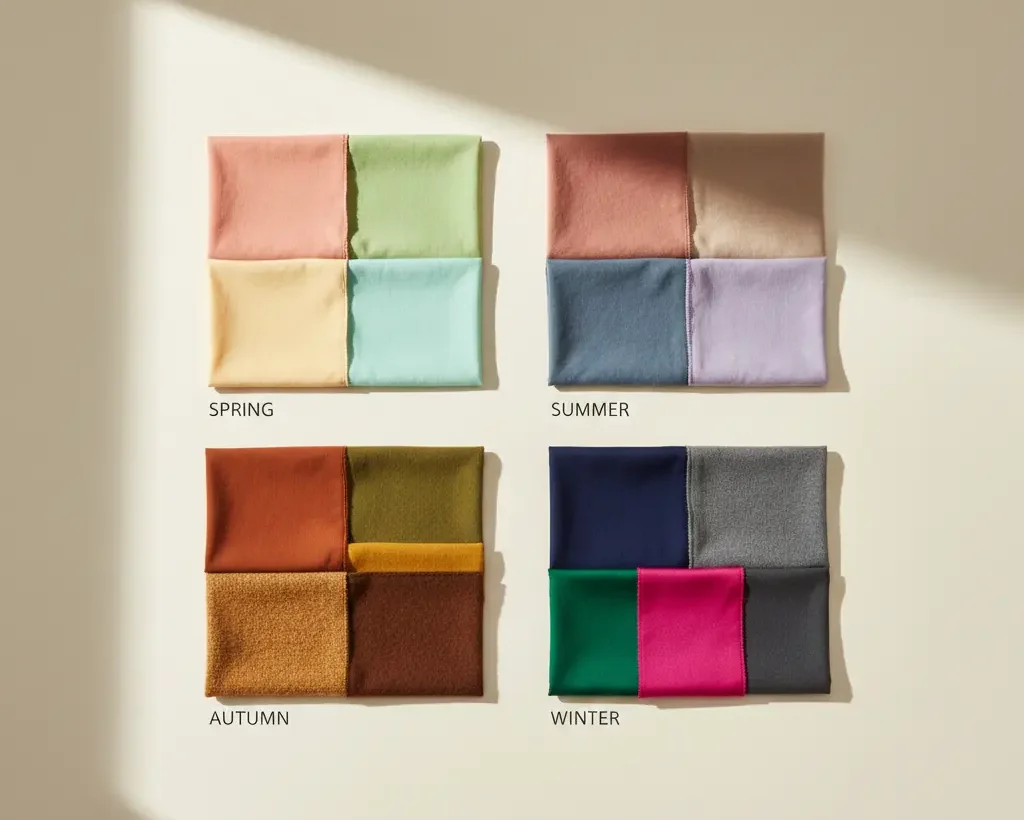
The 4-season system is the classic method.
It has four groups:
- Spring
- Summer
- Autumn
- Winter
Each season is based on undertone and overall look.
Spring
Warm and fresh colors.
Peach, coral, warm green.
Summer
Cool and soft colors.
Rose, dusty blue, lavender.
Autumn
Warm and deep colors.
Olive, rust, mustard.
Winter
Cool and bold colors.
Black, white, jewel tones.
Pros
- Easy to learn
- Quick to use
- Good for beginners
Cons
- Can feel too broad
- Some people fall between seasons
- Less precise for shopping
What is the 12-season system
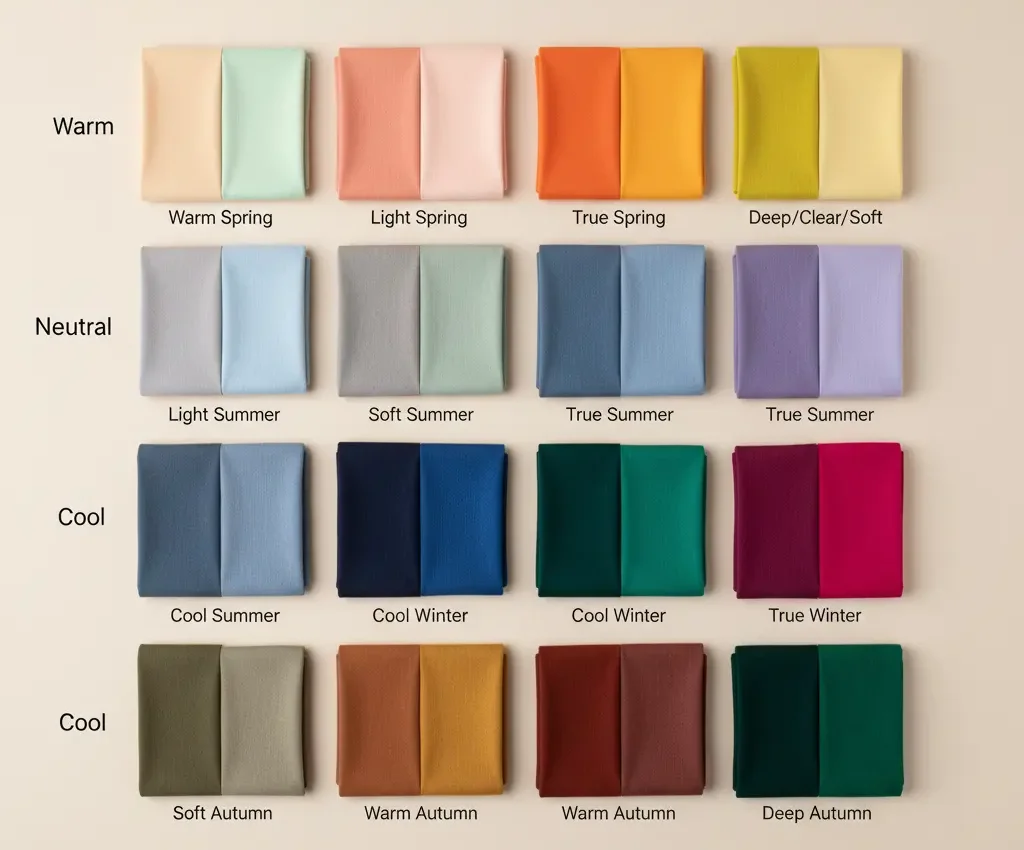
The 12-season system expands the four seasons.
Each season splits into three types.
Example:
Spring → Light Spring, Warm Spring, Bright Spring
This helps people who do not fit neatly into one group.
Pros
- More accurate
- Better for wardrobe planning
- Helps with makeup and hair color
Cons
- Harder to learn
- Takes more time
- More detail to understand
4-season vs 12-season color analysis
Which System Should You Start With?
| If this sounds like you | Start here |
|---|---|
| New to color analysis | 4-season |
| Feel between seasons | 12-season |
| Want quick wardrobe help | 4-season |
| Want precise palette | 12-season |
| Get mixed quiz results | 12-season |
Both systems work.
The best one depends on how precise you want to be.
Which system should you use
Use the 4-season system if you want:
- A quick answer
- Simple guidance
- Easy wardrobe planning
Use the 12-season system if you want:
- More exact colors
- Better outfit matches
- Clear makeup shades
- Fewer shopping mistakes
Many people start with four seasons and then refine into twelve.
Step-by-step: find your season at home
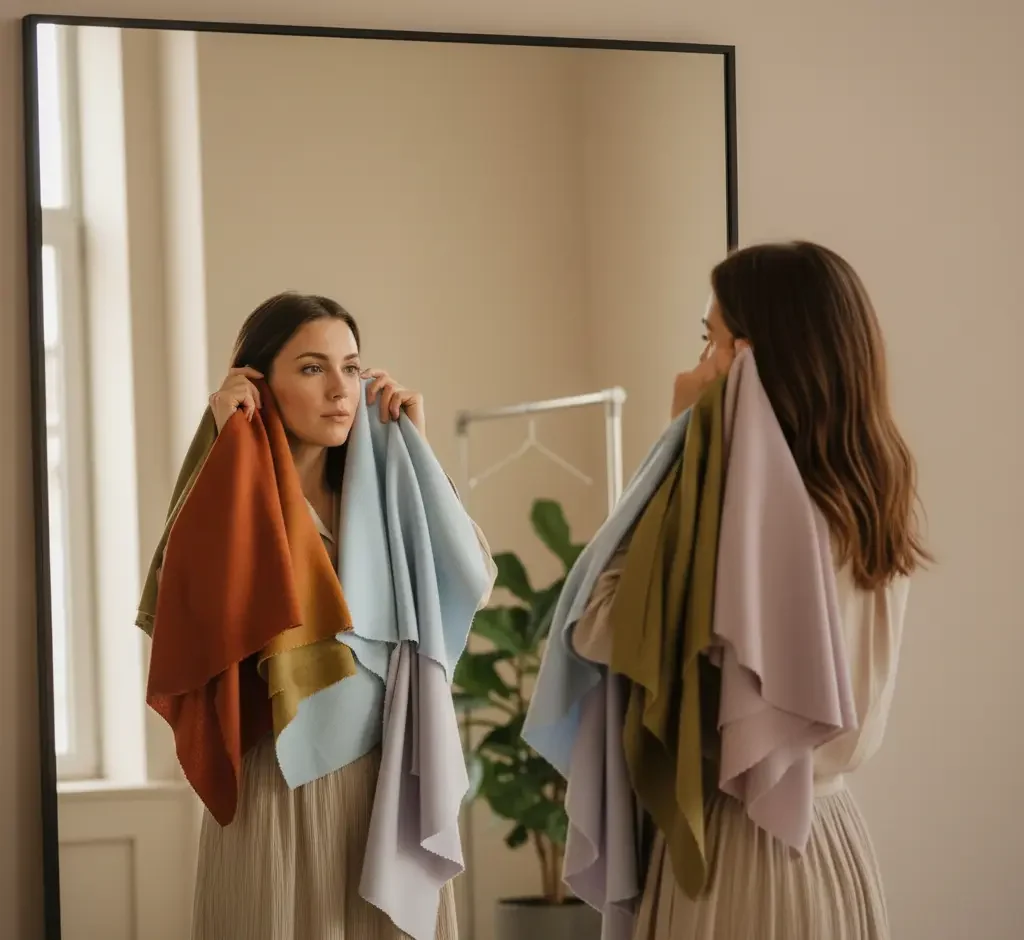
This method gives a strong starting point.
Step 1: warm or cool
Test gold and silver near your face.
If gold looks better → warm.
If silver looks better → cool.
Use this as a clue, not a final answer.
Step 2: light or deep
Do light colors suit you more?
Or deep colors?
Step 3: soft or bright
Do muted colors look calm on you?
Or bold colors look better?
These three steps point you to a season group.
Warm + light → Spring
Cool + soft → Summer
Warm + deep → Autumn
Cool + bold → Winter
From there, you can refine into 12 seasons.
Quick Self Check
| Question | If yes |
|---|---|
| Gold jewelry looks better | Warm |
| Silver jewelry looks better | Cool |
| Light colors suit you | Light |
| Dark colors suit you | Deep |
| Muted shades suit you | Soft |
| Bold colors suit you | Bright |
12-season subtype examples
Each main season has three subtypes.
Spring
Light Spring
Warm Spring
Bright Spring
Summer
Light Summer
Cool Summer
Soft Summer
Autumn
Soft Autumn
Warm Autumn
Deep Autumn
Winter
Bright Winter
Cool Winter
Deep Winter
These subtypes help fine-tune your palette.
Common season mix-ups
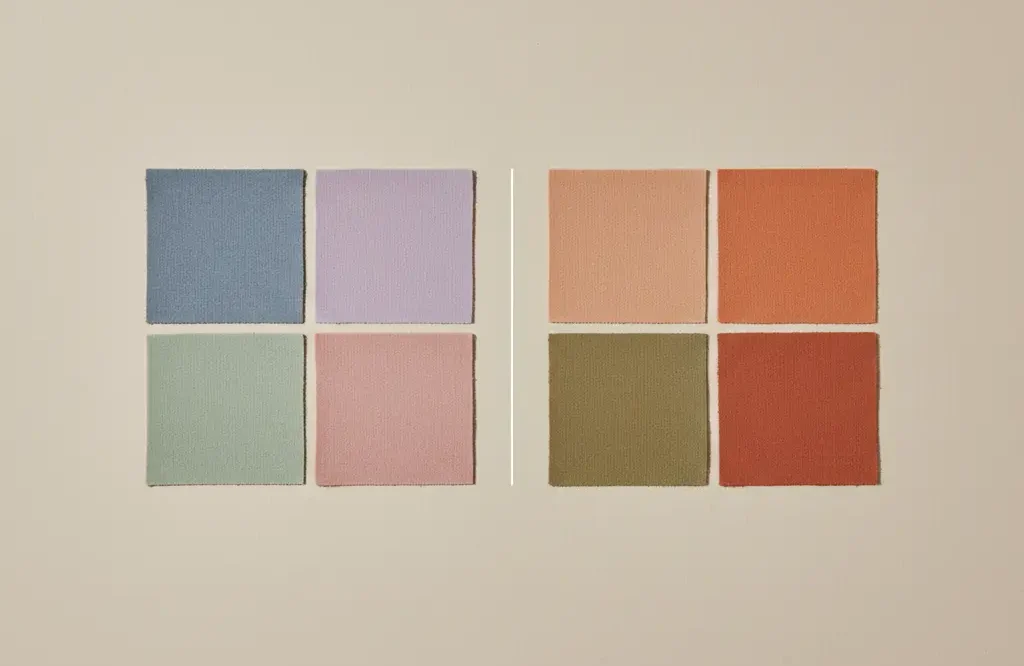
Many people confuse these pairs:
Soft Summer vs Soft Autumn
Light Spring vs Light Summer
Deep Winter vs Deep Autumn
If you feel stuck between two seasons, check contrast and warmth again.
Common Season Confusion
| Often confused | Key difference |
|---|---|
| Soft Summer vs Soft Autumn | Cool vs warm softness |
| Light Spring vs Light Summer | Warm vs cool lightness |
| Deep Winter vs Deep Autumn | Cool vs warm depth |
Why quizzes give mixed results
Online quizzes can help, but they are not perfect.
Lighting changes how colors look.
Makeup affects results.
Hair dye changes contrast.
Use quizzes as a guide, then confirm with real color tests.
Real life use of your season
Knowing your season helps you:
- Choose clothing colors
- Pick makeup shades
- Select hair color
- Build a capsule wardrobe
- Shop faster
You waste less money on wrong colors.
Outfit and makeup examples
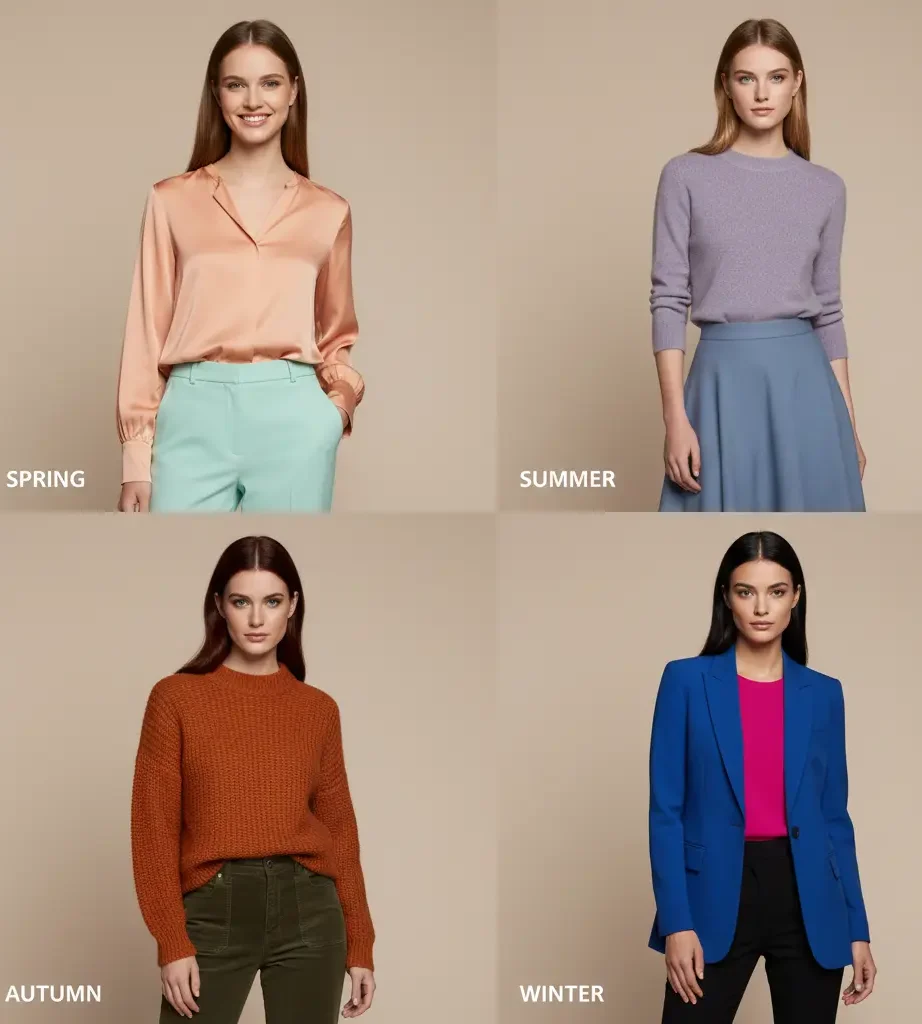
Spring
Light warm outfits
Peach blush
Golden jewelry
Summer
Soft cool outfits
Rose lipstick
Silver jewelry
Autumn
Earthy outfits
Warm brown makeup
Bronze tones
Winter
High contrast outfits
Berry lipstick
Black and white looks
These are general guides.
Your subtype refines them further.
Can your season change
Your base undertone stays the same.
Hair color, aging, or tanning can shift how colors look.
You may move between subtypes, but your main season stays close.
Quick decision guide
Start with 4 seasons if:
- You are new
- You want simple steps
- You want fast results
Move to 12 seasons if:
- You want accuracy
- You shop often
- You feel between seasons
- Quizzes give different answers
Quick Summary
- 4-season system is simple and fast
- 12-season system gives more precise results
- Both systems help you choose better colors
- Start simple and refine only if needed
Final Thought
After working with both the 4-season and 12-season systems for years, one thing becomes clear. Most people do not need more charts or quizzes. They need a method that helps them choose colors with confidence. Some feel good starting with the 4-season system because it is simple and quick. Others get better results when they refine into the 12-season system and notice which shades truly suit their skin, eyes, and hair.
In real use, progress comes from testing colors in natural light and paying attention to how your face responds. Over time, the right palette becomes easy to spot. You shop faster, build outfits with less stress, and avoid colors that never felt right. The goal is not to fit a label perfectly. The goal is to find colors that support how you want to look and feel each day.
