

If you have ever felt like some colors make you look fresh while others make you look tired, you are not alone. Many people who later discover they are Soft Autumn go through this for years without knowing why. You may notice that black feels too harsh, bright colors feel too loud, and some cool shades make your skin look flat or dull. Even warm colors do not always work the way you expect, which can make shopping, makeup, and outfit choices feel confusing.
In my experience, this usually happens when someone has a mix of softness, warmth, and low contrast, which is exactly what defines Soft Autumn. Once people understand this balance, everything starts to make more sense. Colors look more natural, outfits feel more flattering, and it becomes much easier to choose what truly suits you. In this guide, you will learn what Soft Autumn means, how to tell if it fits you, your best and worst colors, and how to use your palette in real life.
Quick Takeaway: Is Soft Autumn Right for You?
Soft Autumn is best for people who look most balanced in soft, warm, and muted colors. If black feels too harsh, bright colors feel too loud, and earthy low-contrast shades look more natural on you, this season may be a strong match.
- Best traits: soft, warm, muted, low contrast
- Best colors: sage, olive, camel, dusty peach, muted teal
- Avoid: pure black, optic white, icy shades, bright jewel tones
- Often confused with: Soft Summer and True Autumn
What Is the Soft Autumn Color Season?
The Soft Autumn color season is a color season that suits people who look best in soft, warm, and muted shades. It is part of the Autumn color season family, but it is gentler and less rich than the deeper Autumn seasons.
This season usually works best for people whose natural coloring looks more balanced in earthy, blended tones rather than bright, cool, or high-contrast colors. If shades like sage, olive, camel, dusty peach, and warm taupe look more natural on you than icy or bold colors, the Soft Autumn color season may be a strong fit.
The 12 Seasons of Color Analysis
Color analysis puts people into 12 color seasons. These seasons are based on how your natural coloring works with different shades.
The four main seasons are:
Each one is then split into three smaller groups.
That gives us 12 seasons in total.
Soft Autumn is one of the Autumn seasons.
It sits between:
- Soft Summer
- True Autumn
This means Soft Autumn has:
- some warmth from Autumn
- some softness from Summer
That is why this season can feel tricky at first.
But once you understand it, it becomes much easier to dress, shop, and choose colors that flatter you.
Soft Autumn Is Warm and Soft
The heart of Soft Autumn is simple:
Soft Autumn is warm and muted.
This season does not look best in bright, icy, sharp, or high-contrast colors.
Instead, Soft Autumn looks best in shades that feel:
- gentle
- earthy
- calm
- blended
- dusty
- natural
Think of colors like:
- sage green
- muted teal
- soft camel
- warm taupe
- dusty peach
- olive
- mushroom brown
- muted rust
These colors do not scream for attention.
They create a soft and balanced look.
The two main traits of Soft Autumn are:
1) Softness first
This is the most important trait.
Your best colors are muted, not bright.
2) Warmth second
Your colors also have a warm undertone.
That means warm, earthy shades usually suit you better than cool, icy ones.
Quick self-check
You may be a Soft Autumn if:
- Black feels too strong on you
- Icy white makes you look tired
- Cream looks better than pure white
- Bright pink looks too loud
- Warm muted colors look more natural than icy cool shades
- Soft, warm colors make your skin look smoother
- Low-contrast outfits look better than bold contrast
- Shiny or high-contrast outfits feel overpowering
If that sounds like you, keep reading.
Soft Autumn Self-Check
If most of these feel true for you, Soft Autumn may be a strong fit:
- Bright colors feel too strong on you
- Black feels harsh near your face
- Cream looks better than pure white
- Warm muted shades look more natural than cool icy ones
- Low-contrast outfits suit you better than bold contrast
- Earthy, blended colors make your skin look smoother
Characteristics
Soft Autumn usually has a soft, blended, and low-contrast look.
This season often looks best in colors that feel:
- muted rather than bright
- warm rather than cool
- gentle rather than sharp
Soft Autumn features may show up in the:
- eyes
- skin
- hair
- overall contrast level
What matters most is not one single feature.
It is the overall harmony of your coloring.
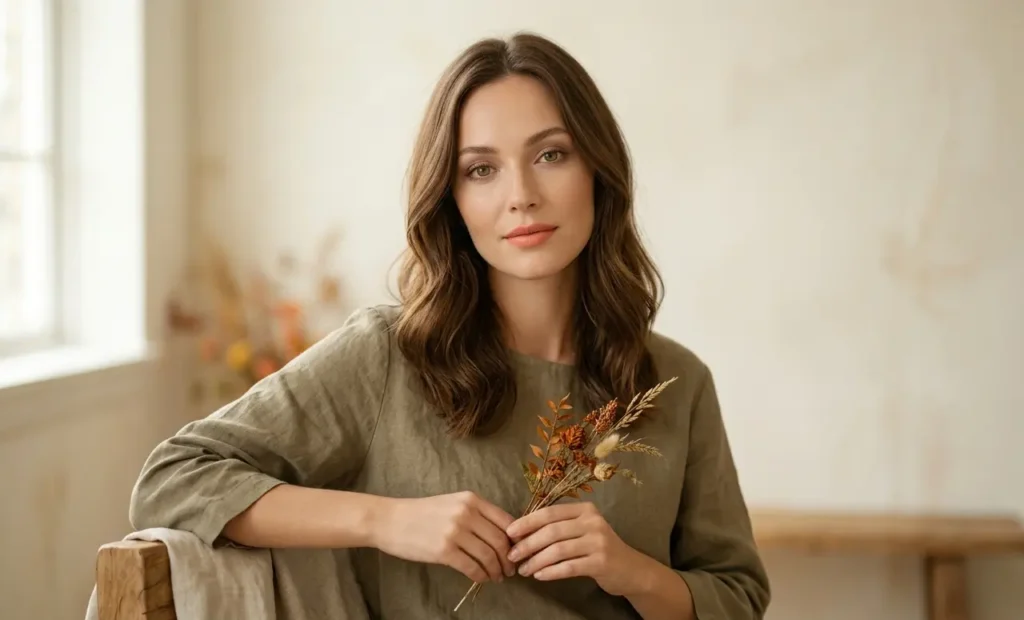
Who is NOT Soft Autumn?
You may not be Soft Autumn if:
- icy cool colors suit you better than warm ones
- Bright, clear colors make your face look fresh
- You look strong in bold contrast
- Smoky cool tones look better than earthy warm tones
If that sounds more like you, you may be closer to Soft Summer or another season.
Soft Autumn vs Soft Summer
This is one of the biggest areas of confusion.
Both seasons are muted, but the key difference is simple:
- Soft Autumn is warm
- Soft Summer is cool
If warm muted shades like olive, cream, and warm taupe flatter you more, you may lean towards Soft Autumn.
If cool muted shades like smoky blue, cool taupe, and dusty rose flatter you more, you may lean toward Soft Summer.
If you want a deeper breakdown of traits, undertones, and visual clues, it is best to explore a full Soft Autumn characteristics guide.
The Color Palette
The Soft Autumn palette is made of colors that are:
- warm
- muted
- earthy
- soft
- natural-looking
These shades usually feel gentle instead of bold.
Some common Soft Autumn colors include:
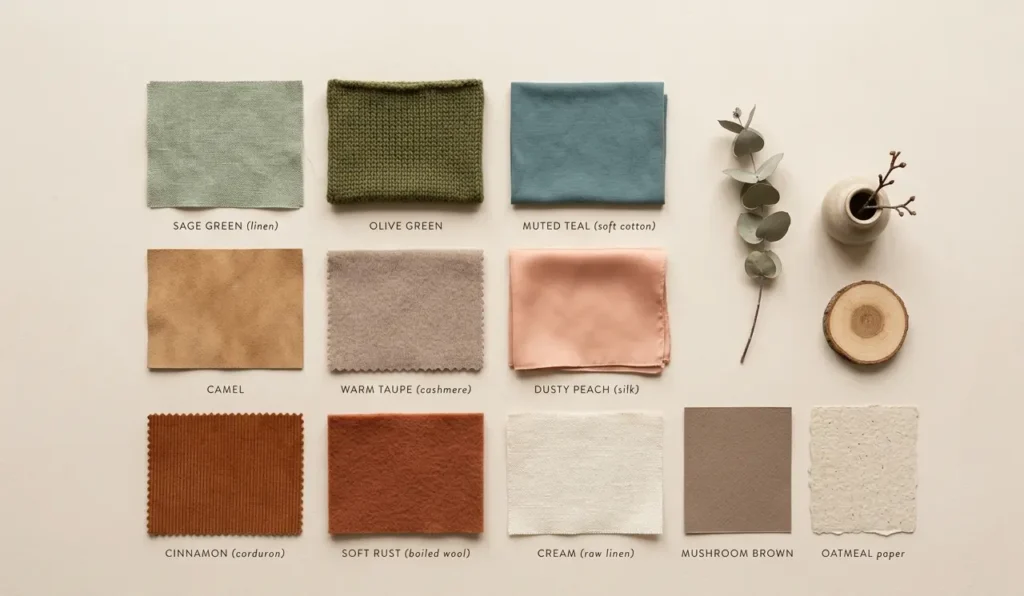
- sage
- olive
- muted teal
- camel
- warm taupe
- dusty peach
- cinnamon
- soft rust
- cream
- mushroom brown
Some soft autumn color palette Pinterest ideas.
Color Dimensions
Soft Autumn colors usually work best because they are:
- warm in hue
- medium in value
- low in chroma
That means the best shades are usually:
- not too cool
- not too bright
- not too extreme
Sister Palettes
Soft Autumn sits between:
- Soft Summer
- True Autumn
It is:
- warmer than Soft Summer
- softer than True Autumn
Compared with Deep Autumn, Soft Autumn is lighter, gentler, and less intense.
Soft Autumn vs True Autumn vs Deep Autumn
Soft Autumn is softer and more muted than the other Autumn seasons.
- Soft Autumn looks best in gentle, blended, low-contrast colors
- True Autumn suits richer, warmer, and more saturated shades
- Deep Autumn suits darker, deeper, and more dramatic colors
If strong warmth or deep contrast feels too heavy on you, Soft Autumn may be the better fit.
Soft Autumn vs Similar Seasons
If you want a deeper breakdown, swatches, and exact shade ideas, it is best to explore a full Soft Autumn color palette guide.
Styling
This is where your Soft Autumn palette becomes useful in daily life.
It is one thing to know your season.
It is another thing to actually wear it well.
This section helps with that.
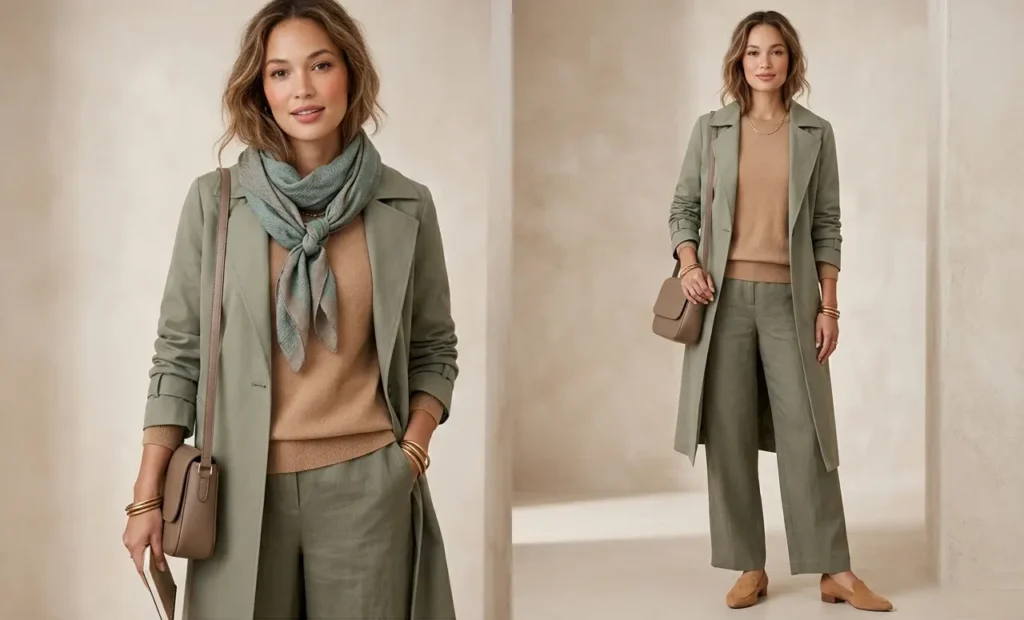
Neutrals
Your neutrals matter a lot because they make up most of a real wardrobe.
The best Soft Autumn neutrals are usually:
- warm beige
- camel
- taupe
- mushroom
- cocoa
- olive-brown
- softened navy
- soft espresso
- oatmeal
- cream
These shades are easy to wear and easy to mix.
Best everyday Soft Autumn neutrals:
- soft camel trousers
- warm cream knitwear
- taupe jackets
- mushroom cardigans
- cocoa handbags
- olive outerwear
These neutrals are often more useful than bold colors because they work again and again.
Colors to Avoid
Not every warm color works for Soft Autumn.
Some shades are too bright, too cold, or too sharp.
The least flattering Soft Autumn colors are usually:
- pure black
- optic white
- cobalt blue
- neon coral
- fuchsia
- icy lavender
- cool charcoal
- bright emerald
- blue-red
- silver-heavy icy shades
These colors can make Soft Autumn skin look:
- dull
- tired
- harsh
- washed out
Common mistake:
- choosing warm colors that are too bright
- wearing black too close to the face
- picking very shiny or high-shine fabrics
- choosing cool pink or icy makeup shades
- wearing high-contrast prints or outfits
Small changes in softness can make a big difference.
If you want to read about the worst soft autumn colors in detail, then read this detailed article.
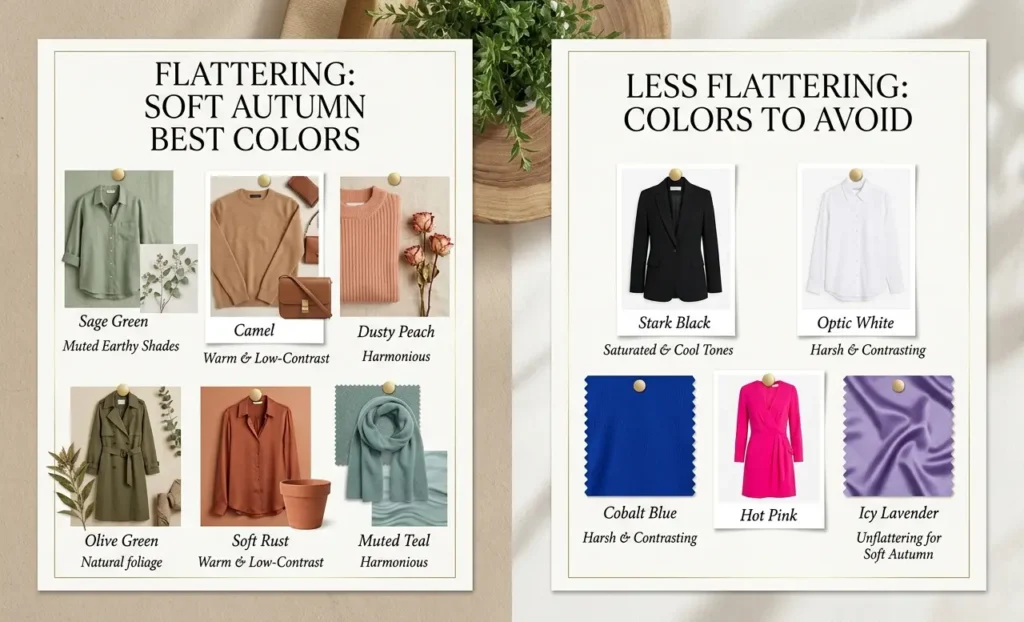
Soft Autumn: Best vs Worst Color Direction
Color Combinations
A big part of looking good is not just choosing the right colors.
It is knowing how to combine them.
Soft Autumn looks best in combinations that feel:
- blended
- calm
- earthy
- low contrast
Great Soft Autumn color combinations:
- sage + camel
- olive + cream
- dusty teal + cocoa
- warm beige + cinnamon
- mushroom + muted peach
- soft rust + taupe
- eucalyptus + warm stone
These combinations feel balanced and flattering.
Here is a detailed article on the best colors for soft autumn. Read this if you want to go more in-depth.
Less flattering combinations often include:
- black + white
- bright pink + black
- cobalt + white
- icy blue + charcoal
The softer the blend, the better.
Soft Autumn often looks especially good in monochromatic outfits or in combinations of neighboring colors with a similar softness.
These outfits feel more balanced than high-contrast color pairings.
Patterns & Prints
Soft Autumn usually looks best in prints that feel:
- soft
- blended
- earthy
- low contrast
The best prints often include:
- muted florals
- soft plaids
- watercolor-style patterns
- gentle abstract prints
Very sharp, bold, or high-contrast prints can feel too strong.
If a print feels loud, it may overpower your natural softness.
Metals & Accessories
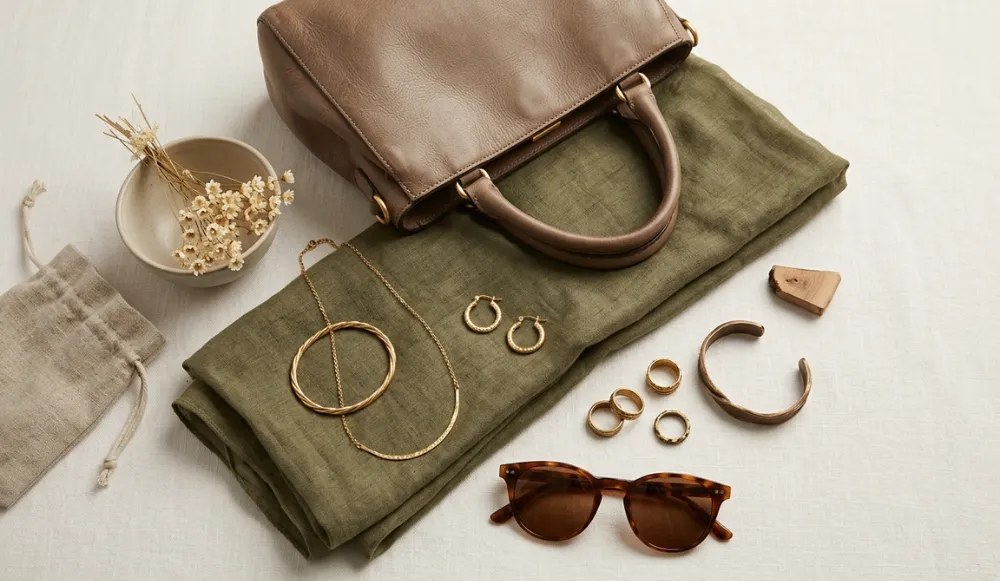
The best metals for Soft Autumn usually have a soft, muted finish.
Good options often include:
- brushed gold
- antique gold
- soft rose gold
- pewter
- muted silver
- bronze
- soft white gold
Very bright, shiny, or overly orange metals can feel too strong.
Best accessory colors for Soft Autumn:
- tan
- camel
- olive
- warm brown
- muted green
- soft rust
- taupe
This works well for:
- handbags
- shoes
- belts
- sunglasses
- watch straps
Small details can make a big difference.
Makeup for the Soft Autumn Woman
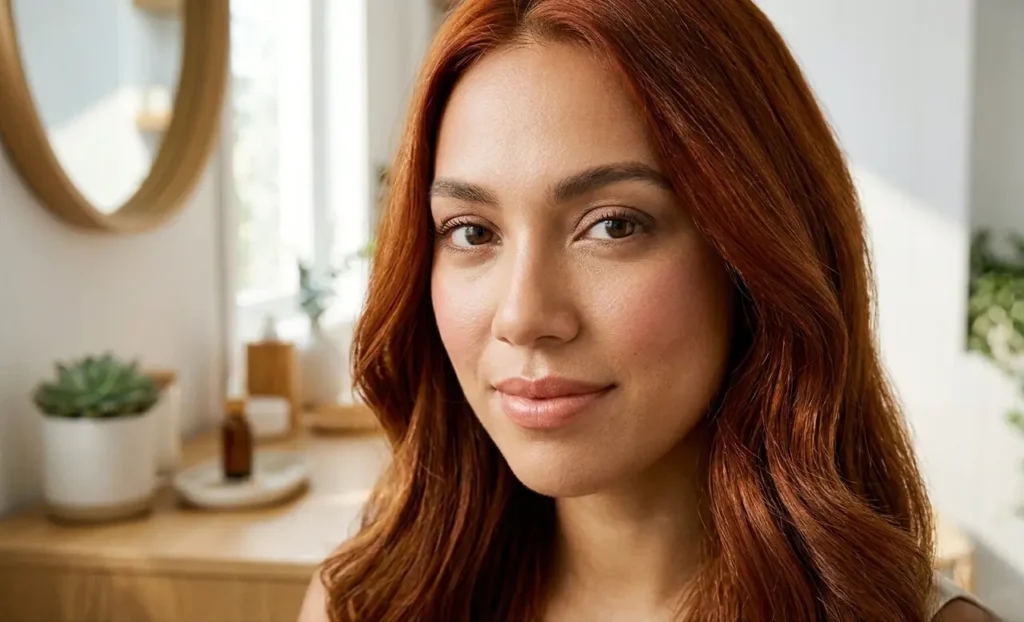
Soft Autumn makeup usually looks best when it feels:
- soft
- warm
- natural
- blended
In general, Soft Autumn makeup works best in shades like:
- muted peach
- warm rose
- terracotta nude
- olive
- bronze taupe
- soft brown
Very icy, bright, or blue-based makeup can often feel too strong.
If you want the best lipstick, blush, eyeshadow, and nail shades in detail, it is best to explore a full Soft Autumn makeup guide.
Wardrobe Essentials for Soft and Warm Coloring
A Soft Autumn wardrobe usually works best when it feels:
- calm
- cohesive
- earthy
- easy to mix
Good basics often include:
- cream
- camel
- olive
- taupe
- cocoa
- muted teal
These shades help create a softer and more balanced look.
Soft Autumn Colors for the Whole Year
Soft Autumn colors can work well all year when you adjust the depth and weight of the shades.
In lighter months, softer and fresher tones often feel best.
In cooler months, deeper muted neutrals and earthy shades usually work better.
The key is to stay within the same soft, warm, and muted feeling.
Action Steps for Embracing Your Soft Autumn Palette
If you think you are Soft Autumn, here are the best next steps.
1) Start with neutrals
This is the easiest place to begin.
Try:
- cream
- camel
- taupe
- olive
- cocoa
2) Replace harsh basics
Swap:
- black → soft espresso or olive-brown
- white → cream or ecru
- bright navy → warm-leaning navy
3) Check your makeup shades
Try softer, warmer shades instead of cool or bright ones.
4) Look at your best outfits
Notice what they have in common.
They may already be telling you that Soft Autumn fits.
5) Build slowly
You do not need to change everything at once.
Even a few better colors can make a big difference.
Not Sure Which Color Season You Are?
Take our free 2-minute Color Season Quiz to discover whether you are most likely a Spring, Summer, Autumn, or Winter—and explore the colors that suit you best.
Final Thoughts
Soft Autumn can feel confusing at first, but once you understand how soft, warm, and muted colors work together, everything becomes much clearer. In my experience, people in this season often feel like colors are “almost right” until they finally find the balance that suits them. When you start choosing softer and more blended shades, your overall look feels more natural, your outfits feel easier to put together, and even small choices like makeup and accessories begin to work better. That is what makes Soft Autumn useful in real life—it helps you choose colors that support your natural look instead of fighting against it.
