

Many people struggle to figure out why some colors look right while others feel completely off. You try different outfits, but the results are not consistent. One day your face looks fresh and clear, and the next day it looks dull or tired. Many people switch to soft or neutral colors, thinking they are safe, but those shades often make things worse instead of better.
I have seen this pattern many times. People think they chose the wrong season or blame their skin tone, but the real issue is often chroma. When someone has bright chroma, their features need clear and strong colors to look balanced. If bright colors make your face look more alive while soft colors make you look flat, this is a strong sign you are dealing with high chroma.
If bright colors make you look better than muted ones, you may have bright chroma.
If bright, clear colors make your face look fresh and awake, and muted colors make you look dull or tired, you likely have bright chroma. The key is how your face reacts, not your hair or skin alone.
Quick Signs You Have Bright Chroma
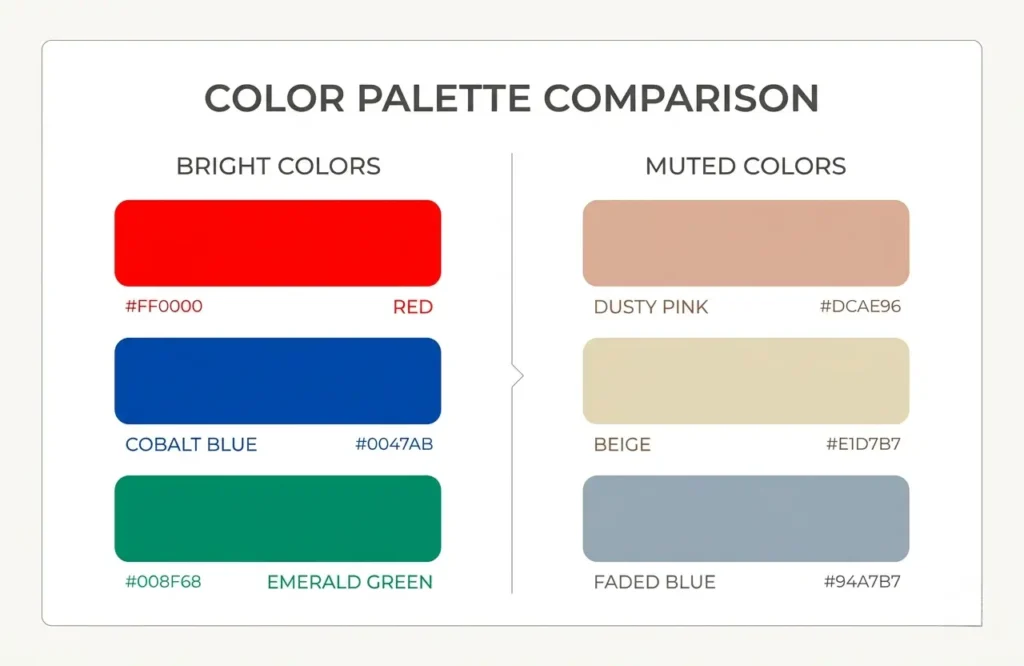
- Bright, clear colors make your face look fresh and alive
- Muted or dusty colors make your skin look dull
- Your features can handle strong contrast easily
- Bold makeup looks natural on you, not heavy
- Clear colors suit you more than soft or blended shades
What Does Bright Chroma Mean in Color Analysis?
Chroma means how clear or muted a color is.
- High chroma (bright) = clear, strong, clean colors
- Low chroma (soft) = muted, dusty, blended colors
If you have bright chroma, your features need intensity to look balanced.
Soft colors do not match your natural clarity. They can make your skin look flat.
This is the difference between clear vs muted coloring.
10 Clear Signs You Have Bright Chroma
1. Bright Colors Make Your Face Look Alive

When you wear clear colors like bright red, cobalt blue, or emerald green:
- Your skin looks fresh
- Your eyes stand out
- Your face looks awake
This is a strong sign of high chroma.
2. Muted Colors Make You Look Dull
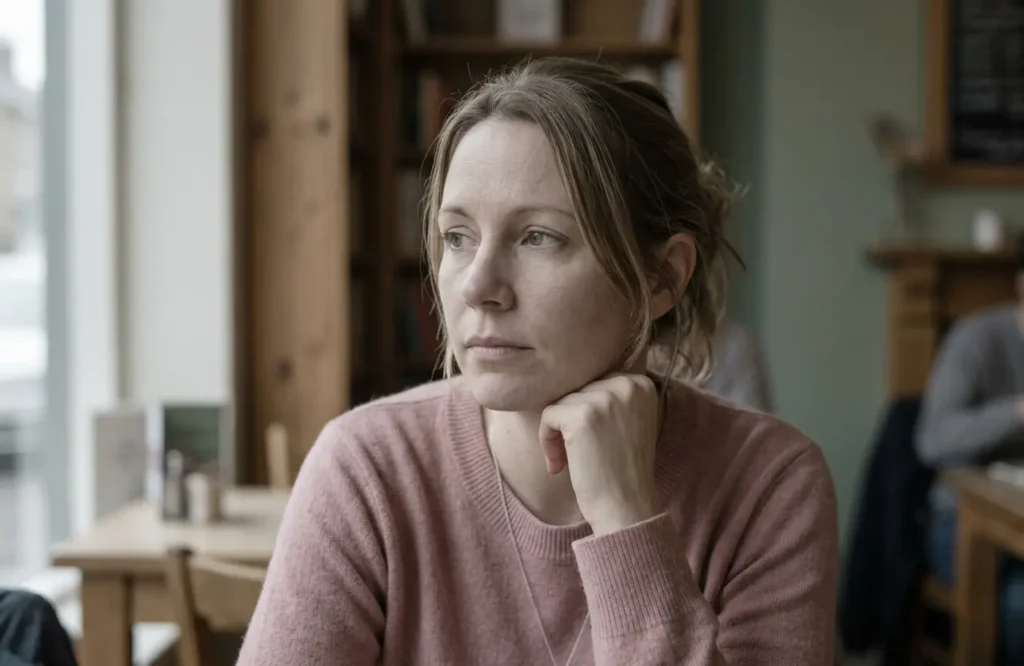
Soft shades like dusty pink, beige, or faded blue can:
- Make your skin look grey
- Reduce contrast in your face
- Make you look tired
If this happens often, you likely do not suit low chroma.
If you often wonder why soft colors wash you out, chroma is usually the reason.
3. Black and White Work Well on You
Many people look harsh in black and white.
But if you have bright chroma:
- Black does not overpower you
- White looks clean, not flat
This is more common if you lean toward Bright Winter.
4. You Have Noticeable Contrast in Your Features
Look at your natural coloring:
- Dark hair with lighter skin
- Bright eyes against your skin tone
This contrast supports bright, clear colors.
But contrast alone does not confirm chroma. It’s just one clue.
5. Bold Makeup Looks Natural on You

If bold lipstick or strong eye makeup looks right (not heavy), this is a key sign.
- Bright red lipstick looks balanced
- Clear pinks look fresh
- Soft nude shades may look dull
Your face can carry intensity.
6. You Look Better in High-Contrast Prints

Clothes with strong contrast often suit you:
- Black and white patterns
- Bright color combinations
- Sharp, clear prints
Soft, blended prints may look boring on you.
7. Your Eyes Look Clear, Not Soft
Bright chroma people often have:
- Clear eye color
- Defined iris pattern
- Eyes that stand out easily
Muted eyes tend to look more blended and soft.
8. You Can Wear Both Warm and Cool Bright Colors
You may notice:
- Both bright coral and bright fuchsia work
- Both clear blue and bright green look good
This happens because brightness matters more than warm or cool undertones at first, as long as the colors stay clear and bright.
9. Shiny and Glossy Finishes Suit You
Glossy textures often look better than matte:
- Glossy lips
- Shiny fabrics
- Polished metals
Matte, dusty finishes can look flat on your skin.
10. You Relate to Bright Season Types
If you explore seasonal color analysis, you may fit into:
- Bright Winter
- Bright Spring
Both are high chroma seasons with clear, strong colors.
What Happens on Your Face (The Real Test)
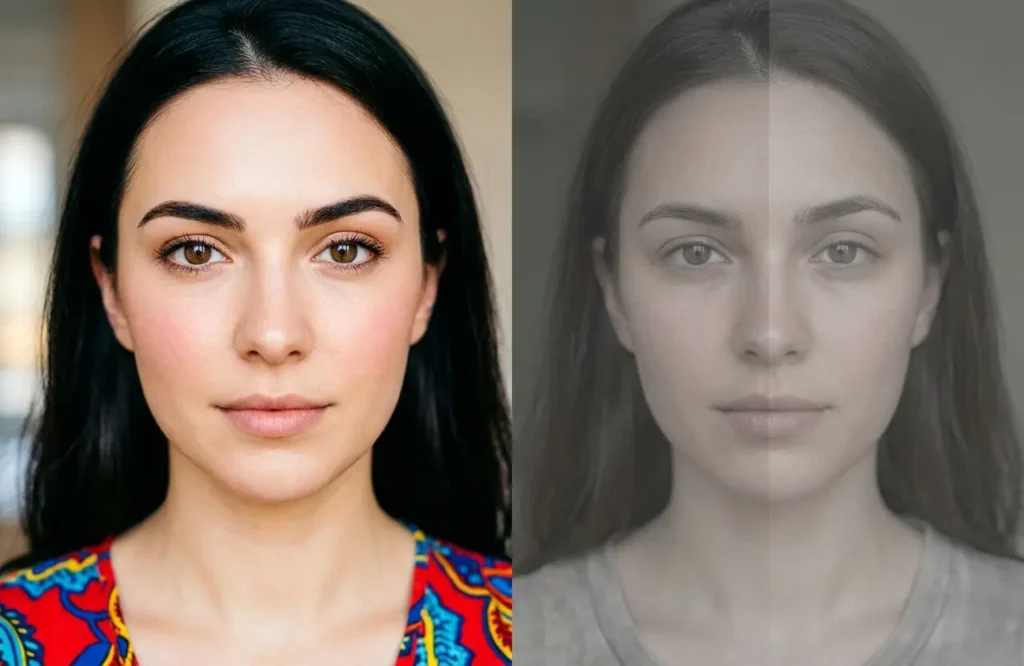
This is where most people get clarity.
Think of it like this: bright chroma looks clear and sharp, while soft chroma looks blended and muted.
If your face looks more defined with strong colors, that is a key sign.
When the color is RIGHT (bright):
- Skin looks clear
- Eyes pop
- Face looks fresh
When the color is WRONG (muted):
- Skin looks dull or grey
- Eyes lose focus
- Face looks tired
This visual change is the biggest clue.
Quick At-Home Test for Bright Chroma

Try this simple test.
- Stand in natural light
- Hold a bright color (like hot pink) near your face
- Then hold a soft color (like dusty pink)
Ask yourself:
- Which one makes your skin look better?
- Which one makes your eyes stand out?
If bright wins clearly, you likely have high chroma.
- Do bright colors make your face look more awake?
- Do muted colors make your skin look dull?
- Do bold shades feel more natural than soft ones?
Bright Chroma vs Soft Chroma (Simple Difference)
Bright Chroma:
- Clear, strong colors suit you
- Face looks better with intensity
- Muted colors look dull
Soft Chroma:
- Muted colors suit you
- Face looks calm and blended
- Bright colors feel too harsh
This is where many people get confused.
| Feature | Bright Chroma | Soft Chroma |
|---|---|---|
| Best Colors | Clear, bold, saturated | Muted, dusty, blended |
| Skin Reaction | Looks fresh and clear | Looks calm and soft |
| Wrong Colors Effect | Muted colors look dull | Bright colors look harsh |
| Overall Look | Clear, sharp, lively | Soft, blended, gentle |
Common Mistakes People Make
- High contrast does not always mean bright chroma
- Fair skin does not mean you are bright
- Dark hair does not automatically mean high chroma
The real test is always how your face reacts to color.
You Might Be Mistaking This for Bright Chroma
Some people think they have bright chroma, but that is not always true.
- High contrast does not always mean high chroma
- Clear skin does not always mean bright coloring
- Dark hair alone is not enough to confirm brightness
The real test is always how your face reacts to clear vs muted colors.
What This Means for Your Season
If you relate to most of these signs, you likely have high chroma.
In seasonal color analysis, this usually connects to:
These seasons share one key trait: clear, strong colors that match your natural intensity.
Final Thoughts
From real examples, one thing stays consistent. When someone has bright chroma, clear and strong colors make their face look more awake, more defined, and more balanced, while soft colors reduce that clarity and make the face look tired. The key is to focus on how your face reacts instead of guessing based on hair or skin alone. If bright colors keep making your face look clearer and more alive, that is a strong confirmation that you have bright chroma.
