


Finding the right shade of blonde for your season can feel frustrating, especially when a blonde color that looks beautiful on someone else ends up looking too harsh, too yellow, or completely washing you out. Many people choose blonde hair based on trends, salon photos, or celebrity inspiration without realizing that undertones, contrast, and seasonal coloring play a huge role in how blonde actually looks on the face. I have seen people spend time and money on blonde shades that technically looked pretty, but did not feel balanced with their natural features.
One thing I have noticed while studying seasonal color analysis is that the most flattering blonde is usually not the trendiest one. It is the shade that works naturally with your skin tone, eye color, depth, and overall harmony. Some people glow in soft beige blonde, while others need icy platinum or rich honey tones to look their best. Once you understand your season, choosing blonde becomes much easier because you stop guessing and start choosing shades that truly support your natural coloring.
How Seasonal Color Analysis Helps You Choose Blonde Hair
Seasonal color analysis groups people into four main seasons:
- Spring
- Summer
- Autumn
- Winter
Each season has natural color harmony. Your skin tone, eyes, and natural hair color work together in a certain way.
Some people suit:
- warm golden blonde
- soft beige blonde
- icy platinum blonde
- muted ash blonde
Others do not.
This is why two people can wear the same blonde shade and get completely different results.
The right blonde usually:
- brightens your skin
- makes your eyes clearer
- creates balance
- looks more natural
The wrong blonde can:
- make skin look gray
- create harsh contrast
- bring out redness
- make dark circles more visible
You do not need to know your exact season perfectly before choosing blonde. Even understanding whether your coloring is warm, cool, soft, or bright can help you avoid many common blonde mistakes.
How to Know Your Season
Before choosing blonde hair, you need a basic idea of your season.
Quick Blonde Match Guide
- Warm Seasons: Honey blonde, golden blonde, caramel blonde
- Cool Seasons: Ash blonde, pearl blonde, icy blonde
- Soft Seasons: Beige blonde, dusty blonde, muted blonde
- Bright Seasons: Clear blonde, platinum blonde, high-contrast blonde
Warm vs Cool
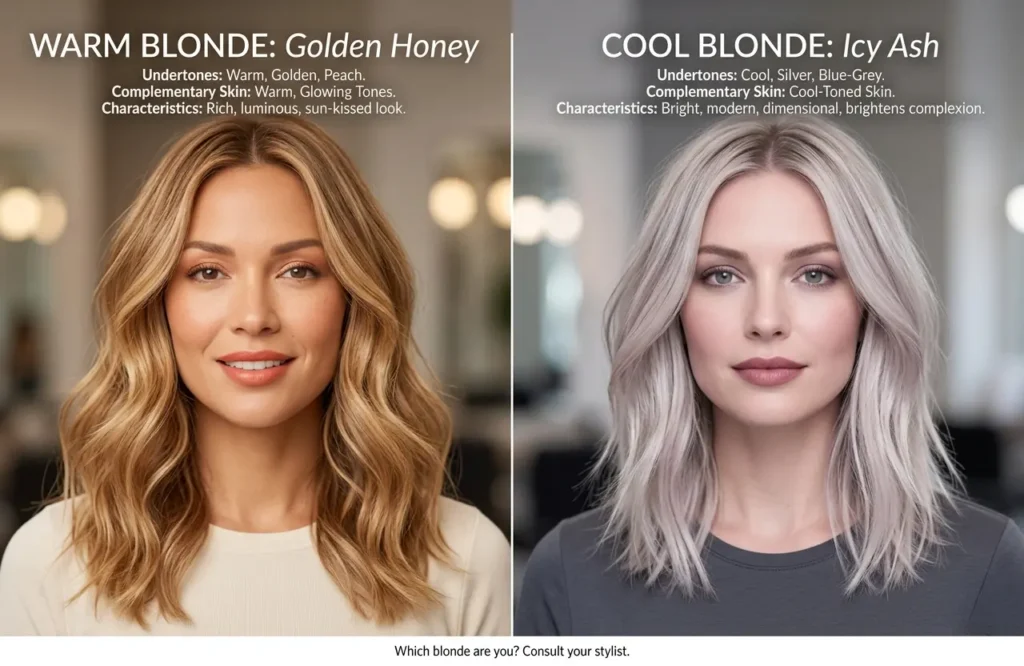
Spring and Autumn seasons usually look best in warmer blonde tones, while Summer and Winter seasons often suit cooler blonde shades.
Warm seasons usually suit:
- golden blonde
- honey blonde
- caramel blonde
- buttery blonde
Cool seasons usually suit:
- ash blonde
- pearl blonde
- icy blonde
- champagne blonde
A simple clue is jewelry.
If gold jewelry looks better, you may lean warm.
If silver looks better, you may lean cool.
Light vs Deep
Light seasons usually have:
- softer contrast
- lighter eyes
- lighter hair naturally
Deep seasons usually have:
- darker hair
- stronger contrast
- richer coloring
Light seasons often suit softer blondes.
Deep seasons usually need more depth in their blonde shades.
Bright vs Muted
Bright seasons can handle:
- clear blonde tones
- high shine
- stronger contrast
Muted seasons usually look better in:
- smoky blonde
- beige blonde
- blended tones
Very bright blonde can overpower muted coloring.
Warm Blonde vs Cool Blonde
One of the biggest blonde mistakes is choosing the wrong temperature.
Warm blonde has:
- golden tones
- honey tones
- buttery tones
- caramel warmth
Cool blonde has:
- ash tones
- icy tones
- silver tones
- smoky tones
Warm blonde usually suits:
- Spring
- Autumn
Cool blonde usually suits:
- Summer
- Winter
Neutral blondes like beige blonde can work for many seasons when balanced correctly.
Popular Blonde Families Explained
Warm Blondes
Warm blondes usually contain golden or rich tones.
Popular warm blonde shades include:
- honey blonde
- caramel blonde
- buttery blonde
- golden blonde
- amber blonde
These shades often work best for the Spring and Autumn seasons.
Cool Blondes
Cool blondes usually contain icy, smoky, or silver tones.
Popular cool blonde shades include:
- ash blonde
- pearl blonde
- icy blonde
- silver blonde
- mushroom blonde
These shades often flatter the Summer and Winter seasons.
Neutral Blondes
Neutral blondes sit between warm and cool tones.
Popular neutral blonde shades include:
- beige blonde
- champagne blonde
- bronde
- creamy blonde
These shades can work well for people who need balanced softness.
Best Blonde Shades for Spring Seasons
Spring seasons usually look fresh, warm, and bright. Heavy ash tones can make Spring coloring look flat.
Light Spring Blonde Hair
Best shades:
- light golden blonde
- champagne blonde
- creamy blonde
- warm beige blonde
These shades keep the look soft and fresh.
Avoid:
- dark ash blonde
- icy platinum
True Spring Blonde Hair
Best shades:
- honey blonde
- buttery blonde
- golden blonde
- warm wheat blonde
These shades match the natural warmth of True Spring.
Avoid overly cool blondes that remove warmth from the face.
Bright Spring Blonde Hair
Best shades:
- bright golden blonde
- warm platinum blonde
- clear honey blonde
Bright Springs can handle clearer blonde because their features naturally appear more vivid.
Avoid muted or smoky blondes.
Best Blonde Shades for Summer Seasons
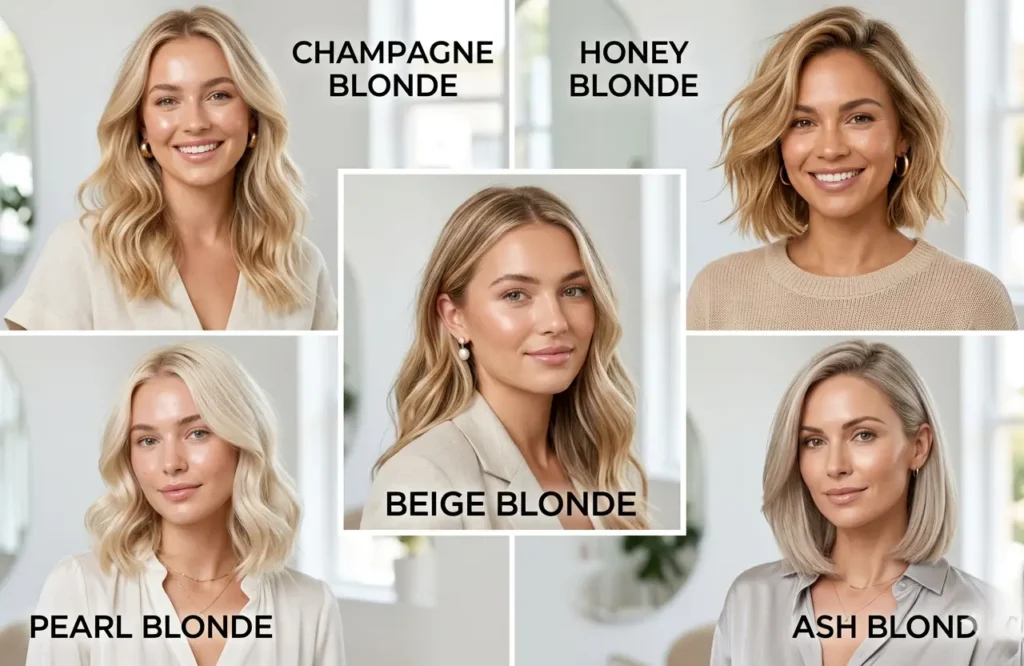
Summer seasons usually look soft and cool. Very yellow blonde often clashes with Summer coloring.
Light Summer Blonde Hair
Best shades:
- soft pearl blonde
- cool beige blonde
- light ash blonde
These shades keep the overall look delicate.
Avoid:
- orange-gold blonde
- strong caramel blonde
True Summer Blonde Hair
Best shades:
- ash blonde
- mushroom blonde
- smoky beige blonde
- silver blonde
These cooler shades work well with soft cool undertones.
Avoid heavy golden warmth.
Soft Summer Blonde Hair
Best shades:
- muted beige blonde
- dusty blonde
- soft ash blonde
Soft Summers usually suit muted blonde because their natural coloring lacks sharp contrast.
Very bright platinum can look too harsh.
Best Blonde Shades for Autumn Seasons
Autumn seasons usually have rich warmth and deeper coloring.
Very icy blonde often looks unnatural on Autumn palettes.
Soft Autumn Blonde Hair
Best shades:
- soft honey blonde
- beige caramel blonde
- muted golden blonde
These shades keep warmth soft instead of overpowering.
Avoid sharp platinum tones.
True Autumn Blonde Hair
Best shades:
- deep honey blonde
- caramel blonde
- amber blonde
- rich golden blonde
These tones bring out Autumn warmth beautifully.
Cool ash shades can make True Autumn look dull.
Dark Autumn Blonde Hair
Best shades:
- dark golden blonde
- caramel balayage
- warm bronde
- toffee blonde
Dark Autumn usually looks better with dimensional blonde because very light platinum can remove the rich depth that gives this season balance.
Rooted blonde styles often work well here.
Best Blonde Shades for Winter Seasons
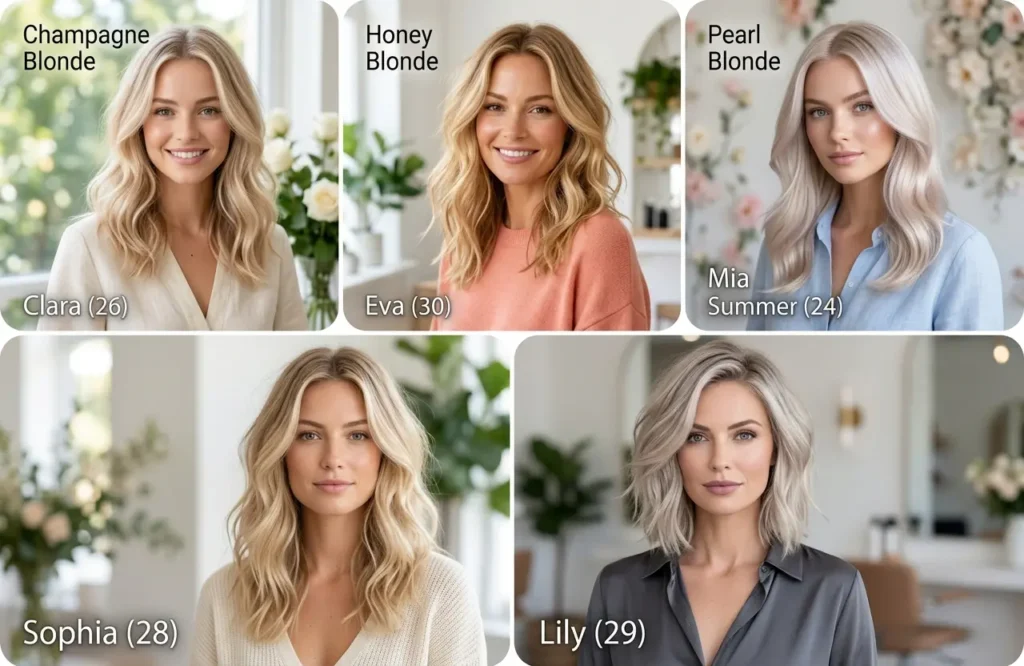
Winter seasons usually have cool undertones and a stronger contrast.
Warm yellow blonde can compete with Winter coloring.
Bright Winter Blonde Hair
Best shades:
- icy blonde
- bright pearl blonde
- cool platinum blonde
Bright Winters can often handle icy or high-contrast blonde better than muted seasons, especially when some root depth remains.
Avoid muddy blonde shades.
True Winter Blonde Hair
Best shades:
- silver blonde
- icy beige blonde
- cool pearl blonde
These shades keep the cool clarity Winter needs.
Warm honey blonde may look too yellow.
Dark Winter Blonde Hair
Best shades:
- rooted platinum
- cool beige balayage
- smoky blonde highlights
Dark Winter usually needs contrast preserved around the roots.
Flat all-over yellow blonde can feel too harsh.
Blonde Shades That Usually Clash With Your Season
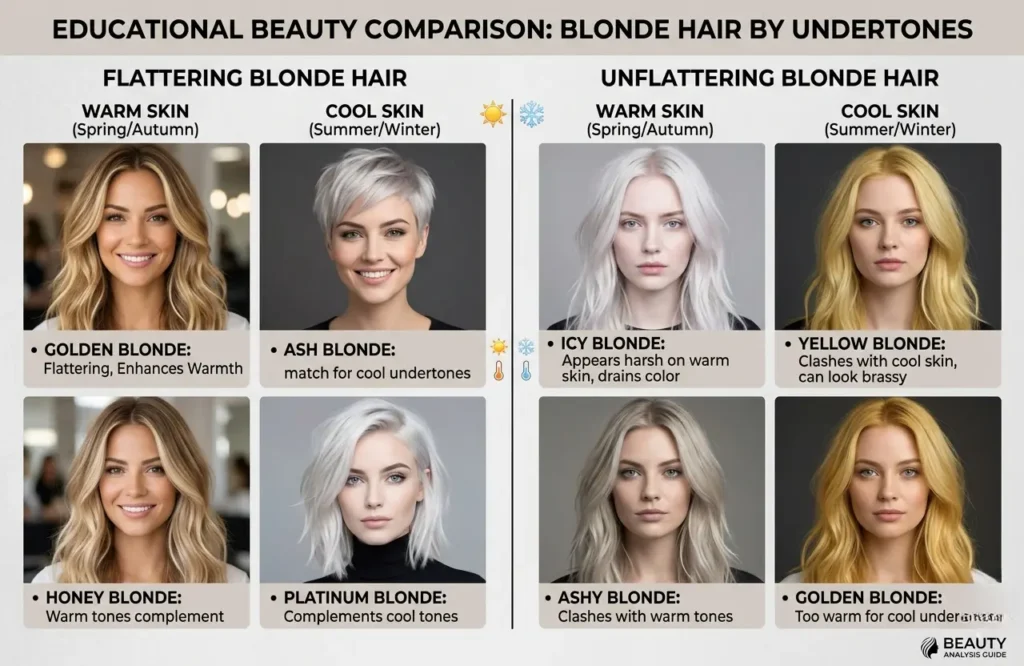
Some blonde shades fight against natural coloring instead of working with it.
Examples include:
- icy platinum on warm Autumn
- yellow gold blonde on cool Summer
- smoky ash blonde on Bright Spring
- orange blonde in Winter
When the blonde clashes with your season, the face often loses balance.
The right blonde should support your natural coloring instead of overpowering it.
| Blonde Mistake | What Can Happen |
|---|---|
| Icy blonde on warm skin | Skin may look dull or tired |
| Yellow blonde on cool tones | Redness may become more noticeable |
| Platinum blonde on soft seasons | Features can appear too harsh |
| Muddy blonde on bright seasons | Face may lose brightness and clarity |
Signs Your Blonde Shade Does Not Match Your Season
Sometimes the wrong blonde shade creates imbalance instead of harmony.
Common signs include:
- your skin looks dull or tired
- redness becomes more noticeable
- dark circles stand out more
- the blonde feels disconnected from your face
- makeup suddenly feels harder to balance
The right blonde usually makes your features look clearer and healthier without needing extra effort.
Best Blonde Shades by Season at a Glance
| Season | Best Blonde Shades | Blonde Shades to Avoid |
|---|---|---|
| Light Spring | Creamy Blonde, Warm Beige Blonde | Dark Ash Blonde |
| True Spring | Honey Blonde, Golden Blonde | Smoky Blonde |
| Bright Spring | Bright Golden Blonde | Muted Ash Blonde |
| Light Summer | Pearl Blonde, Soft Ash Blonde | Orange Gold Blonde |
| True Summer | Mushroom Blonde, Silver Blonde | Heavy Honey Blonde |
| Soft Summer | Dusty Blonde, Beige Ash Blonde | Bright Platinum Blonde |
| Soft Autumn | Beige Caramel Blonde | Sharp Icy Blonde |
| True Autumn | Caramel Blonde, Amber Blonde | Cool Ash Blonde |
| Dark Autumn | Warm Bronde, Toffee Blonde | Flat Platinum Blonde |
| Bright Winter | Icy Blonde, Pearl Blonde | Muddy Blonde |
| True Winter | Silver Blonde, Cool Beige Blonde | Yellow Blonde |
| Dark Winter | Rooted Platinum, Smoky Blonde | Warm Orange Blonde |
Celebrity Blonde Examples by Season
Celebrity examples can make seasonal blonde differences easier to understand.
- Taylor Swift often wears soft blonde shades that work well for Light Summer coloring.
- Margot Robbie is known for warm golden blonde tones that suit Spring palettes beautifully.
- Jennifer Aniston often wears balanced beige blonde that feels natural and dimensional.
- Anya Taylor-Joy wears icy blonde shades that match high-contrast Winter coloring.
These examples show how different blonde tones create completely different effects depending on the season.
Best Blonde Options for Naturally Dark Hair
Many brunettes worry that blonde will look too fake or too harsh.
The good news is that full platinum is not your only option.
Great blonde ideas for darker hair include:
- balayage
- rooted blonde
- caramel highlights
- soft bronde
- dimensional blonde
These styles create a softer contrast and easier maintenance.
Dark Autumn and Dark Winter usually look better with blended blonde instead of solid platinum.
What to Tell Your Stylist
If you are unsure how to explain your blonde goals at the salon, these points can help:
- Ask for warm, cool, soft, or bright blonde tones based on your season
- Mention if you want natural-looking or high-contrast blonde
- Request rooted blonde if you want easier maintenance
- Bring reference photos with people who share similar coloring to yours
- Ask your stylist which blonde tones will work best with your undertone
Low-Maintenance Blonde Ideas by Season
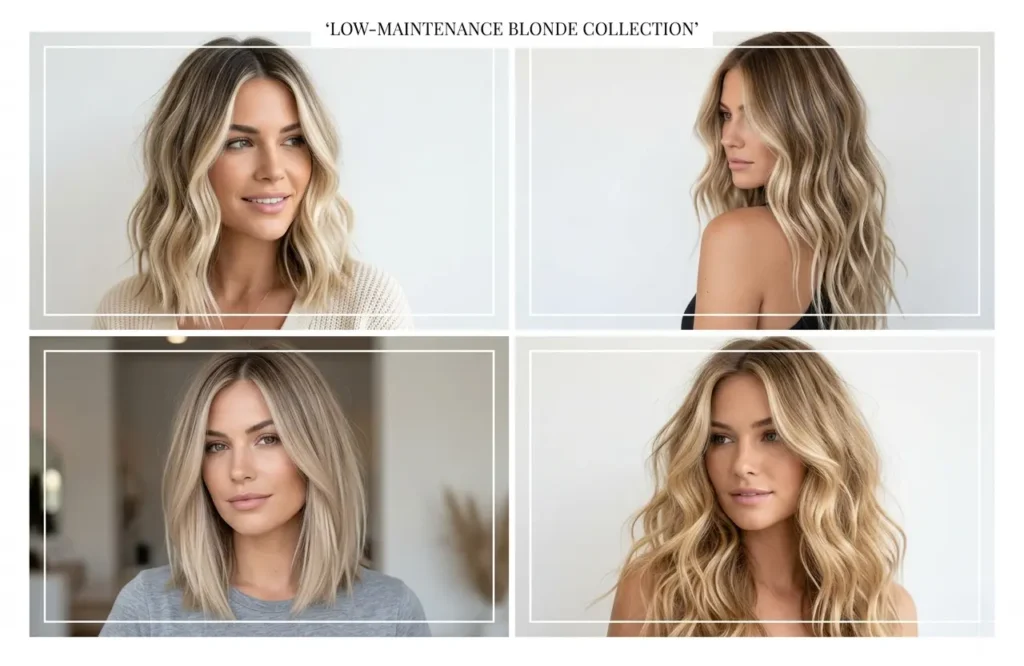
Some blonde shades need constant upkeep. Others fade more naturally.
Low-maintenance blonde ideas include:
- rooted blonde
- balayage
- beige blonde
- soft honey blonde
- bronde
Soft seasons usually suit lived-in blonde especially well.
Bright icy blonde often needs more toning and salon visits.
If you want easier upkeep, avoid extremely light platinum shades.
How Contrast Levels Affect Blonde Hair
Contrast level matters just as much as undertone.
Low Contrast Seasons
Low contrast seasons usually suit:
- blended blonde
- soft beige blonde
- muted ash blonde
Harsh platinum can overpower delicate features.
Medium Contrast Seasons
Medium contrast seasons often look best in:
- balanced blonde
- dimensional blonde
- rooted blonde
These shades create harmony without looking flat.
High Contrast Seasons
High contrast seasons can usually handle:
- icy platinum
- bright blonde
- stronger root contrast
This is why some Winters can wear dramatic blonde successfully.
Trend Blonde vs Flattering Blonde
A trendy blonde shade is not always the most flattering one.
Some viral blonde colors look beautiful in photos, but can feel harsh in real life if they do not match your season.
Blonde shades that harmonize with your natural coloring usually:
- look softer on the face
- make the skin appear healthier
- feel more balanced
- stay timeless longer
Choosing blonde based on your season often creates a more natural and polished result.
How to Maintain Your Blonde Tone
Blonde hair needs maintenance to keep the color balanced.
Helpful tips include:
- using purple shampoo carefully
- avoiding too much heat
- using color-safe products
- toning brassiness early
- protecting hair from sun damage
Warm blondes can turn orange over time.
Cool blondes can become dull or gray if over-toned.
The goal is to keep the blonde balanced for your season.
Frequently Asked Questions – FAQ
Can You Be Blonde in Any Season?
Why Does Blonde Hair Look Good on Some People but Not Others?
What Blonde Hair Color Makes You Look Younger?
Is Ash Blonde Warm or Cool?
What Is the Most Natural Looking Blonde Hair Color?
Before You Go Blonde Checklist
✔ Know your undertone
✔ Decide how much maintenance you want
✔ Choose warm, cool, soft, or bright blonde carefully
✔ Consider your natural contrast level
✔ Save reference photos close to your season
✔ Think about whether you want dimensional or full blonde
Final Thoughts
After looking closely at seasonal color palettes and blonde undertones, it becomes clear that blonde hair works best when it matches your natural harmony instead of fighting against it. I have seen small changes in warmth, softness, or contrast completely improve how balanced and healthy someone looks. In many cases, the issue is not that blonde does not suit them. The real problem is that they were wearing the wrong type of blonde for their season.
In my experience, the best blonde results happen when people focus less on copying trends and more on understanding their own coloring. A blonde shade that works beautifully on a cool, high-contrast Winter may feel overpowering on a soft, muted Summer. Once you start paying attention to undertones, brightness, depth, and contrast, choosing and confidently maintaining blonde hair becomes much easier. The goal is not to find the most popular blonde shade. The goal is finding the blonde that makes your own features look naturally brighter, softer, and more balanced.

