


Many people who fit the soft summer color palette feel frustrated when shopping. Clothes may look good on display but feel wrong once worn. Bright colors can look too loud. Warm tones like orange or mustard may make the skin look dull. Even black can feel heavy. After a while, the closet fills with items that never get used. This often leads people to think their style is the problem, when the real issue is color.
From years of working with real wardrobes and testing colors in natural light, one pattern shows up often. People who suit cool, muted tones usually feel their best in soft blues, roses, and grays, yet they rarely start there. Many are typed into the wrong color season or follow trends that do not match their coloring. Once they shift to the right palette, their skin looks calmer, and outfits start to work together with less effort. This guide is built from those real results and aims to make the soft summer color palette simple to use in daily life.
Key takeaways
Soft Summer colors are cool, muted, and calm.
They sit between summer and autumn on the color chart.
If bright or warm colors look too strong on you, this palette may fit.
This guide shows your best colors, outfits, makeup, and how to use the soft summer color palette in real life.
The overall impression
Soft Summer looks gentle and blended. Nothing looks sharp or bold.
Hair, skin, and eyes have low contrast. Colors look dusty and cool.
Bright shades feel too strong. Warm shades feel off.
Muted cool tones bring balance to the face.
Think soft blue, rose, lavender, sage, and cool gray.
These colors sit close together and feel smooth, not loud.
Soft Summer characteristic
Skin
Skin often has a cool or neutral-cool tone.
It may look pink, beige, or soft olive.
Warm yellow tones can look strange on the skin.
Hair
Hair is usually ash brown, soft black, or dark blonde.
It looks cool and slightly muted.
Eyes
Eyes are often gray, blue, green, or soft hazel.
They look calm rather than bright.
Contrast level
Soft Summer has low contrast.
Hair, skin, and eyes blend instead of standing out.
Signs you may be Soft Summer
- Black feels too strong
- Orange looks wrong
- Neon looks too bright
- Dusty colors look better
- Silver jewelry suits you
Soft Summer Color Traits
This season mixes cool and soft traits.
Colors are cool first. Soft comes second.
That means colors are toned down, never bright.
Soft Summer sits between Cool Summer and Soft Autumn.
It shares cool tones with summer and softness with autumn.
Muted cool tones bring balance and calm.
Soft Summer vs Other Seasons
Soft Summer vs Cool Summer
Both are cool.
Soft Summer is more muted and gentle.
Cool Summer is clearer and brighter.
Soft Summer vs Soft Autumn
Soft Summer is cool and muted.
But soft Autumn is warm and muted.
If dusty cool colors work better than warm brown, you are likely Soft Summer.
The Colour Palette
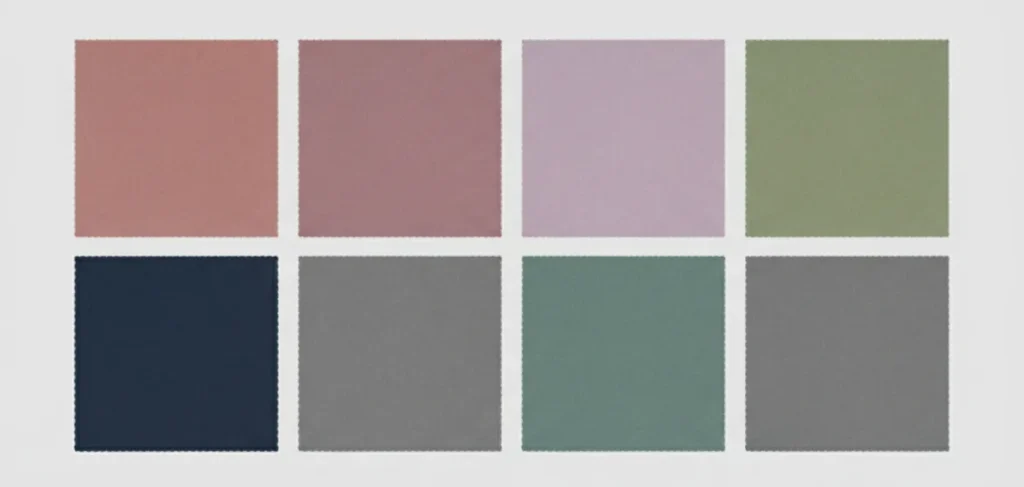
Soft Summer Color Palette Structure
Think of the soft summer color palette in clear layers. This helps you use the colors in real outfits instead of guessing.
Core colors (best near the face)
These are your most flattering shades.
Use them for tops, dresses, and scarves.
- dusty rose
- mauve
- lavender
- soft blue
These colors brighten the face and keep the look balanced.
Neutrals (build the outfit base)
Use these for jackets, pants, and everyday basics.
- cool gray
- soft navy
- taupe
- soft white
- charcoal
They help the whole wardrobe mix well.
Accent colors (add interest)
Use these in smaller areas like tops, bags, or shoes.
- berry
- plum
- sage
- soft teal
They add depth without overpowering your look.
Statement colors (use in small amounts)
These are deeper tones. Use them carefully.
- deep plum
- muted wine
- dark navy
Start with core colors near the face.
Build outfits with neutrals.
Add accent colors last.
This keeps your soft summer color palette balanced and easy to use.
Core palette colors
- dusty rose
- mauve
- lavender
- slate blue
- soft navy
- sage
- cool teal
- berry
These form the heart of the soft summer color palette.
Full palette by color family
Pinks
Rose, mauve, berry, soft raspberry.
Avoid coral or peach.
Blues
Soft navy, slate blue, dusty blue.
Avoid bright royal blue.
Greens
Sage, soft teal, cool green.
Avoid olive or warm green.
Purples
Lavender, plum, soft violet.
Avoid warm purple.
Reds
Muted berry and wine tones.
Avoid bright red or orange red.
Neutrals
Soft white
Cool gray
Taupe
Soft navy
Charcoal
These build the base of the palette.
Metals
Best metals:
- silver
- white gold
- platinum
Muted rose gold can work.
Light–medium–dark palette range
Light tones
Soft lavender
Dusty pink
Soft blue
Medium tones
Rose
Sage
Soft teal
Deep tones
Soft navy
Charcoal
Plum
All must stay cool and muted.
Avoid very dark warm colors.
Warm vs cool look-alike colors
Some colors look close but are wrong.
Dusty rose → good
Peach → too warm
Soft teal → good
Warm teal → too warm
Cool taupe → good
Camel → too warm
This helps when shopping.
What “muted” means
Muted colors look dusty or gray-toned.
They are not bright or shiny.
If a color looks too clear or loud, it is likely not in the palette.
In stores:
- bright color = skip
- slightly gray soft color = try
Palette harmony rules
- stay in cool muted tones
- avoid mixing bright with soft
- keep contrast gentle
- blend similar tones
- use 2–3 palette colors per outfit
These rules keep outfits balanced.
How contrast works for Soft Summer
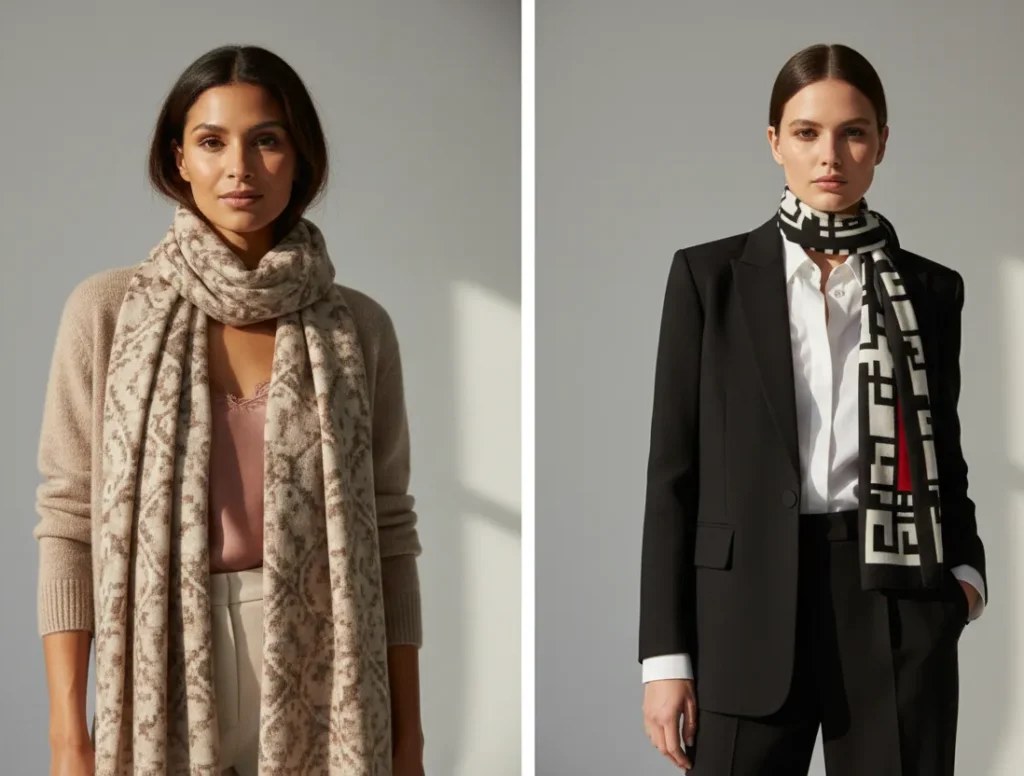
Soft Summer looks best in gentle contrast.
Colors should blend.
Good contrast
mauve + gray
sage + navy
rose + charcoal
Too much contrast
black + white
neon + gray
bright red + black
Keep contrast soft and smooth.
Best color combinations
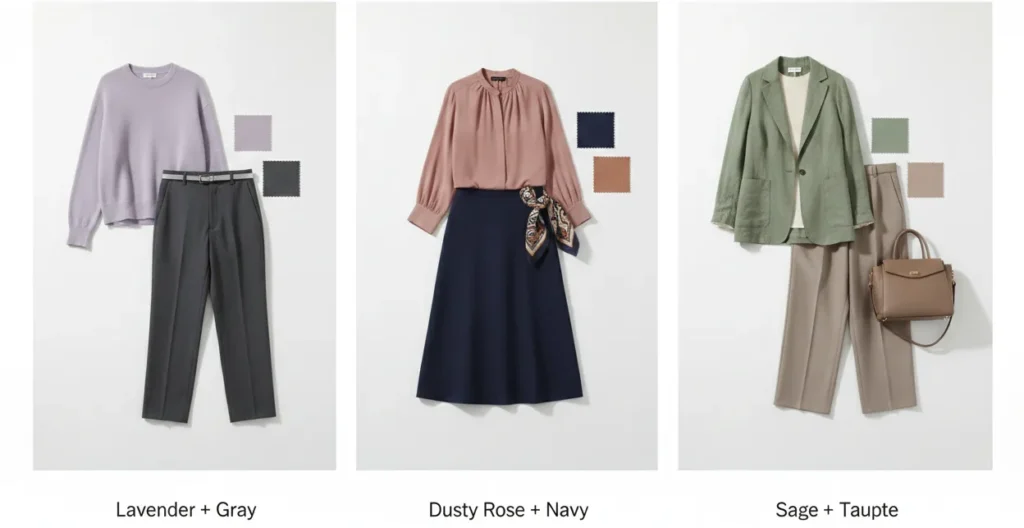
- dusty rose + gray
- lavender + navy
- sage + taupe
- berry + charcoal
- soft teal + cool white
These combinations sit inside the palette and always work.
Where to use each palette color
Near the face
Use your best tones:
rose, lavender, soft blue.
Base wardrobe
Use neutrals:
gray, navy, taupe.
Accent colors
Use deeper tones:
plum, berry, teal.
This helps build outfits easily.
Prints inside the palette
Best prints:
- watercolor prints
- soft florals
- low contrast stripes
Avoid sharp black and white prints.
Keep prints soft and blended.
Seasonal shifts inside the palette
Summer: lighter dusty tones
Fall: deeper sage and berry
Winter: charcoal and plum
Spring: soft lavender and rose
All remain cool and muted.
Soft Summer Palette Rules
- Choose cool and muted colors
- Keep contrast soft and blended
- Avoid warm and bright shades
- Use gray-based tones
- Build outfits from soft neutrals
- Add color through dusty tones
Styling
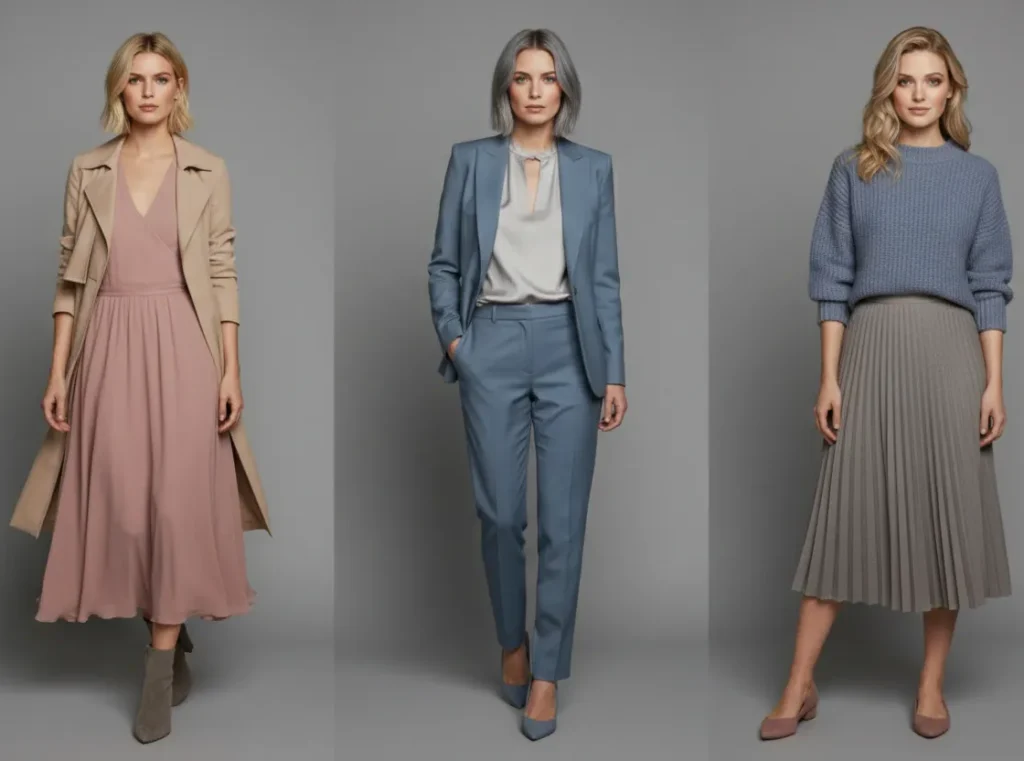
Everyday outfits
Soft blue jeans + dusty rose top
Gray pants + lavender shirt
Add silver jewelry.
Work outfits
Gray blazer
Soft navy pants
Mauve blouse
Casual outfits
Soft denim and muted tees.
Avoid bright prints.
Capsule wardrobe idea
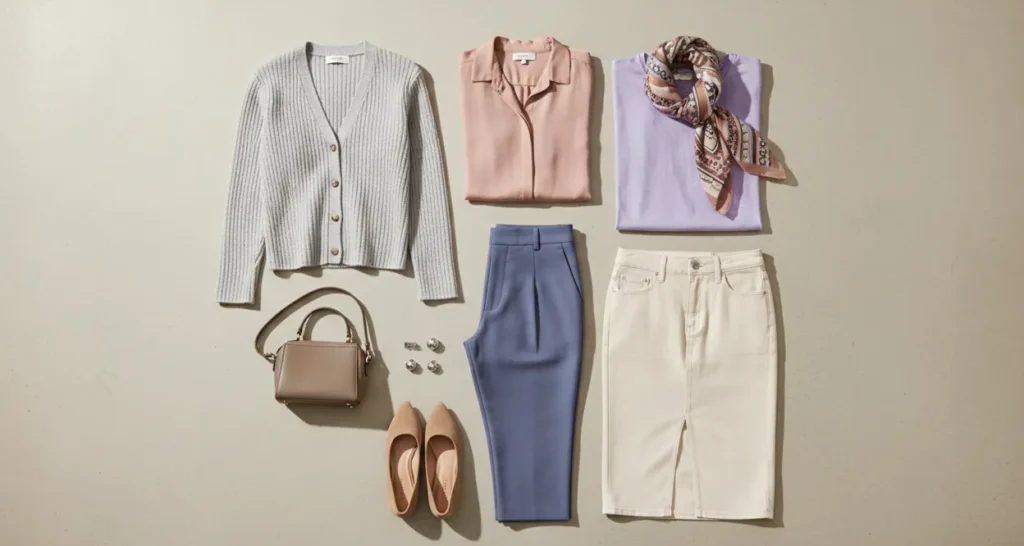
Start with:
- gray pants
- soft navy jeans
- rose top
- lavender knit
- sage shirt
- silver jewelry
- soft white tee
Patterns and fabrics
Good fabrics
matte cotton
soft wool
suede
linen
Avoid shiny or stiff fabric.
Makeup guide
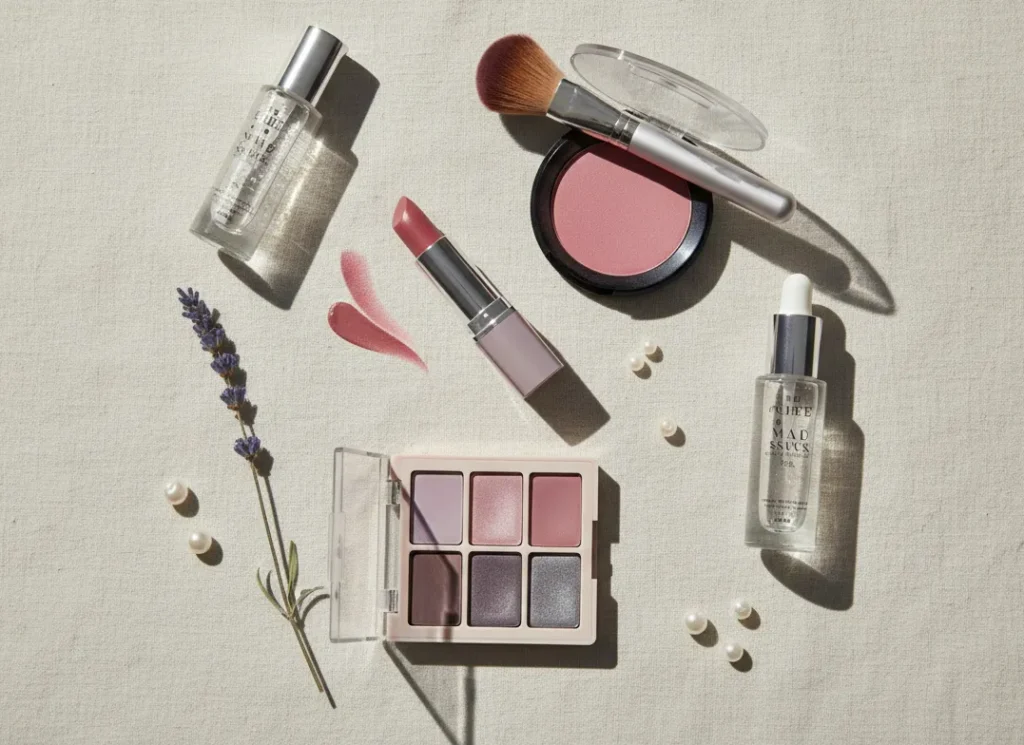
Best blush: rose, mauve
Best lips: berry, soft pink
Best eyes: gray, taupe
Avoid orange tones.
Hair color guide
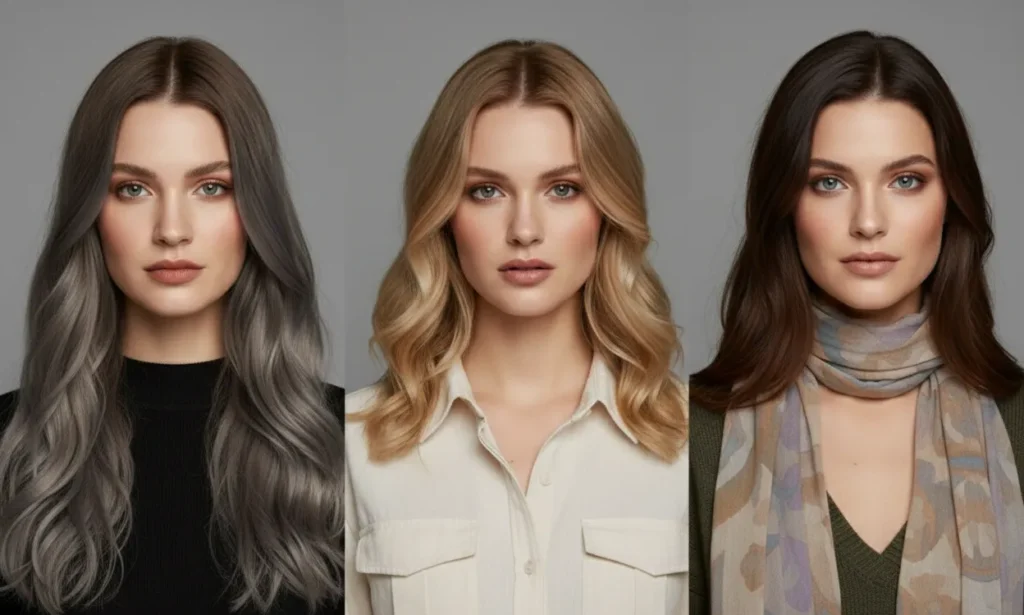
Best: ash brown, cool dark blonde
Avoid: golden blonde, copper
Keep hair cool and soft.
Soft Summer celebrity examples
Emily Blunt
Dakota Johnson
Katie Holmes
They often wear muted cool colors that blend well.
Shop Soft Summer
Check color in natural light.
Hold fabric near your face.
If skin looks calm, it works.
Build your wardrobe slowly
Start with tops.
Then add layers and shoes.
Save a palette image on your phone.
Can Soft Summer wear black?
Pure black can feel strong.
Try soft navy or charcoal instead.
Common palette mistakes
Choosing colors too bright.
Choosing colors too warm.
Mixing outside the palette.
Using too much contrast.
Conclusion
When someone finds their correct palette, shopping and getting dressed become easier. Those who fall into the soft summer color palette often notice quick changes once they switch to cool, muted shades. Their features look more balanced, makeup blends better, and outfits mix well without much planning. Over time, this saves money and reduces the stress of buying items that never feel right.
The best results come from steady use of the palette rather than big changes all at once. Start with colors near the face, test them in natural light, and build a wardrobe step by step. This approach has worked well for many people who felt unsure about their style before learning their season. With the right colors in place, personal style feels more natural and consistent, and daily outfit choices become much simpler.

