

If you feel stuck between Soft Autumn and Light Spring, you are not alone. I have seen this confusion many times. People try both palettes, and both seem to work. Soft colors look fine. Light colors also look fine. But something still feels off. You don’t look bad, but you don’t look your best either. That is where most people get stuck.
From my experience, this happens because these two color seasons share a lot. Both are warm. Both have low contrast. That overlap makes it hard to choose. But there is always a small difference. One set of colors will make your skin look calm and even. The other will make your face look brighter and fresher. Once you see that difference, the answer becomes clear.
Why You Feel Stuck Between These Two
Common Mistakes to Avoid
- Thinking warm always means Autumn
- Confusing soft with light
- Testing colors in poor lighting
- Relying only on quizzes without real color testing
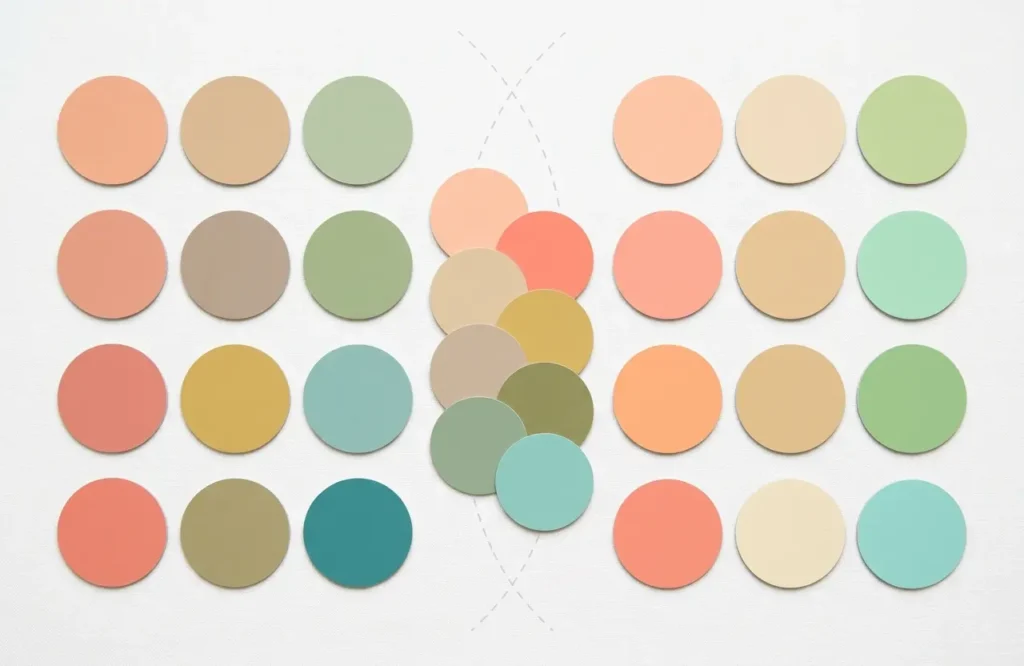
If you feel confused, there is a reason.
Soft Autumn and Light Spring share many things:
- Both are warm
- Both have low contrast
- Both use soft peach, warm beige, and light greens
That is why both can look okay on you.
But here is the key difference:
- Soft Autumn blends with your face
- Light Spring brightens your face
One will always look more natural.
How to Determine If You’re a Soft Autumn vs Light Spring?
1-Minute Test (Quick Answer)
Stand in natural light and try this:
- Hold a dusty peach near your face
- Then hold a clear light peach
Now check:
- If your skin looks smooth and even → Soft Autumn
- If your face looks brighter and fresh → Light Spring
Pick the one that makes you look better, not just “okay”.
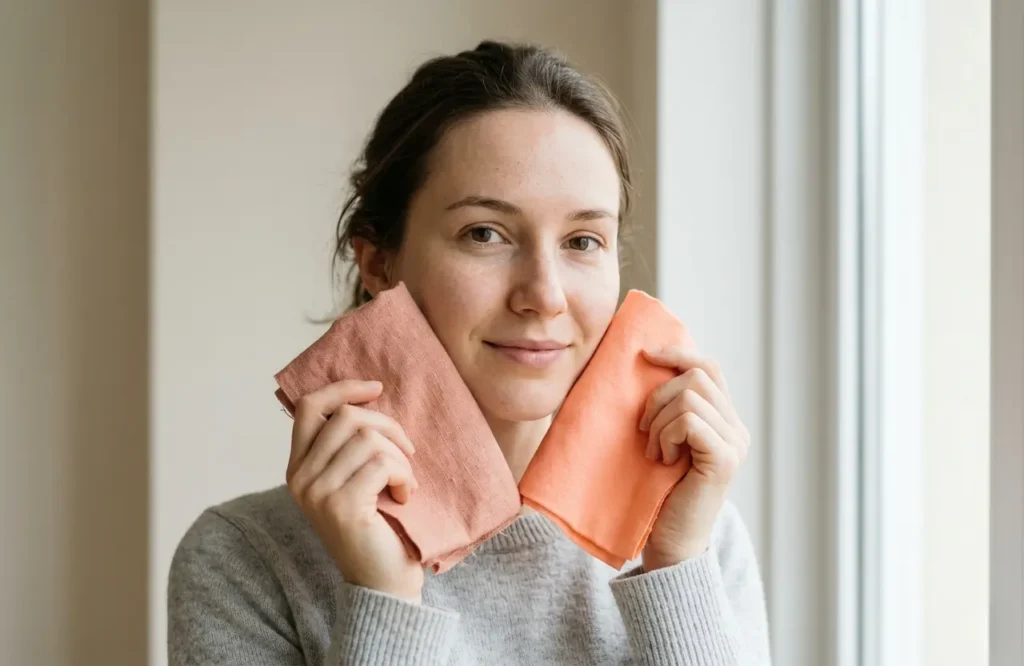
This is the most important part. Do not skip it.
Find Your Primary Characteristic
Focus on this first:
- Soft Autumn = muted, dusty
- Light Spring = light, fresh
Think of it this way:
- Soft Autumn colors look like they have a bit of grey in them
- Light Spring colors look like they have white added
Quick check:
- Do bright colors feel too strong? → Soft Autumn
- Do soft colors feel dull? → Light Spring
Eye and Hair Color
This can help, but do not trust it fully.
Soft Autumn:
- Soft brown, hazel, muted green
- Hair looks warm but not shiny
Light Spring:
- Light blue, light green, warm light brown
- Hair looks lighter and clearer
Many people overlap here. Do not decide based on this alone.
What If You Have Olive or Neutral Skin?
If your skin looks olive or hard to define, this can make things tricky.
- Olive skin often leans towards Soft Autumn because of its softness
- But if your face looks clearer in light, fresh colors, you may be Light Spring
Do not rely on undertone alone. Always test colors near your face.
The Color Test
This is the best way to decide.
Try these color pairs in natural light:
- Dusty peach vs clear peach
- Olive vs light mint
- Cream vs bright ivory
Now look at your face:
If Soft Autumn:
- Skin looks smooth
- No harsh shadows
- Face looks calm
If Light Spring:
- Skin looks fresh
- Eyes look brighter
- Face looks more alive
If one side clearly looks better, that is your answer.
Why Both Seasons Can Look Good on You
You may notice that both palettes work sometimes.
This happens because:
- Both seasons are warm
- Both have soft contrast
- Some colors overlap, like peach and warm neutrals
But look closely:
- Soft Autumn will smooth your skin
- Light Spring will add brightness and glow
Focus on which effect looks better, not just “okay”.
Comparing Sister Seasons
This helps if you are still unsure.
Soft Autumn sits near Soft Summer
Light Spring sits near Light Summer
Simple rule:
- If you can handle a bit of cool tone → you may lean towards Summer
- If you need warmth → stay in Autumn or Spring
Light Spring vs Soft Autumn Color Palettes
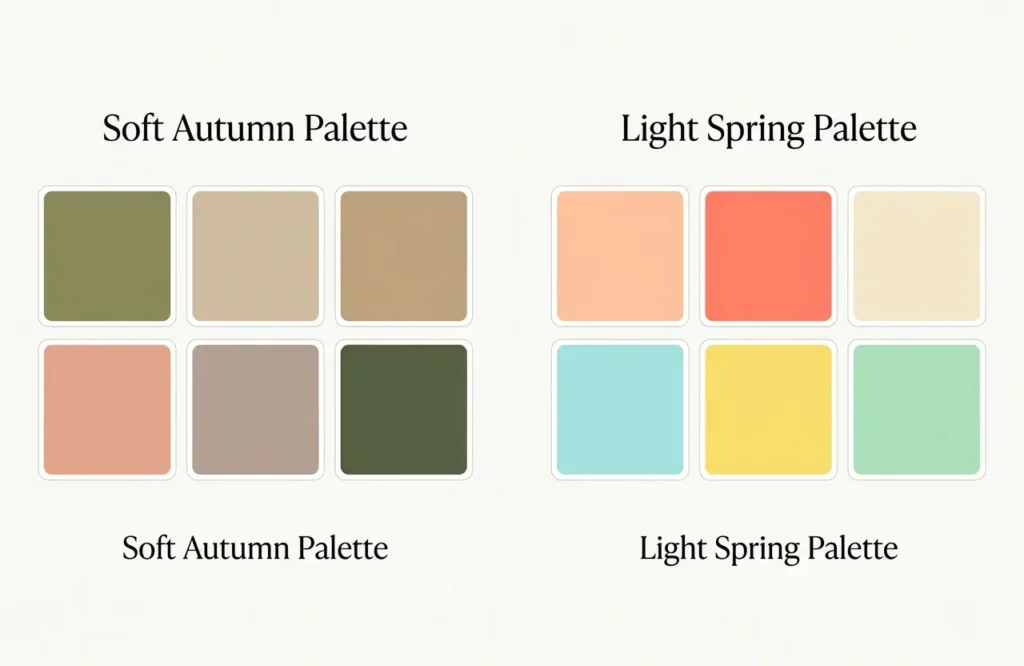
This is where most people get confused.
Let’s fix that.
- Soft Autumn = muted (grey added)
- Light Spring = light (white added)
That is the core difference.
Light Spring
Warm & Light Undertones
- Skin looks warm and fresh
- Often has a soft glow
- Yellow and peach tones are common
Low Contrast (Leaning Light)
- Features are light overall
- Nothing looks very deep or heavy
Fresh & Youthful
- Looks best in clean, light colors
- Heavy colors make the face look tired
What to Avoid
- Very dark brown
- Deep olive
- Dusty muted colors
These make your face look heavy or tired.
Soft Autumn
Neutral-Warm Undertones
- Skin looks warm but softer
- May look slightly olive or muted
Soft & Muted
- Colors look dusty, not bright
- Bright colors feel too strong
Earthy & Natural
- Works well with grounded tones
- Think olive, brown, warm beige
What to Avoid
- Neon colors
- Very bright shades
- Icy pastel tones
These make your features look washed out or harsh.
If you want to go into detail for the soft autumn color palette, read these detailed articles.
Key Characteristics
Soft Autumn vs Light Spring – Quick Comparison
| Feature | Soft Autumn | Light Spring |
|---|---|---|
| Main trait | Muted (soft, dusty) | Light (fresh, clear) |
| Undertone | Warm to neutral-warm | Warm |
| Contrast | Low, slightly deeper | Low, lighter overall |
| Best colors | Olive, beige, dusty peach | Peach, coral, light blue |
| Looks best in | Soft, blended tones | Light, fresh tones |
| Avoid | Bright, neon, icy tones | Dark, heavy, muted tones |
| Skin effect | Smooth and calm | Bright and glowing |
- Warm and muted
- Low contrast, slightly deeper than Light Spring
- Best in soft, earthy tones
- Bright colors look too harsh
Light Spring Characteristics:
- Warm and light
- Low contrast, but lighter overall
- Best in fresh, light colors
- Dark or heavy colors look dull
Ask yourself:
Do I look better in soft or light colors?
Quick Decision Shortcut
If you want a fast answer, use this:
- If dusty, soft colors always look calm and natural → Soft Autumn
- If light, fresh colors make your skin glow → Light Spring
- If both seem okay, check this:
- Do bright colors feel too strong? → Soft Autumn
- Do muted colors feel dull? → Light Spring
This works for most people.
Comparing Soft Autumn and Light Spring Celebrities
This helps you see patterns.
Soft Autumn examples:
- Drew Barrymore
- Olivia Palermo
Light Spring examples:
- Amanda Seyfried
- Reese Witherspoon
Notice:
- Soft Autumn Celebrities look better in muted shades
- Light Spring Celebrities shine in light and clear colors
Light Spring: The Light and Warm Palette
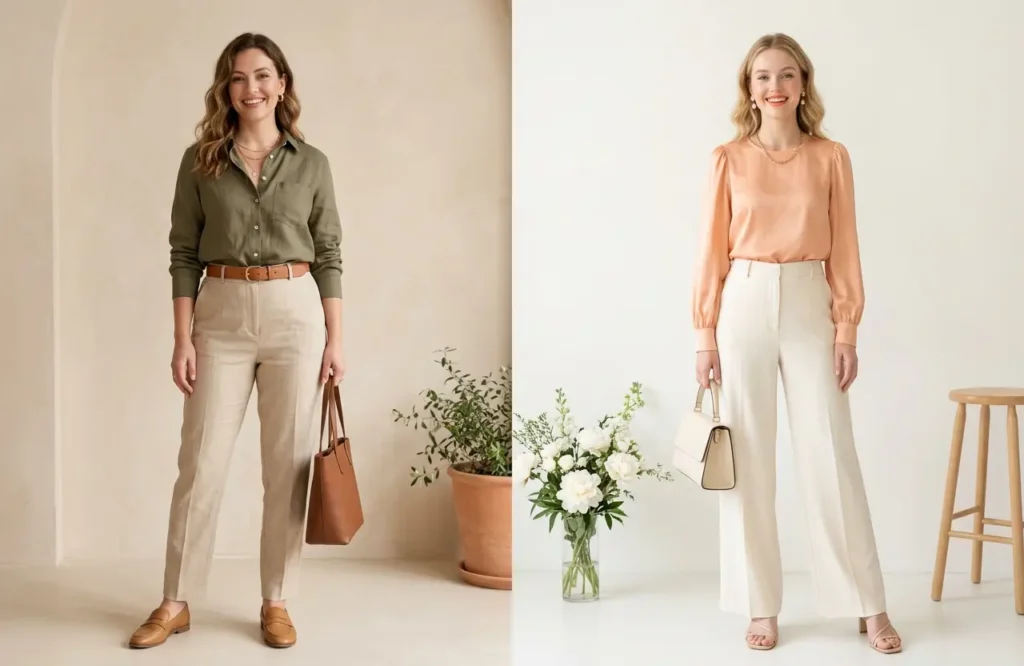
Light Spring colors feel soft but bright.
Best choices:
- Peach
- Light coral
- Warm pink (not cool hot pink)
- Light blue
- Ivory
Outfit idea:
- Peach top + ivory pants + light gold jewelry
Makeup:
- Fresh peach blush
- Light coral lips
- Soft glow
Tips
- Avoid very dark colors
- Avoid dusty tones
- Choose light gold over deep gold
- Keep your look fresh and clean
Soft Autumn: Muted and Medium Depth Palette
Soft Autumn colors feel calm and natural.
Best choices:
- Olive green
- Warm beige
- Soft brown
- Dusty peach
- Muted teal
Outfit idea:
- Olive top + cream pants + brown shoes
Makeup:
- Dusty peach blush
- Warm nude lips
- Soft bronze eyes
Avoid:
- Bright neon colors
- Icy pastels
Easter Egg Yellow vs. Wheat Yellow
- Bright yellow → Light Spring
- Soft wheat yellow → Soft Autumn
If bright yellow feels too loud, you are likely Soft Autumn.
Lime Green vs. Dark Forest Green
- Light lime green → Light Spring
- Soft forest green → Soft Autumn
If lime looks too sharp, go Soft Autumn.
Aqua Blue vs. Cadet Blue
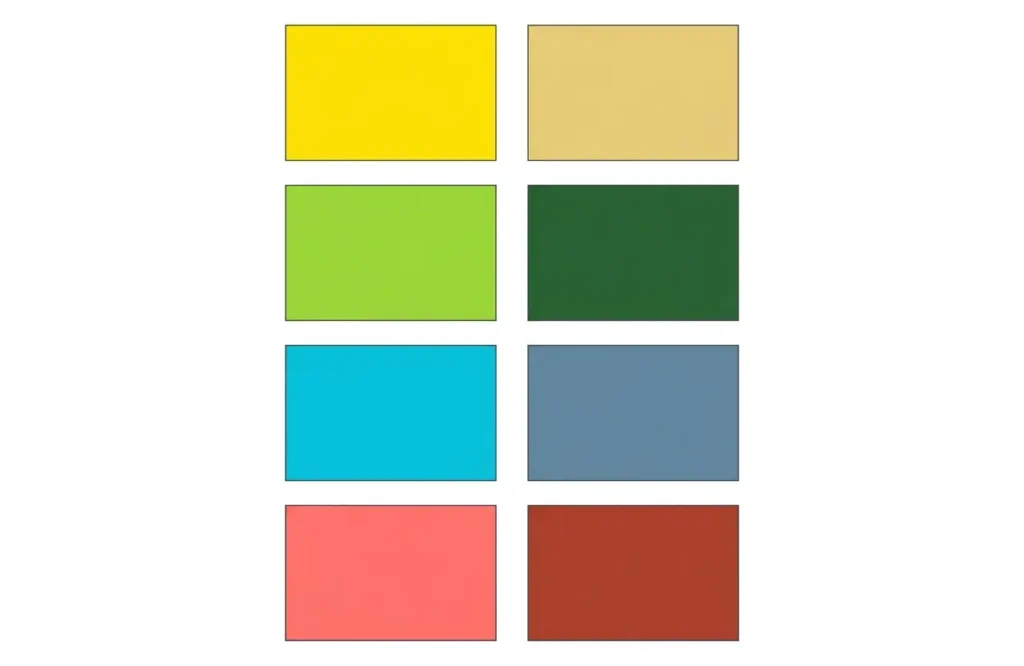
- Clear aqua → Light Spring
- Soft cadet blue → Soft Autumn
If aqua makes your skin pop, you are likely Light Spring.
Hot Pink vs. Brick Red
- Warm coral pink → Light Spring
- Brick red → Soft Autumn
If bright pink feels too strong, Soft Autumn is a better fit.
Not Sure Which Color Season You Are?
Take our free 2-minute Color Season Quiz to discover whether you are most likely a Spring, Summer, Autumn, or Winter—and explore the colors that suit you best.
CONCLUSION
If you still feel unsure, keep it simple. In my experience, the right season always shows on your face, not in theory. When the colors match you, your skin looks smoother, your eyes look clearer, and your face looks balanced without effort. So stand in natural light and test both again. If your face looks calm and blended, you are Soft Autumn. If it looks fresh and bright, you are Light Spring. Trust what you see. That is the most reliable way to decide.
