


Many people buy clothes in the “right” colors but still feel something looks off. An outfit may look great on the rack but too harsh or too dull once it’s on your body. Photos may make your face look tired, even when you feel fine. This is a common frustration, and it often has little to do with body shape or trend choices. In many cases, the real issue is contrast. The balance between light and dark in your features plays a big role in how clothing and makeup sit on you.
In my work with readers and style clients, I have seen this pattern again and again. Someone with soft, blended features wore very bold black and white outfits and felt overwhelmed. Another person with strong, bold features wore only soft neutrals and looked washed out. Once we matched their clothing and makeup to their natural contrast level, the change was clear. Faces looked brighter, outfits felt balanced, and confidence improved. This guide uses that real experience and proven color analysis methods to help you understand high contrast vs low contrast and apply it in a simple way.
Quick Takeaway
- High contrast means strong difference between your features.
- Low contrast means your features blend softly.
- Matching outfit contrast with face contrast creates balance.
- A simple black-and-white photo test can help you find your level.
Does It Really Matter If You Have a High Contrast or Low Contrast Face?
Yes.
Your contrast level is the difference between your skin, hair, and eyes. Some people have strong differences between these features. Others have very little difference.
If your contrast level matches your outfit and makeup, everything looks balanced. If it does not match, you may look washed out or too harsh.
Knowing your contrast helps you:
- choose better colors
- pick the right makeup depth
- build outfits that look balanced
- avoid common style mistakes
Low Contrast
Low contrast means your features blend softly.
Your skin, hair, and eyes sit close in depth.
Common signs
- light hair and light eyes
- medium brown hair with medium skin
- gentle overall look
What suits low contrast
Soft color combinations work best.
Choose outfits where colors sit close together in depth.
Examples:
- beige with soft brown
- dusty blue with gray
- light sage with cream
Very sharp black and white outfits can look too strong.
Makeup tips
Use soft tones and blended edges.
Avoid very heavy contour or very dark lipstick unless balanced with softer clothing.
Medium Contrast
Medium contrast sits between high and low.
Many people fall here.
You may have:
- medium brown hair and light skin
- dark blonde hair with medium eyes
- features with some difference but not extreme
What works best
Balanced outfits.
Mix light and medium shades instead of extreme light and dark.
Examples:
- navy with soft blue
- medium gray with white
- olive with cream
Medium contrast can shift slightly with makeup or hair color.
High Contrast
High contrast means strong differences between features.
There is a clear jump between light and dark.
Common signs
- dark hair and light skin
- very dark eyes with light skin
- strong brow and eye definition
What suits high contrast
Bold color combinations look great.
Clear light-dark pairings work well.
Examples:
- black and white
- navy and white
- deep red with light neutral
Soft blended outfits can make high contrast faces look flat.
Makeup tips
Defined brows, eyeliner, and deeper lipstick often work well.
Stronger makeup can match your natural contrast.
So What Does This Have to Do With You?
If your outfit contrast matches your natural contrast, your face stands out in a good way.
If it does not match, the clothes may overpower you or fade you out.
High contrast people usually suit bold outfits.
Low contrast people usually suit softer blends.
Medium contrast sits in between.
Determine Your Contrast Level
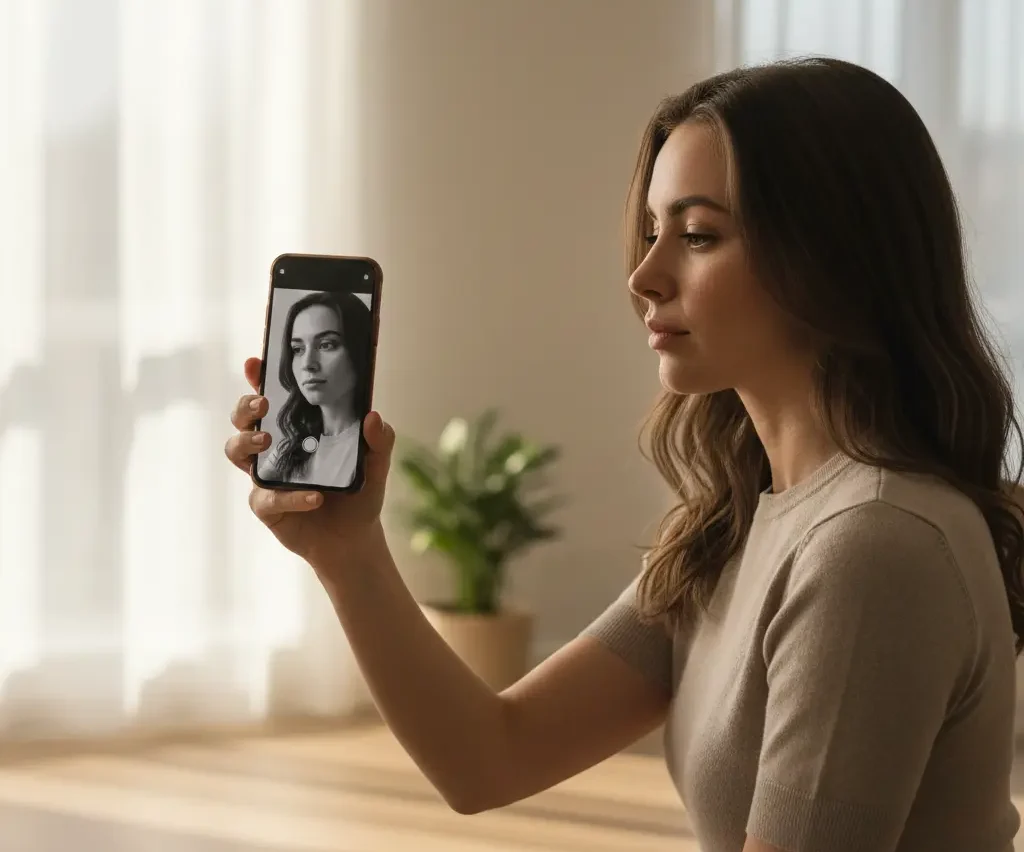
Find Your Contrast in 1 Minute
- Take a selfie in natural daylight.
- Turn the photo black and white.
- Compare hair, skin, and eyes.
- Strong difference = high contrast.
- Soft blend = low contrast.
- Middle range = medium contrast.
You can find your level at home in a few minutes.
Mirror test
Stand in front of a mirror in natural light.
Look at the difference between your hair, skin, and eyes.
If features blend, you may be low contrast.
If they stand out strongly, you may be high contrast.
Black and white photo test
Take a clear photo of your face.
Turn it black and white.
If your features still look bold, you are likely high contrast.
If everything blends, you are likely low contrast.
Now If it sits in the middle, you are medium contrast.
Measuring Contrast Levels
Contrast is based on value difference.
Value means how light or dark something is.
Compare:
- hair vs skin
- brows vs skin
- eyes vs skin
Big difference means high contrast.
Small difference means low contrast.
Visual Contrast Examples to Look For
Look at photos of faces with strong light-dark difference and faces where everything blends softly.
Notice:
- bold brows and eyes on high contrast faces
- soft transitions on low contrast faces
- how clothing contrast changes the overall look
If your outfit stands out more than your face, the contrast may be off.
If your face stands out first, the balance is likely right.
Step-by-Step Contrast Test
Follow this test in natural daylight.
- Pull hair away from your face.
- Stand near a window.
- Check the difference between skin and hair.
- Look at brows and eyes.
- Take a photo and turn it black and white.
Review the result:
- strong difference = high contrast
- soft blend = low contrast
- middle result = medium contrast
Common mistakes
- testing in yellow indoor light
- wearing heavy makeup
- using filtered photos
- judging only by hair color
Styling Medium Contrast
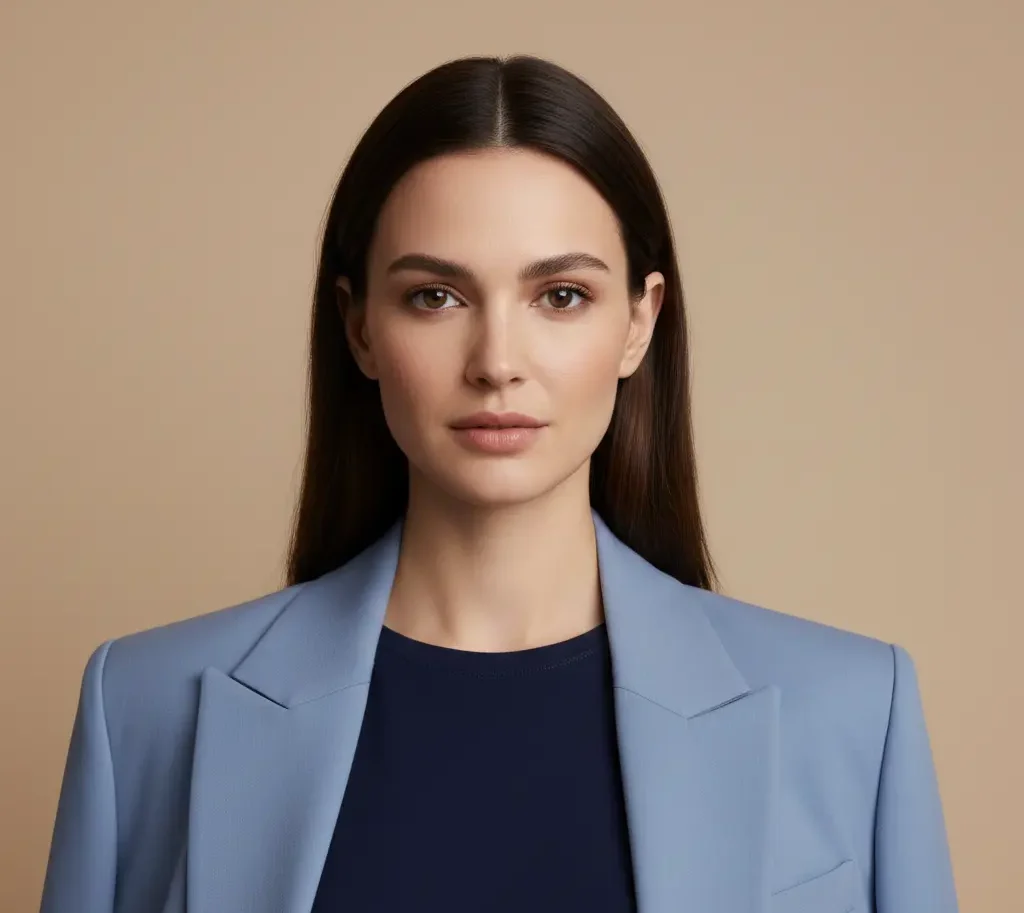
Medium contrast needs balance.
Too much light-dark pairing can feel harsh.
Too little can feel dull.
Try:
- medium depth colors together
- one slightly darker piece with softer tones
- gentle patterns
Examples:
- navy with soft blue
- medium gray with white
- muted green with cream
Outfit Examples by Contrast Level
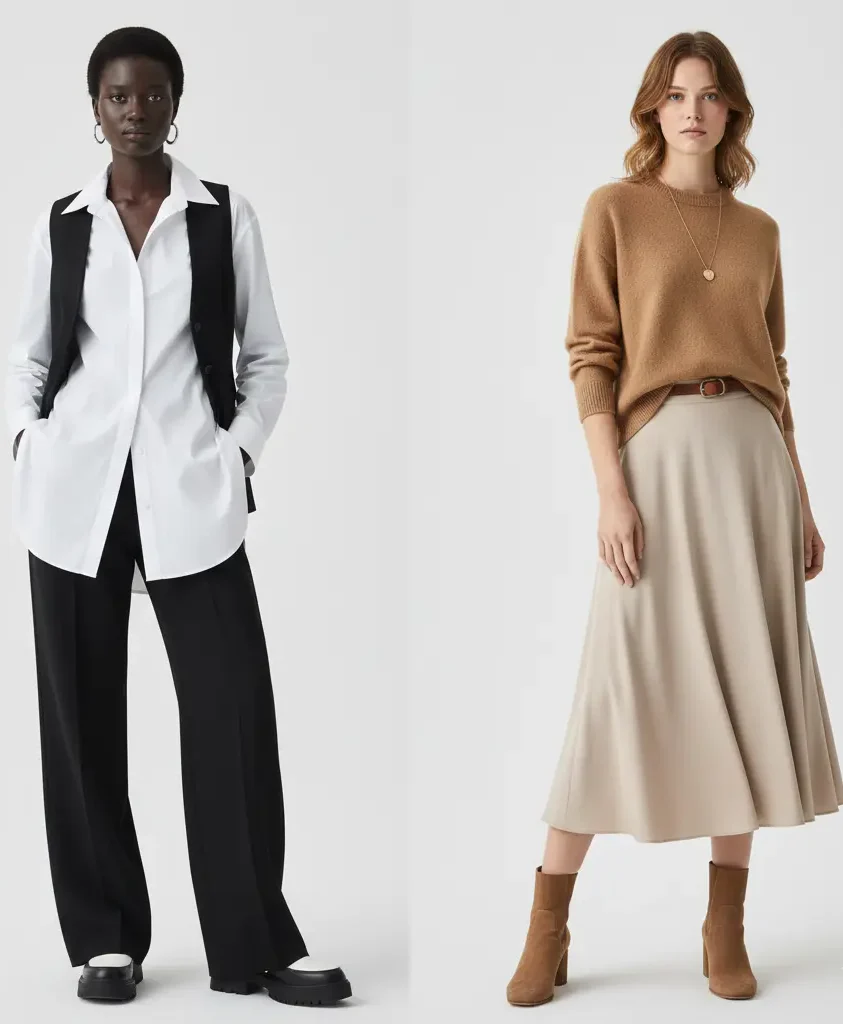
Outfit Contrast Formulas
| Your Contrast Level | Best Outfit Formula |
|---|---|
| High Contrast | Light + dark pairing |
| Medium Contrast | Light + medium pairing |
| Low Contrast | Similar depth pairing |
Tip: Your outfit should not overpower your face. Match clothing contrast to your natural features.
High contrast outfits
- black and white pairing
- navy with white
- bold color with light neutral
Low contrast outfits
- beige with soft brown
- dusty blue with gray
- cream with light olive
Medium contrast outfits
- medium denim with white
- soft navy with light gray
- muted green with cream
Contrast Levels by Season
Contrast often links with seasonal color analysis.
Higher contrast is often seen in:
- Winter palettes
- some Spring palettes
Lower contrast is often seen in:
- Summer palettes
- Autumn palettes
This is not a strict rule but helps guide choices.
Why Contrast Matters
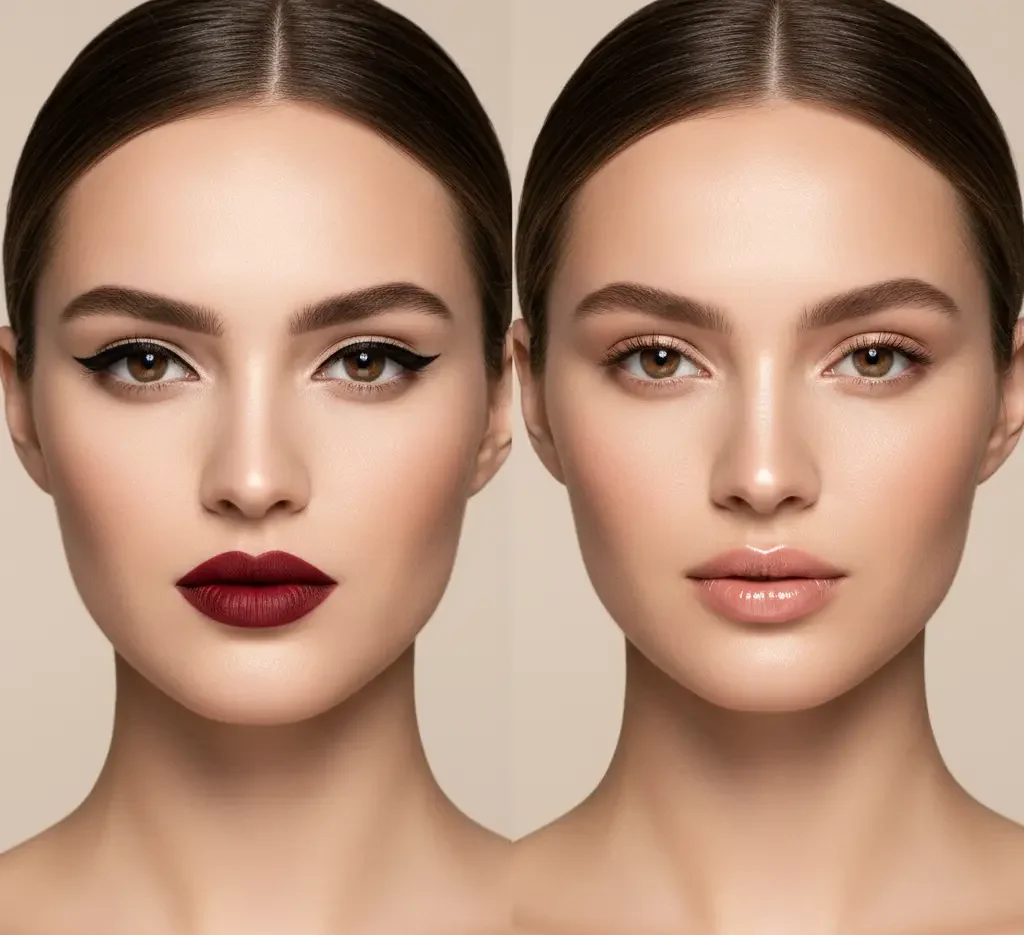
Contrast helps create balance.
When your outfit matches your natural level, your face becomes the focus.
If contrast is too strong, clothes may overpower you.
If contrast is too low, you may look faded.
You can adjust contrast with:
- makeup depth
- hair color
- outfit pairing
High Contrast vs Low Contrast
| Feature | High Contrast | Low Contrast |
|---|---|---|
| Feature Difference | Strong light vs dark | Soft blended tones |
| Best Outfits | Bold light-dark combos | Similar depth colors |
| Makeup | Defined and deeper | Soft and blended |
| Patterns | Sharp and clear | Soft and blended |
Tip: Matching clothing contrast with your natural contrast helps your face stand out in a balanced way.
High Contrast vs Low Contrast: Quick Comparison
High contrast:
- strong feature difference
- suits bold color pairing
- suits defined makeup
Low contrast:
- soft feature difference
- suits blended colors
- suits gentle makeup
Medium contrast:
- balanced feature difference
- suits moderate color pairing
Quick Checklist
- My features look bold in black and white photos → high contrast
- My features blend softly → low contrast
- I sit in between → medium contrast
If outfits feel harsh, lower the contrast.
If outfits feel dull, raise the contrast.
Conclusion
Once you know your contrast level, styling becomes much easier. You stop guessing and start choosing with purpose. In my own work with readers and clients, I have seen how powerful this shift can be. People often feel more confident when their clothes and makeup match their natural contrast. Photos look better. Outfits feel more balanced. Shopping becomes less stressful.
You do not need to change who you are to look your best. You only need to match your natural light and dark balance. Start with the simple tests in this guide. Try small changes in outfit contrast or makeup depth. Pay attention to how your face looks in photos and mirrors. Over time, you will see patterns that work for you.
This approach is based on practical color analysis methods used by stylists and makeup artists. It works across ages, styles, and trends. Once you understand your contrast, you can use it as a guide for years.
