

If you’ve been stuck between True Autumn and Deep Autumn, you’re not alone. Many people reach this point and feel confused. You try warm colors, and they work, but not always. Some shades look great, while others feel too dark or too dull. I’ve seen this happen often with people who already knew they were in the Autumn color season but couldn’t figure out their exact type.
The main issue usually comes down to one detail most people miss: depth vs softness. At first, the difference is hard to see because both seasons look similar and share the same warmth. That’s why people stay confused for a long time. In this guide, you’ll see how each one works, how colors affect your face, and how to tell which one fits you.
What’s the Difference: True Autumn vs Deep Autumn
The difference comes down to depth.
- True Autumn = warm + soft + medium depth
- Deep Autumn = warm + deep + slightly intense
Simple way to think about it:
- If dark colors feel too heavy → you are likely True Autumn
- If deep, rich colors make you look better → you are likely Deep Autumn
True Autumn vs Deep Autumn (Quick Comparison)
| Feature | True Autumn | Deep Autumn |
|---|---|---|
| Main trait | Soft warmth | Deep richness |
| Depth | Medium | Medium to deep |
| Contrast | Medium | Medium to high |
| Best colors | Muted, warm tones | Dark, rich tones |
| Worst colors | Very dark shades | Very soft/light tones |
| Overall look | Soft and blended | Strong and defined |
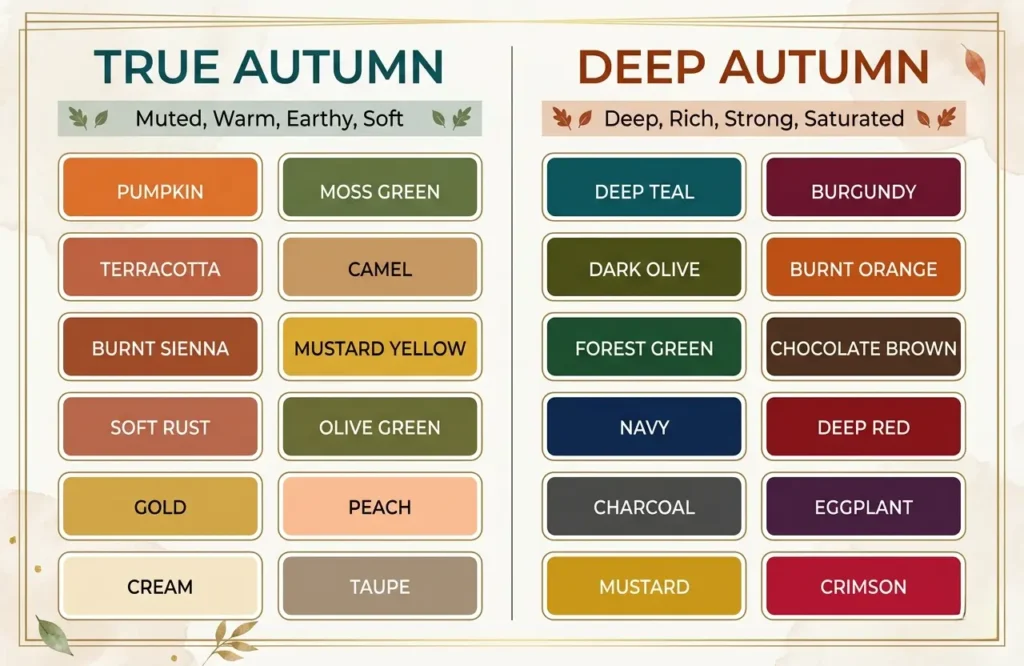
Deep Autumn versus True Autumn (Simple Explanation)
Both seasons are warm. That means:
- gold looks better than silver
- earthy tones suit you
- bright icy colors look off
But they react to color in different ways.
True Autumn:
- looks best in muted, medium tones
- too much darkness makes the face look tired
Deep Autumn:
- needs depth and richness
- soft colors can look dull or flat
Depth vs Softness Explained (Simple but Clear)
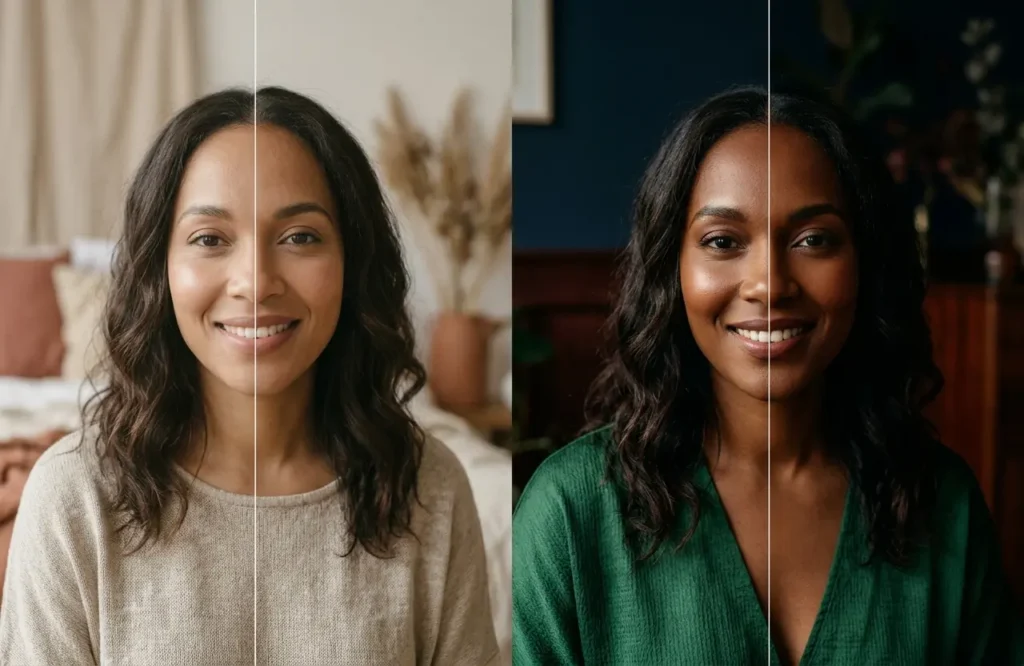
This is the key difference between the two seasons.
What “softness” means (True Autumn)
Soft colors are slightly muted. They are not sharp or strong.
Think of:
- warm beige
- dusty olive
- soft rust
These colors blend gently with your face
When a True Autumn wears soft colors:
- skin looks smooth
- features look balanced
- nothing feels too strong
But when True Autumn wears deep colors:
- face can look heavy
- shadows become stronger
- features lose balance
What “depth” means (Deep Autumn)
Depth means darker and richer colors.
Think of:
- espresso brown
- deep burgundy
- dark olive
These colors add strength and definition
When a Deep Autumn wears deep colors:
- face looks more defined
- features stand out clearly
- skin looks richer
But when Deep Autumn wears soft colors:
- face can look flat
- features fade
- overall look feels dull
A simple way to understand it
- Softness = gentle and blended
- Depth = strong and defined
If your face needs softness → True Autumn
If your face needs depth → Deep Autumn
Key Characteristics
Deep Autumn
- Deep hair (dark brown to black)
- Strong features
- Medium to high contrast
- Skin can handle strong colors
True Autumn
- Warm, golden skin
- Medium contrast
- Features look softer
- Best in balanced tones
Deep Autumn vs True Autumn Color Palettes
Deep Autumn
- Espresso brown
- Deep olive
- Burgundy
- Dark teal
These colors are strong and rich. If you want to explore a complete deep autumn color palette guide, check this.
True Autumn
- Rust
- Mustard
- Warm beige
- Olive green
These colors are softer and more balanced. If you want to explore a complete true autumn color palette guide, check this.
Contrast Difference Between True Autumn and Deep Autumn
Contrast is how much difference there is between your features (skin, hair, eyes).
True Autumn
- Medium contrast
- Features blend softly
- No sharp difference between hair and skin
Overall look feels balanced and gentle
Deep Autumn
- Medium to high contrast
- Stronger difference between features
- Dark hair often stands out more against skin
Overall look feels richer and more defined
Quick check:
- If your features look soft together → True Autumn
- If your features stand out more → Deep Autumn
How to Determine If You’re a True Autumn vs Deep Autumn
This is the most important part.
Find Your Primary Characteristic
Ask yourself:
- Do I suit soft warmth → True Autumn
- Do I suit deep richness → Deep Autumn
Eye and Hair Colour Patterns
- Deep Autumn → darker hair, deeper eyes
- True Autumn → lighter or medium tones
The Colour Test
Try this at home:
- Wear a deep brown
- Wear a soft warm beige
Now compare:
- If deep brown looks better → Deep Autumn
- If beige looks better → True Autumn
Contrast Check
Look at your face in the mirror:
- Strong contrast (light skin + dark hair) → Deep Autumn
- Soft contrast → True Autumn
Comparing Sister Seasons
- Deep Autumn is close to Winter
- True Autumn is fully warm and softer
If you can wear near-black → you lean Deep Autumn
What Happens When You Wear the Wrong Colors
This is where most people finally see the truth.
True Autumn wearing Deep Autumn colors
- Face looks heavy
- Shadows increase
- Skin looks dull
Deep Autumn wearing True Autumn colors
- Face looks flat
- Features lose definition
- Colors feel weak
Real-Life Color Reaction Examples
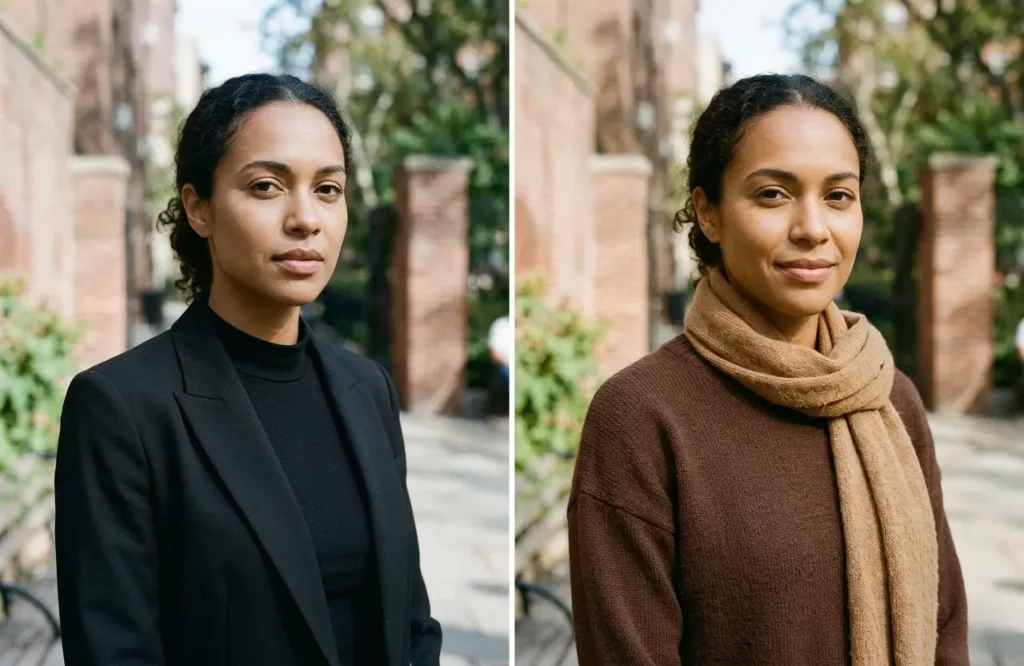
These examples make it easier to see the difference.
Black vs Brown
- True Autumn in black → looks harsh and tiring
- True Autumn in warm brown → looks natural and fresh
- Deep Autumn in black → can still look okay (especially near-black)
- Deep Autumn in deep brown → looks richer and more balanced
Soft Beige vs Deep Burgundy
- True Autumn in beige → skin glows and looks even
- True Autumn in Burgundy → face can look heavy
- Deep Autumn in beige → looks washed out
- Deep Autumn in burgundy → looks strong and defined
Olive vs Bright Colors
- True Autumn in olive → looks calm and balanced
- True Autumn in bright colors → looks off or too sharp
- Deep Autumn in deep olive → looks rich and grounded
- Deep Autumn in very bright colors → looks mismatched
Light vs Dark Outfits
- True Autumn in lighter warm outfits → looks fresh
- True Autumn in very dark outfits → looks overwhelmed
- Deep Autumn in darker outfits → looks powerful and clear
- Deep Autumn in light outfits → looks faded
Focus on your face, not the clothes.
The right colors make your skin look alive.
The wrong colors make you look tired or dull.
How Do These Two Seasons Wear Their Makeup?
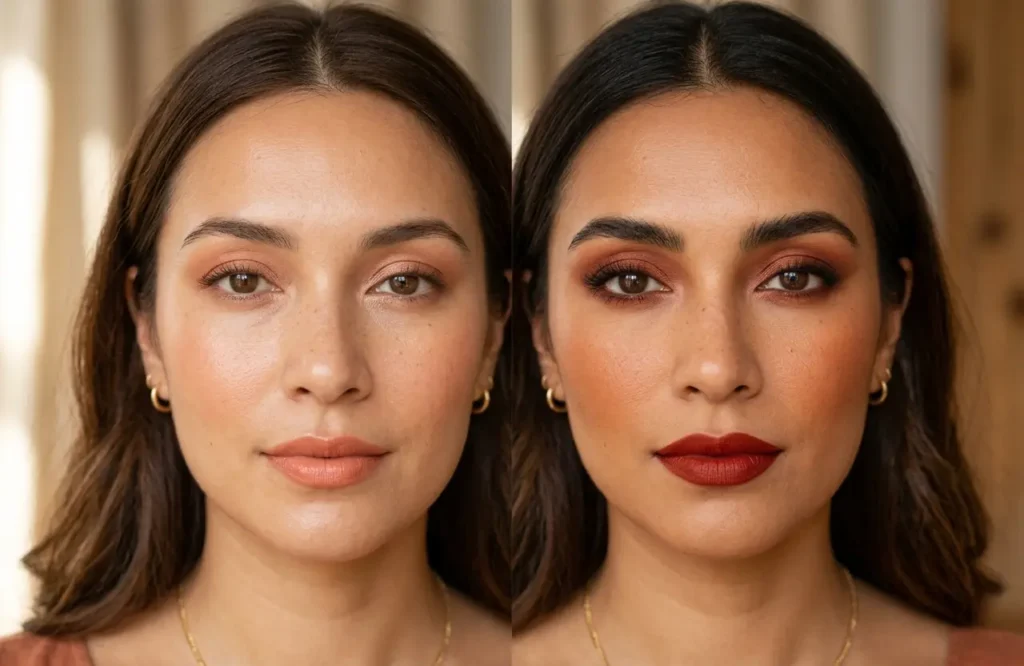
True Autumn
- Soft peach lipstick
- Warm rose blush
- Bronze eyeshadow
Deep Autumn
- Brick red lipstick
- Deep terracotta blush
- Dark brown or espresso eyes
If soft makeup disappears on you, you are likely Deep Autumn.
Outfit Ideas for Each Season
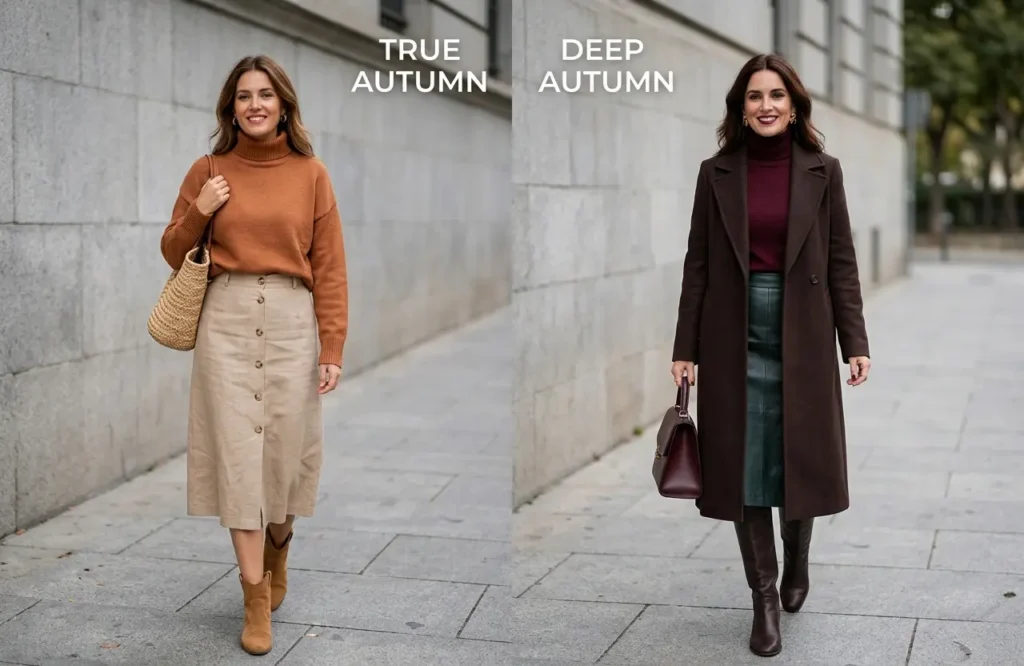
Here are simple outfit ideas to help you apply this in real life.
True Autumn Outfits
- Rust top + warm beige pants
- Olive green dress + brown shoes
- Mustard sweater + soft brown trousers
Keep outfits soft and balanced
Deep Autumn Outfits
- Burgundy top + dark brown pants
- Deep olive jacket + black-brown jeans
- Espresso sweater + dark denim
Go for depth and richness
What to avoid
True Autumn:
- All black outfits
- Very dark combinations
Deep Autumn:
- Pale or washed-out outfits
- Too many soft tones together
Can These Two Seasons Share Colors?
Yes, but with limits.
Both can wear:
- olive
- warm brown
- muted green
But:
- True Autumn should avoid very dark shades
- Deep Autumn should avoid very soft tones
Common Mistakes People Make
These mistakes cause most of the confusion.
1. Thinking darker always means better
Some people choose deep colors just because they look “strong”.
If dark shades make your face look heavy, you are not Deep Autumn
2. Confusing Deep Autumn with Winter
Deep Autumn is warm. Winter is cool.
If icy colors look bad on you, you are not Winter
3. Choosing black too early
Black is too harsh for many Autumns.
Deep Autumn may handle near-black, but True Autumn usually cannot
4. Ignoring softness vs depth
This is the biggest mistake.
True Autumn = softness
Deep Autumn = depth
Comparing True Autumn and Deep Autumn Celebrities
Celebrities help you see real examples.
Deep Autumn
Think of people with:
- strong features
- deep coloring
- bold presence
True Autumn
Think of people with:
- warm glow
- softer look
- natural harmony
Celebrity Inspiration
Deep Autumn
- deep hair
- rich tones
- dramatic contrast
True Autumn
- golden warmth
- softer features
- earthy tones
For a complete guide, check out our True Autumn and Deep Autumn celebrity guides.
For True Autumns
Focus on:
- warm, soft colors
- medium depth
Best choices:
- rust
- mustard
- warm green
Avoid:
- black
- icy colors
- very dark shades
For Deep Autumns
Focus on:
- deep, rich tones
Best choices:
- espresso
- burgundy
- dark olive
Avoid:
- pale colors
- washed-out tones
Fabric and Texture Guide
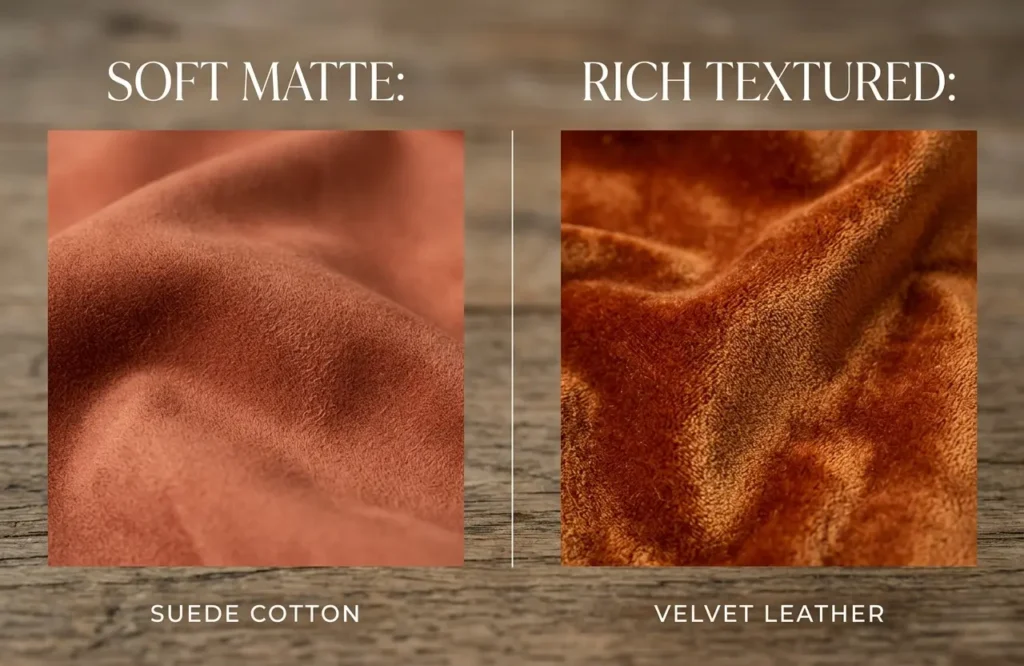
Color is not the only factor. Texture also matters.
True Autumn
- Soft, matte fabrics
- Light wool, cotton, suede
- Avoid shiny or heavy materials
Soft texture matches soft coloring
Deep Autumn
- Rich, heavier fabrics
- Velvet, leather, thick knits
- Slight shine works well
Deep texture supports strong features
Still Not Sure? Quick Final Test
Answer these:
- Do dark colors make you look better or worse?
- Do soft colors look fresh or dull on you?
- Can you wear near-black easily?
If dark suits you → Deep Autumn
If soft suits you → True Autumn
Quick Final Decision Rule
- Dark colors make you look better → Deep Autumn
- Soft warm colors make you glow → True Autumn
Key Takeaways
- True Autumn is softer and more balanced
- Deep Autumn is deeper and more intense
- Both are warm, but react differently to color
- Soft colors suit True Autumn better
- Deep colors suit Deep Autumn better
👉 The easiest way to tell: Watch how your face reacts to soft vs deep colors
Final Thoughts
After looking at many real cases, one thing becomes clear. People don’t struggle because the system is hard, they struggle because the difference is subtle. True Autumn and Deep Autumn are close, but they behave very differently on the face. I’ve seen people wear the wrong depth for years, and they always felt something was off. Then a small color change made a big difference. Their skin looked clearer, and their features stood out more clearly. If soft, warm colors make your face look natural, you are likely a True Autumn. If deep, rich colors make your features stand out, you are likely a Deep Autumn.
