

Have you ever worn a color that looked great on someone else but felt off on you? I have seen this many times. People try new clothes, makeup, and styles, but something still does not look right. The face looks dull, the skin looks uneven, and the whole outfit feels wrong. Many people think the problem is their skin or their choices, but that is not true.
In most cases, the real issue is hue. From experience, once people understand if they are warm or cool, everything becomes easier. Their skin looks clearer, their face looks fresher, and their color choices start to make sense. Hue tells you one simple thing: are you warm or cool? Once you know this, choosing the right colors becomes much easier.
- Hue tells you if you are warm or cool
- Warm colors = yellow or golden tones
- Cool colors = blue or pink tones
- Test with gold vs silver or cream vs white
- If one looks slightly better, follow that
What is Hue in Color Analysis
Hue means if a color is warm or cool.
- Warm hues have yellow or golden tones
- Cool hues have blue or pink tones
This is the first step in color analysis.
Before anything else, you need to know:
Do warm or cool colors suit you better?
If the hue is wrong, even the right shade will not look good.
Why Hue Matters for Your Appearance
Hue affects how your skin looks.
When you wear the right hue:
- your skin looks clear
- your face looks fresh
- your features stand out
When you wear the wrong hue:
- your skin may look dull
- shadows appear
- your face looks tired
This is why hue matters more than anything else.
Warm vs Cool Colors (Easy Difference)
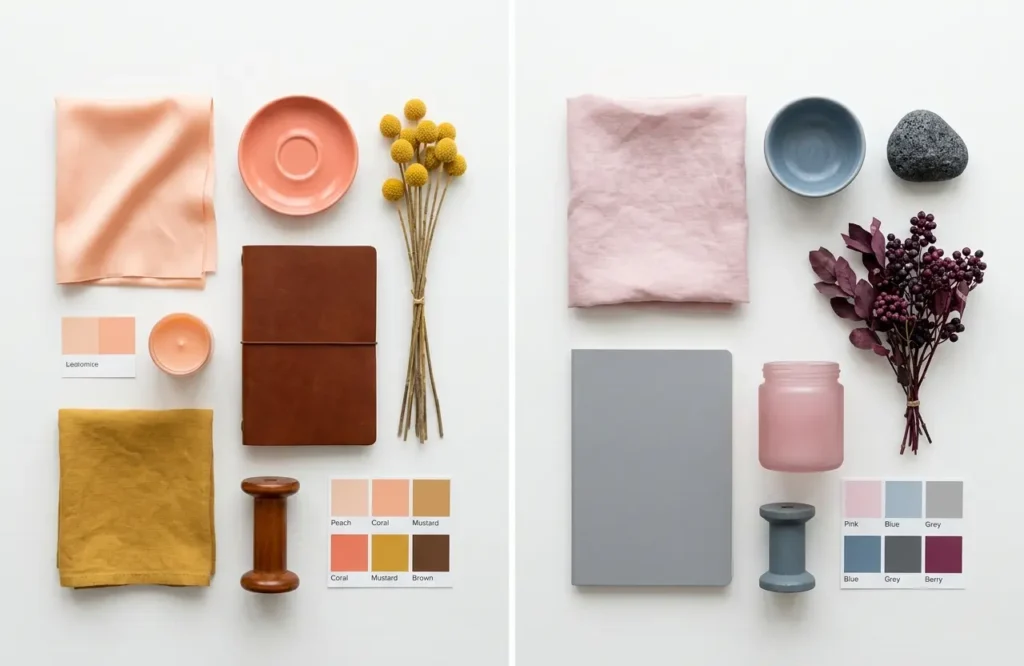
Here is a simple way to see it:
Warm colors
- feel golden, earthy, or sunny
- examples: peach, coral, mustard, warm brown
Cool colors
- feel icy, soft, or crisp
- examples: pink, berry, blue, cool grey
Warm colors add warmth to your face.
Cool colors give a clean and fresh look.
| Warm | Cool |
|---|---|
| Golden, earthy feel | Fresh, icy feel |
| Peach, coral, mustard | Pink, berry, blue |
| Gold jewelry suits better | Silver jewelry suits better |
How to Find Your Hue (Step-by-Step)
Use these simple tests at home.
Stand in natural light and look at your face.
1. Gold vs Silver Test
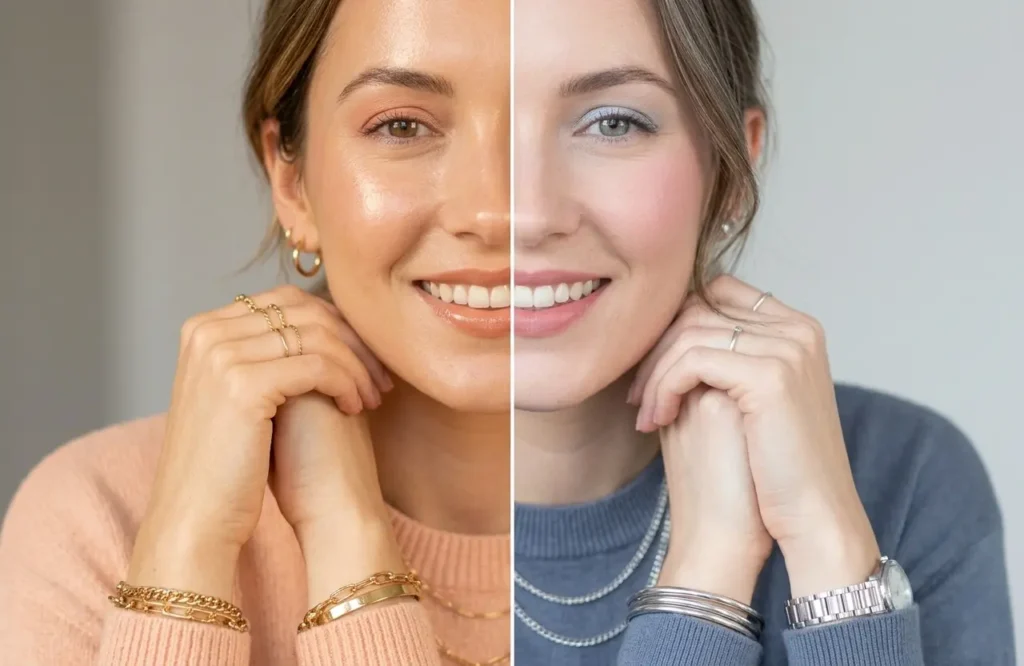
- Gold looks better → warm
- Silver looks better → cool
Notice if your skin looks brighter or dull next to each option.
2. White vs Cream Test

- Cream looks better → warm
- Pure white looks better → cool
Notice if your skin looks brighter or dull next to each option.
3. Lipstick Test
- Peach, coral → warm
- Pink, berry → cool
Notice if your skin looks brighter or dull next to each option.
How to read your results
- If warm options clearly look better → you are likely warm
- If cool options clearly look better → you are likely cool
- If both look okay → you may be neutral
If one option looks even slightly better, follow that.
You do not need a perfect result.
Focus on your skin, not the color itself.
- Gold looks better → Warm
- Silver looks better → Cool
- Cream looks better → Warm
- White looks better → Cool
- Both look fine → Neutral
What Happens When Hue is Wrong
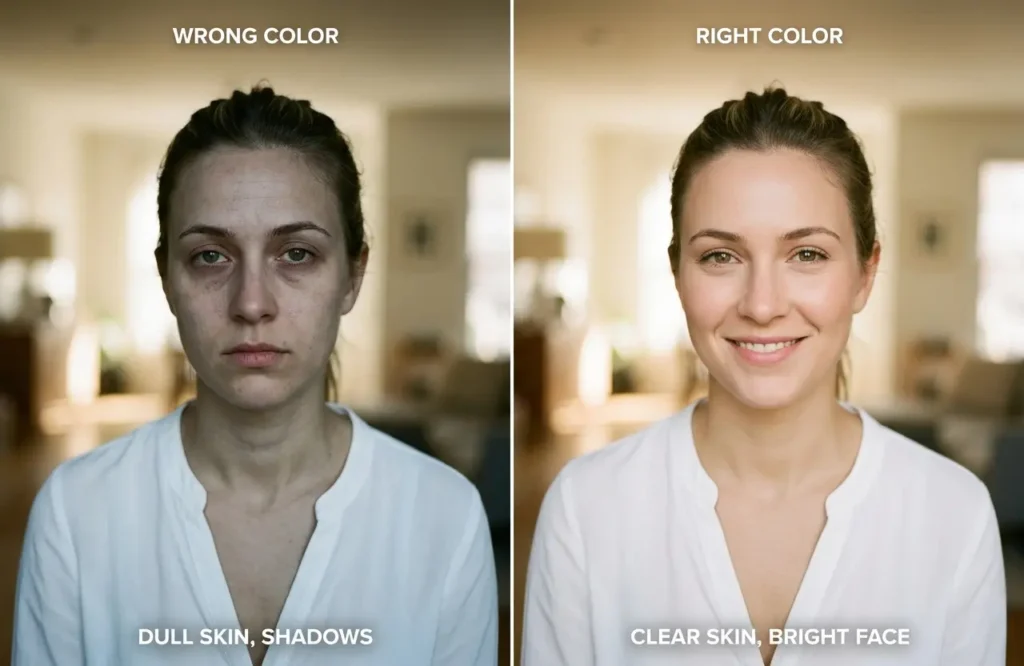
You can see the difference clearly.
If the hue is wrong:
- your skin looks uneven
- your face looks grey or dull
- dark circles stand out
If the hue is right:
- your skin looks smooth
- your face looks bright
- your eyes look clearer
Small changes make a big difference.
Why Hue Comes First
Color analysis has other factors, but hue comes first.
If hue is wrong:
- other factors will not fix the look
If hue is right:
- most colors will already look better
That is why you should always start with hue.
What If You Can’t Tell If You’re Warm or Cool
This is very common.
You may feel:
- both gold and silver look fine
- nothing looks clearly better
This can happen if you have:
If everything looks fine but nothing looks great, you are likely neutral or soft.
What to do:
- look for small differences
- test full outfits, not one item
- trust what looks better, not perfect
You do not need a perfect answer.
You need a direction.
Common Mistakes When Finding Your Hue
Many people get confused when testing warm and cool colors.
Here are some common mistakes to avoid:
Looking at the color, not your face
People focus on the item instead of their skin.
Always check:
- Does your skin look clear or dull?
- Not “Do I like this color?”
Testing in poor lighting
Yellow lights or dark rooms can change how colors look.
Always test:
- in natural daylight
- near a window
Expecting a perfect result
Some people think one option will look 100% better.
In reality:
- The difference is often small
- Even a slight improvement is enough
Ignoring neutral or olive tones
If nothing looks clearly better, people feel stuck.
This usually means:
- you are neutral
- or your features are soft
Testing one item only
One color is not enough to decide.
Try:
- multiple colors
- full outfits
- different fabrics
Final tip
Do not overthink it.
Look for what makes your face look better, even slightly.
That is your answer.
Hue vs Undertone (Simple Difference)
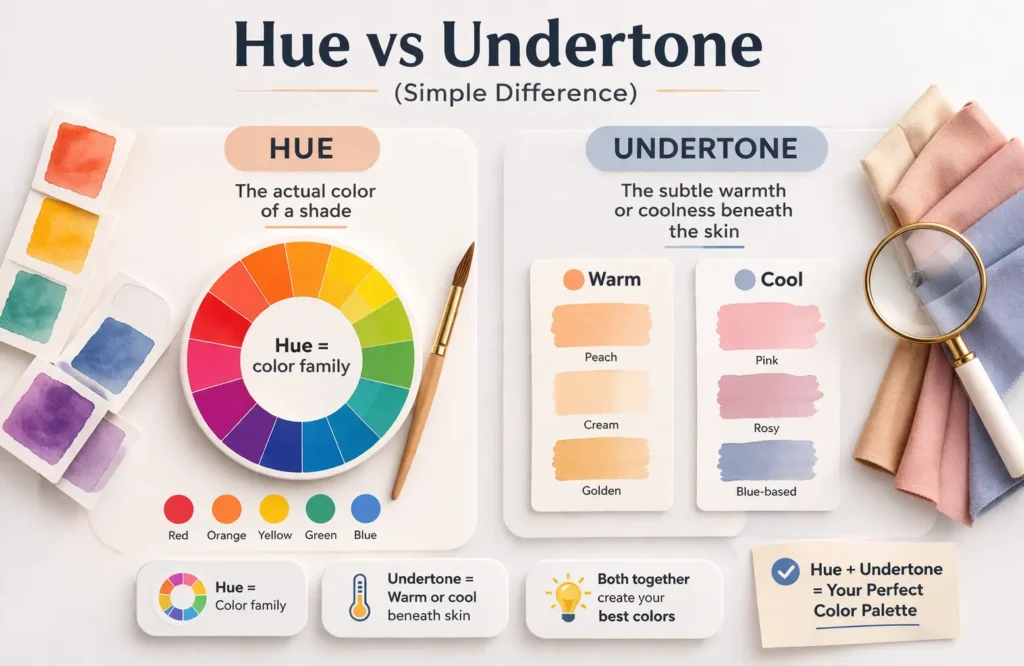
Many people confuse these.
- Undertone = your natural skin base (warm, cool, neutral)
- Hue = how colors react with your face
Your undertone gives a clue.
But hue shows the real result.
That is why testing colors is more useful than guessing.
How to Use Hue in Real Life
Once you know your hue, use it daily.
Clothes
- Warm → earthy, golden shades
- Cool → soft, blue-based shades
Makeup
- Warm → peach, coral, bronze
- Cool → pink, berry, rose
Jewelry
- Warm → gold
- Cool → silver
When your colors match your hue:
- your skin looks clear
- your style looks balanced
Quick Recap
- Hue = warm or cool
- Warm hues = yellow-based
- Cool hues = blue-based
- Hue is the first step in color analysis
- Use simple tests to find your hue
Warm → Spring / Autumn
Cool → Summer / Winter
Once you know your hue, you can go deeper with your full color season.
Not Sure Which Color Season You Are?
Take our free 2-minute Color Season Quiz to discover whether you are most likely a Spring, Summer, Autumn, or Winter—and explore the colors that suit you best.
Final Thought
From what I have seen again and again, hue makes the biggest difference in how colors work on you. You do not need to learn everything at once or find a perfect answer. You just need to see which colors make your face look better, even slightly. Small changes in hue can make your skin look clearer, and your overall look more balanced. Once you understand your hue, you stop guessing and start choosing with confidence, and that is where everything starts to fall into place.
