

Do you feel like your color season is close but not quite right? You try one palette, and it looks okay. Then you try another, and that also works, but something still feels off. This is a very common problem. I have seen many people go through this stage where colors look fine, but not fully balanced. Some shades work, others don’t, and small changes make a big difference. It can feel confusing, like you are missing something.
From experience, this usually means you are not wrong, you are just very close. Most of the time, people in this situation are sitting between two sister seasons. I have seen this pattern again and again. Once you understand how sister seasons work, the confusion starts to clear. You stop guessing and start noticing what actually suits you. That is what we are going to break down in a simple way.
Why You Feel Stuck Between Two Seasons
If You Are Stuck Between Two Seasons
- Colors look good but not great → check your sister season
- One palette feels too warm or too cool → shift slightly
- One feels too bright or too dull → adjust softness
- Small changes make a big difference → focus on details
If you feel stuck between two seasons, there is a reason.
Your features may sit between both.
For example:
- Your skin may handle softness well
- But your undertone may lean warm or cool
This creates overlap.
So both palettes look fine. But one will look more natural.
That small difference is what you need to find.
What Even ARE Sister Seasons?
Sister seasons are two-color seasons that sit next to each other.
They share one main trait:
- soft
- bright
- light
- deep
Because of this, their colors can look similar.
That’s why both seasons may work on you. But only one will look best.
The Kindred Color Families
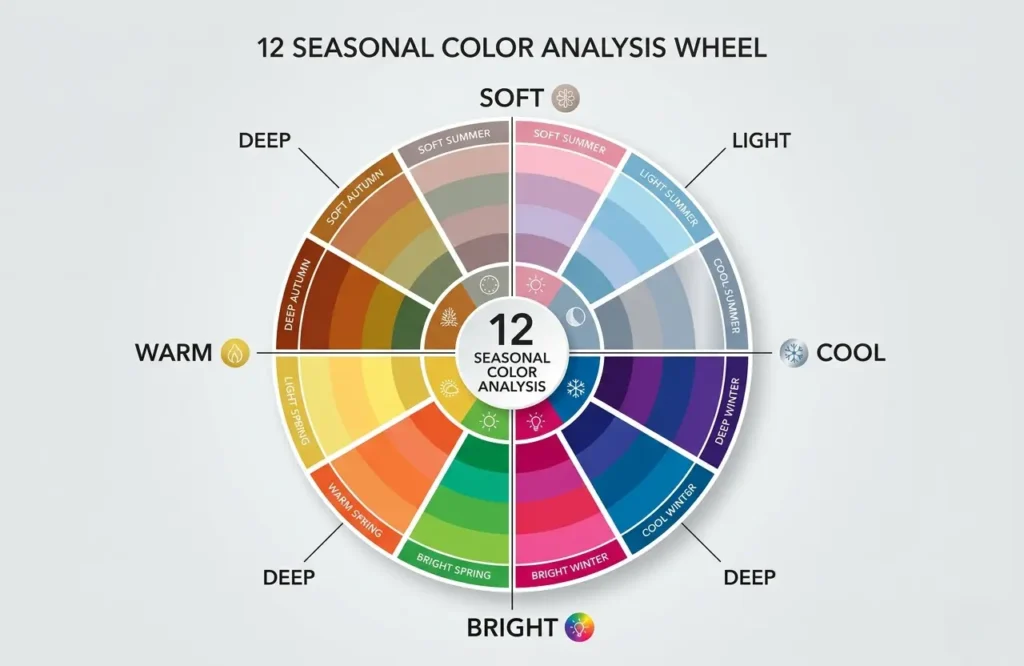
Each season is built on three traits like temperature, chroma, and depth (learn more in color theory for personal style).
- temperature (warm or cool)
- chroma (soft or bright)
- depth (light or dark)
Sister seasons share one of these traits.
That shared trait is what creates confusion.
Temperature-Based Seasons
The Warm Seasons: True Spring and True Autumn
Both are warm.
But:
- Spring is lighter and brighter
- Autumn is deeper and softer
If warm colors suit you, both may work.
But one will feel more natural.
The Cool Seasons: True Winter and True Summer
Both are cool.
But:
- Winter is sharp and bright
- Summer is soft and muted
If cool tones suit you, test brightness next.
Chroma-Based Seasons
The Bright Seasons: Bright Winter and Bright Spring
Both are clear and high contrast.
But:
- Winter is cool
- Spring is warm
If bright colors suit you, check warmth.
Too warm? You may be Winter.
Too cool? You may be Spring.
The Muted Seasons: Soft Summer and Soft Autumn
Both are soft and low contrast.
But:
- Summer is cool
- Autumn is warm
If bright colors look harsh on you, this pair is common.
Depth-Based Seasons
The Light Seasons: Light Spring and Light Summer
Both are light and fresh.
But:
- Spring is warm
- Summer is cool
If dark colors feel heavy, this is your area.
The Dark Seasons: Deep Autumn and Deep Winter
Both are deep and rich.
But:
- Autumn is warm
- Winter is cool
If light colors wash you out, focus here.
Quick Way to Tell Your Sister Season
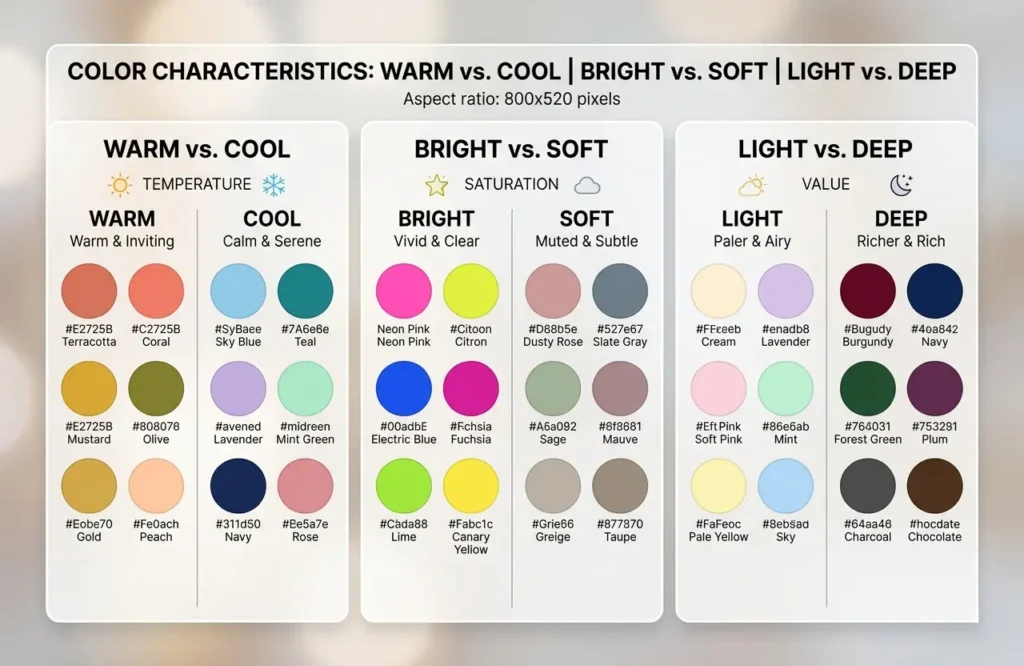
If you want a fast answer, test these three things:
1. Warm vs Cool
- Do warm tones make your skin glow or look yellow?
- Do cool tones make your skin fresh or dull?
2. Bright vs Soft
- Do clear colors look sharp or too strong?
- Do muted colors look balanced or flat?
3. Light vs Deep
- Do light shades brighten your face or wash you out?
- Do deep shades add depth or feel heavy?
Your answers will point you to one side.
THE 6 SISTER SEASONS
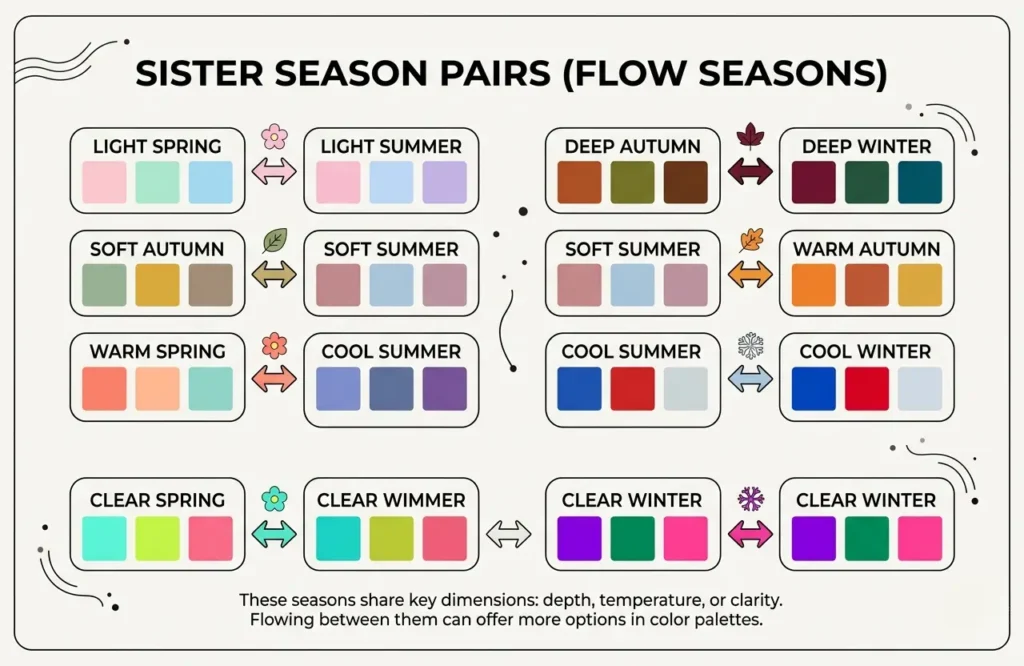
Here are all the sister season pairs:
- Deep Autumn & Deep Winter
- Light Spring & Light Summer
- Warm Spring & Warm Autumn
- Cool Summer & Cool Winter
- Soft Summer & Soft Autumn
- Bright Spring & Bright Winter
Use this as your quick reference.
| Sister Seasons | Shared Trait | Key Difference | Quick Decision |
|---|---|---|---|
| Deep Autumn vs Deep Winter | Deep | Warm vs Cool | Warm = Autumn, Cool = Winter |
| Light Spring vs Light Summer | Light | Warm vs Cool | Warm = Spring, Cool = Summer |
| Warm Spring vs Warm Autumn | Warm | Bright vs Soft | Bright = Spring, Soft = Autumn |
| Cool Summer vs Cool Winter | Cool | Soft vs Bright | Soft = Summer, Bright = Winter |
| Soft Summer vs Soft Autumn | Soft | Cool vs Warm | Cool = Summer, Warm = Autumn |
| Bright Spring vs Bright Winter | Bright | Warm vs Cool | Warm = Spring, Cool = Winter |
DEEP AUTUMN & DEEP WINTER
Shared trait: depth
Key difference:
- Deep Autumn = warm
- Deep Winter = cool
If warm deep tones look rich → Autumn
If cool deep tones look sharper → Winter
What you will notice: One side will make your skin look clearer, while the other may add slight dullness or shadows.
LIGHT SPRING & LIGHT SUMMER
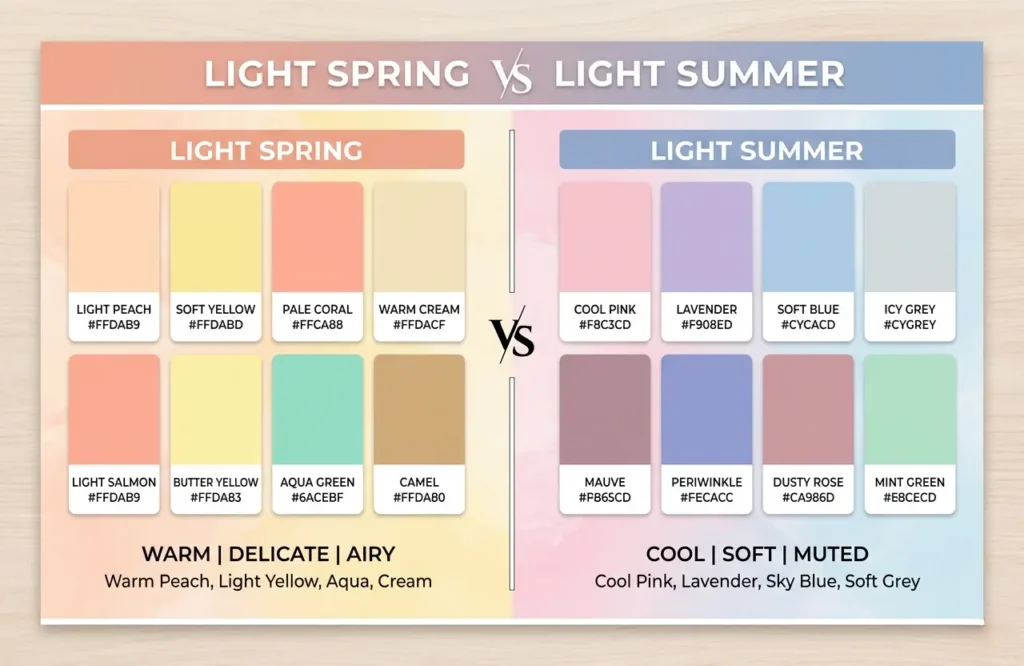
Shared trait: lightness
Key difference:
- Light Spring = warm
- Light Summer = cool
If warm pastels glow → Spring
If cool pastels calm your skin → Summer
What you will notice: One side will make your skin look clearer, while the other may add slight dullness or shadows.
WARM SPRING & WARM AUTUMN
Shared trait: warmth
Key difference:
- Warm Spring = bright
- Warm Autumn = muted
If clear warm colors pop → Spring
If earthy tones look better → Autumn
What you will notice: One side will make your skin look clearer, while the other may add slight dullness or shadows.
COOL SUMMER & COOL WINTER
Shared trait: coolness
Key difference:
- Cool Summer = soft
- Cool Winter = bright
If soft cool tones flatter → Summer
If high contrast suits you → Winter
What you will notice: One side will make your skin look clearer, while the other may add slight dullness or shadows.
SOFT SUMMER & SOFT AUTUMN
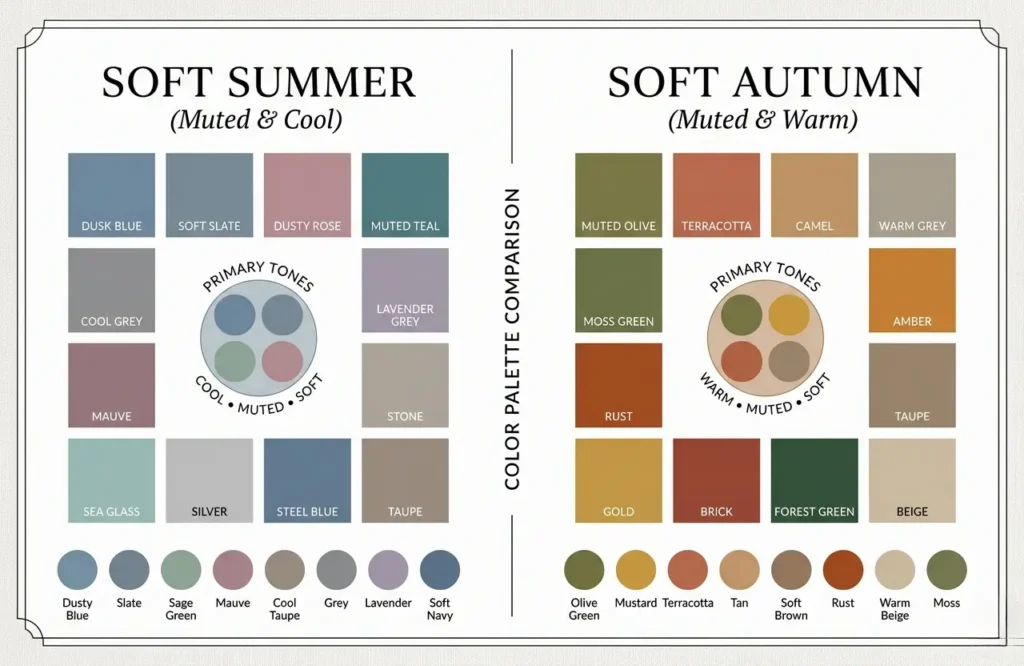
Shared trait: softness
Key difference:
- Soft Summer = cool
- Soft Autumn = warm
If dusty cool shades suit you → Summer
If warm muted tones feel better → Autumn
What you will notice: One side will make your skin look clearer, while the other may add slight dullness or shadows.
BRIGHT SPRING & BRIGHT WINTER
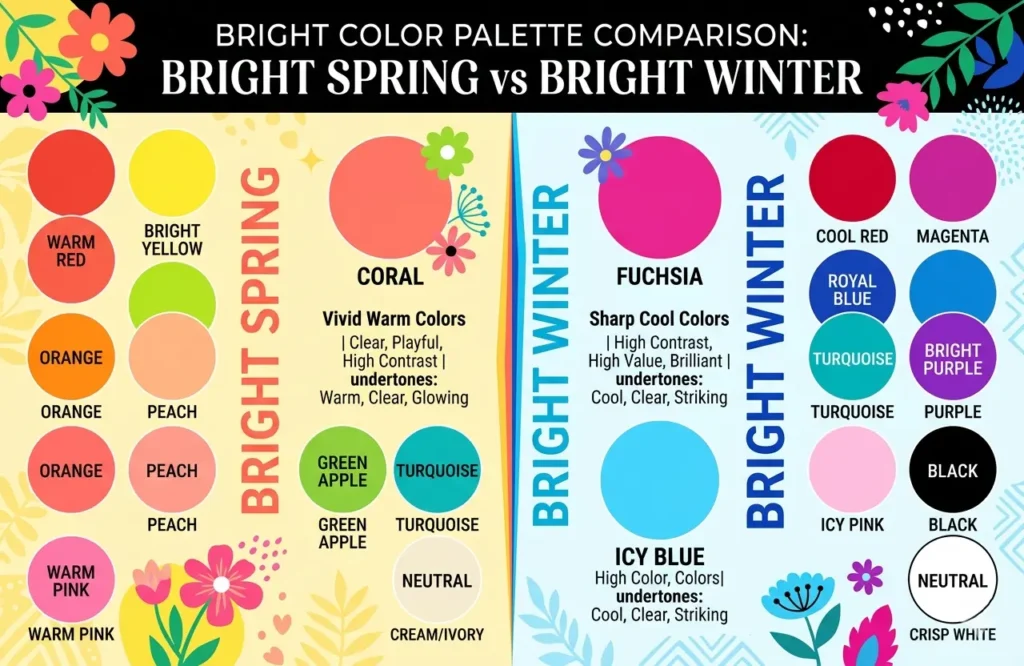
Shared trait: brightness
Key difference:
- Bright Spring = warm
- Bright Winter = cool
If warm, bright colors shine → Spring
If cool, sharp colors stand out → Winter
What you will notice: One side will make your skin look clearer, while the other may add slight dullness or shadows.
What to Watch For
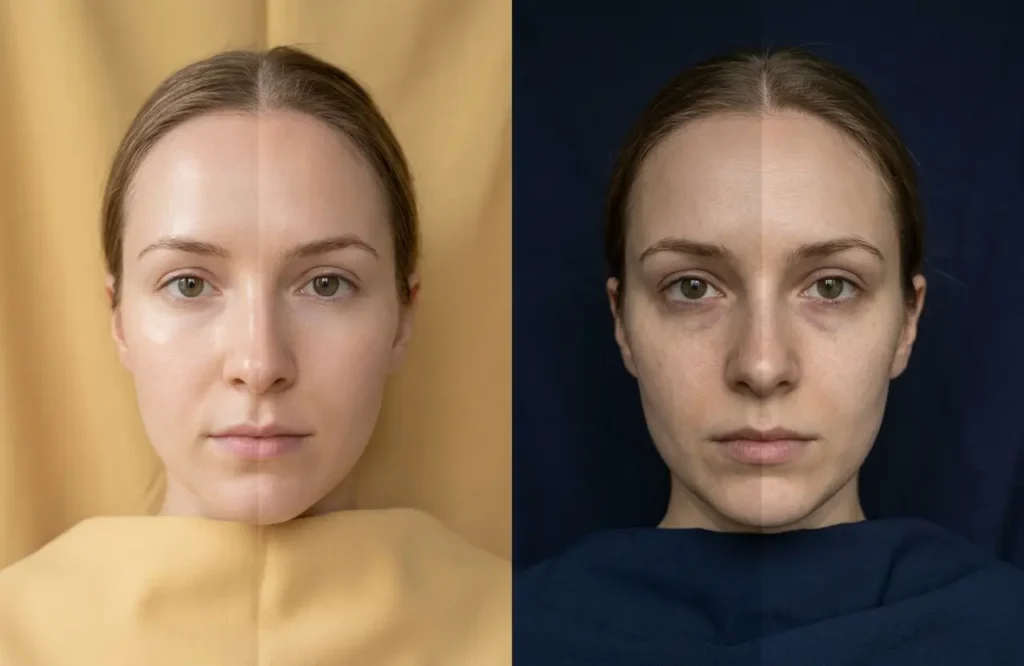
Even small differences matter.
- Too warm → skin may look yellow
- Too cool → skin may look grey
- Too bright → features look harsh
- Too muted → face looks tired
Pay attention to how your skin reacts, not just the color itself.
How Sister Seasons Help You Pinpoint Your Palette
If your season feels close but not perfect, this is normal.
Most people land near their true season.
Use this quick check:
- Do colors feel slightly too warm or too cool?
- Do they look too bright or too dull?
- Do they feel too light or too heavy?
These small signals point to your correct season.
Signs You Might Be in the Wrong Season
Sometimes your season feels close, but not fully right.
Look for these signs:
- Some colors work, but others feel off
- Your skin looks dull in certain shades
- Dark circles or shadows become more visible
- Makeup never looks fully balanced
If this happens, your sister season may be a better fit.
How to Wear Colors from Your Sister Season
You can use your sister season. But do it carefully.
Follow this simple rule:
70% your main season
30% your sister season
Best ways to use it:
- accessories
- tops
- makeup
Avoid using full outfits from your sister season.
Always keep your base palette strong.
Simple Test You Can Try at Home

You don’t need special tools.
Try this:
- Stand in natural light
- Hold two similar colors (one from each sister season)
- Look at your face, not the fabric
Ask:
- Which one makes your skin clearer?
- Which one adds shadows?
The better one shows your true season.
Reconnect With Your Primary Palette
Your sister season is helpful. But it is not your main one.
If your look starts to feel off:
- go back to your core colors
- notice how your skin reacts
Your true season will always look more balanced.
Quick Summary
- Sister seasons share one main trait
- That is why both can look similar
- Small differences decide your true season
- Test warmth, brightness, and depth
- Use your sister season, but keep your main palette first
Not Sure Which Color Season You Are?
Take our free 2-minute Color Season Quiz to discover whether you are most likely a Spring, Summer, Autumn, or Winter—and explore the colors that suit you best.
Final Thought
From experience, this is one of the most common points where people get confused in color analysis. I have seen people switch between seasons many times, thinking something is wrong, but the issue is usually small. They are often standing right between two sister seasons. Once you start testing small differences like warmth, softness, or depth, the answer becomes clear. You do not need to change everything, you just need to notice how your skin reacts to slight shifts in color. Your true season will always look more natural and balanced. Use your sister season as support, but trust what looks best on you.
